Bohemian Guild Glass dated 1715


Glass and Guild: The Nailsmith
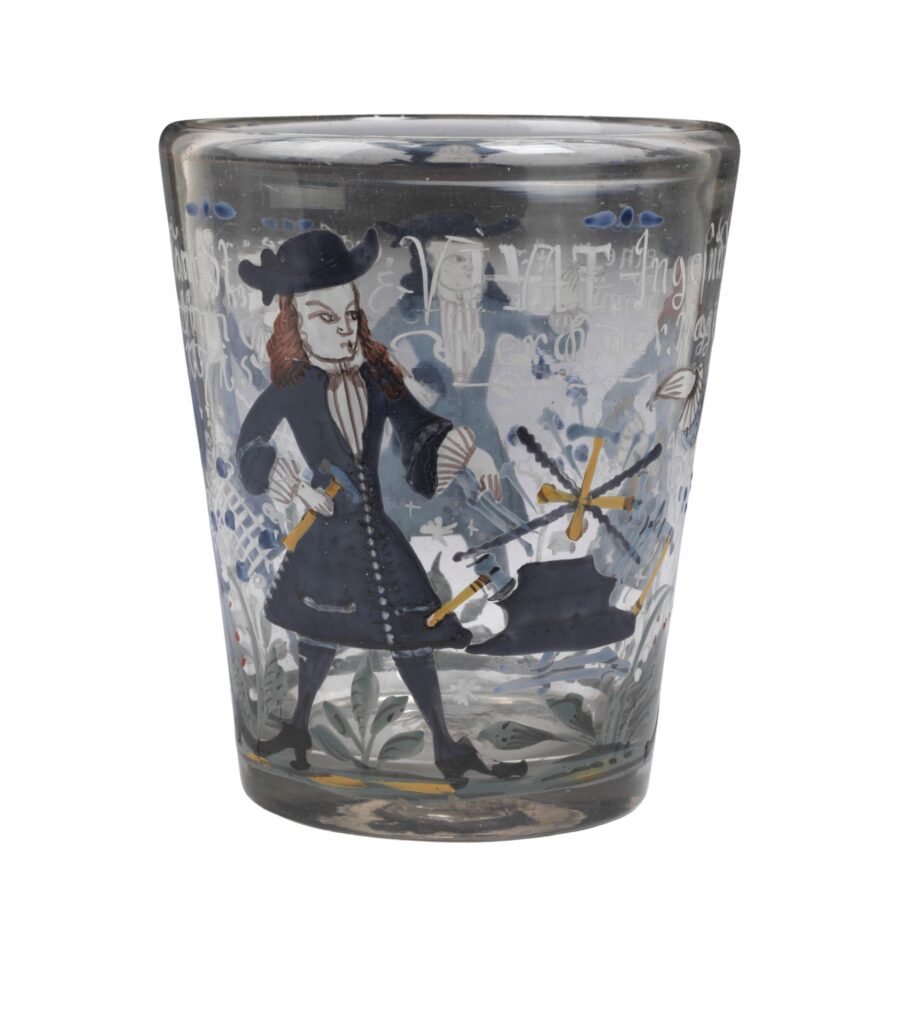
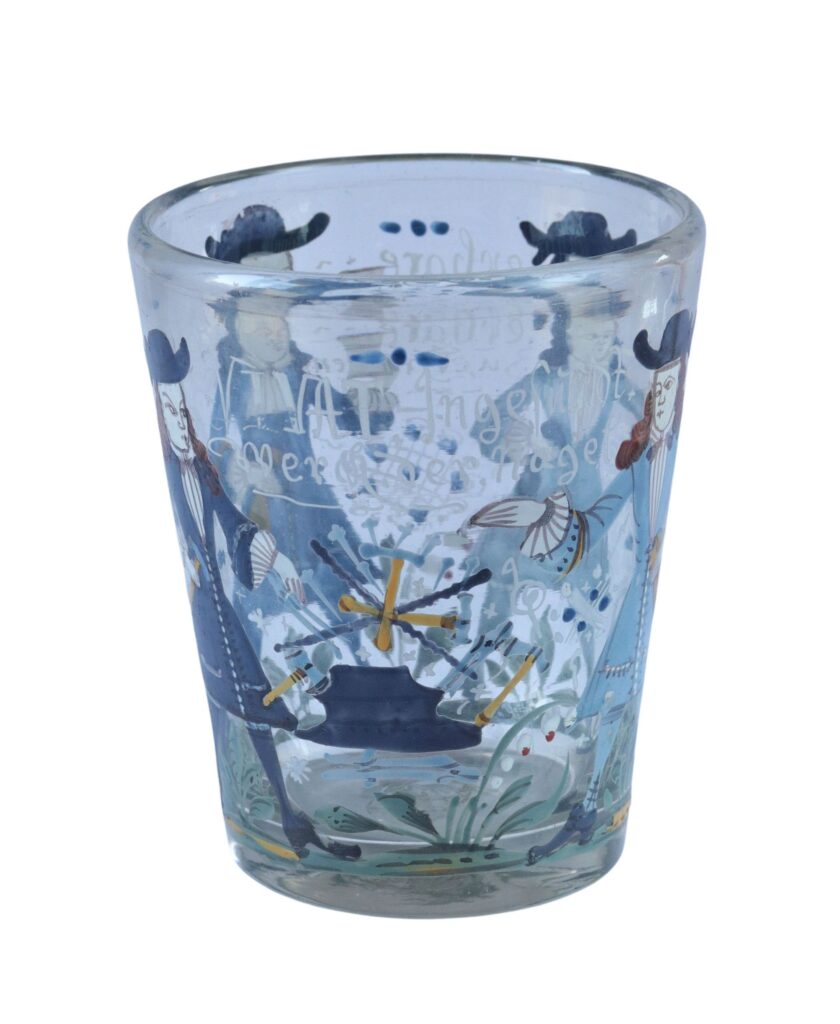
The object illustrates the period’s decorative stylistics depicting two Nailsmith in polychrome enamel colouring attired in early 18th century Guild dress consisting of hats and coats with precise detailing.
Bohemian Nailsmith Guild Glass dated 1715, polychrome enamel decoration, H. 13 cm
Bohemian Glassmaking in the Early 18th Century
The early 17th century marked a golden age for Bohemian glass production. While Venice had long dominated European glassmaking, by the turn of the 18th century, Bohemian glasshouses had established their own distinctive style and technical innovations producing thicker, more substantial pieces with exceptional clarity. The region (now part of the Czech Republic) possessed natural advantages that permitted this ascendancy: abundant forests providing potash, extensive quartz deposits, and skilled craftsmen organized within a guild system.
The Guild System and the Nailsmith Guild
The guild system formed the backbone of craft production throughout Central Europe, and Bohemia was no exception. These professional associations regulated training, production standards, and market access. For craftsmen, guild membership provided economic security, social standing, and collective identity.
The Nailsmith Guild (Nagelschmiedezunft) held particular significance in this context. Nail production might seem mundane to modern sensibilities, but in the early 18th century, hand-forged nails were essential components in construction, furniture-making, and countless other applications. The guild’s members enjoyed considerable status within the broader metalworking guilds.
Enamel Decoration Techniques in Bohemia
Enamel decoration techniques in Bohemia involved applying powdered colored glass mixed with flux to the surface of the completed vessel, then refiring the piece at a lower temperature to fuse the decoration without deforming the underlying form. This demanding process required close collaboration between glassmakers and specialized decorators.
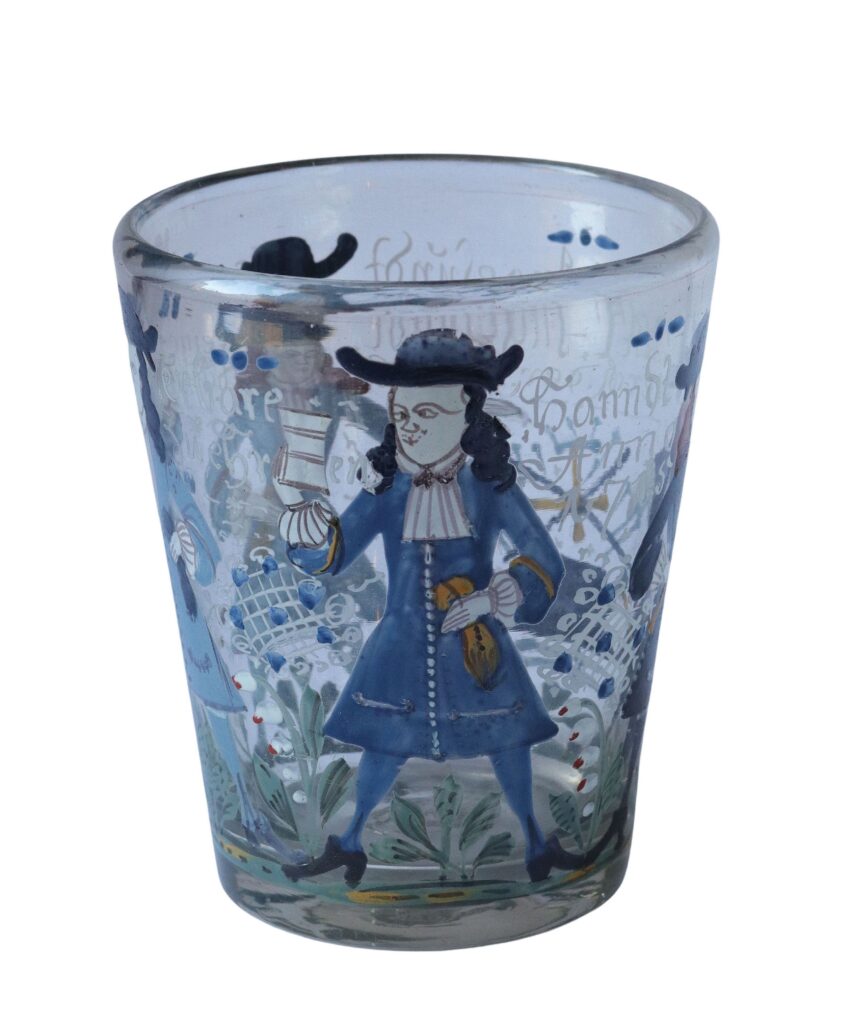
The palette visible on our tumbler is characteristic of Bohemian work: predominant blues, touches of yellow, red, and green, and black for outlines and details. The figures are rendered in a somewhat naïve, folk-art style that prioritizes symbolic representation over naturalistic portrayal—a hallmark of guild-commissioned objects throughout Central Europe.
Museum Reference Objects
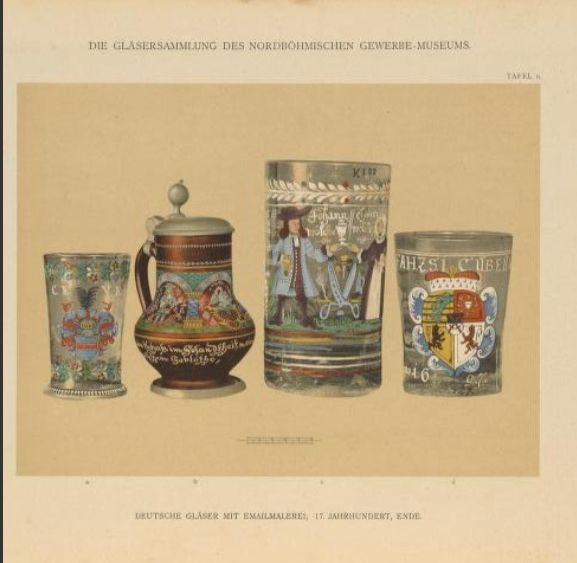
The North Bohemian Museum Liberec
Applied Art – Collection
The exhibition displays a historical timeline of art crafts development in Europe as well as life style trends among the middle and upper class society from antiquity to the present time. It also shows the influence of Oriental cultures on European art crafts.
Literature
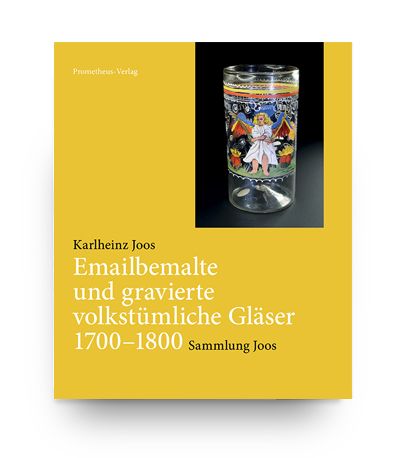
Joos, Karlheinz. Emailbemalte und gravierte volkstümliche Gläser 1700-1800: Sammlung Joos. Prometheus Verlag, 2017.


