Haban Faience Jug dated 1696


The Rich Heritage of late 17th Century Haban Faience
The term ‘Haban’ derives from the German ‘Habaner,’ referring to Anabaptist communities who fled religious persecution in Western Europe during the 16th century.They headed to Moravia, which had gained a reputation for religious tolerance.
Haban faience represents one of Central Europe’s most distinctive ceramic traditions and was shaped by the Anabaptist (Haban) craftsmen of the 16th and 17th centuries. Their production of faience ceramics, have for decades attracted the attention of collectors.
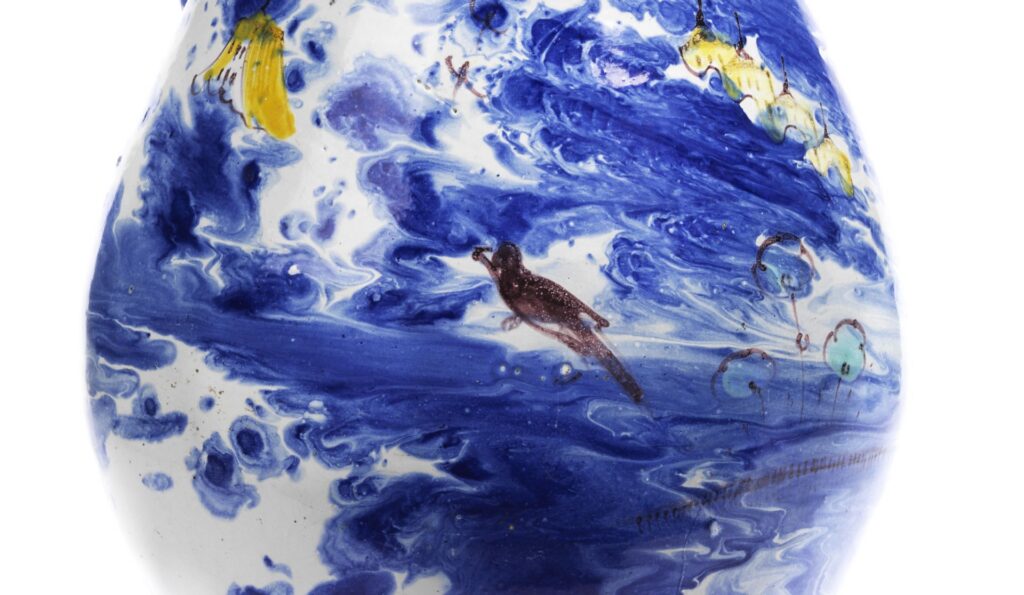
The Haban pottery workshops produced faience—tin-glazed earthenware—that combined technical mastery with aesthetic innovation, creating objects that served both utilitarian and ceremonial functions for aristocratic patrons and community members alike.
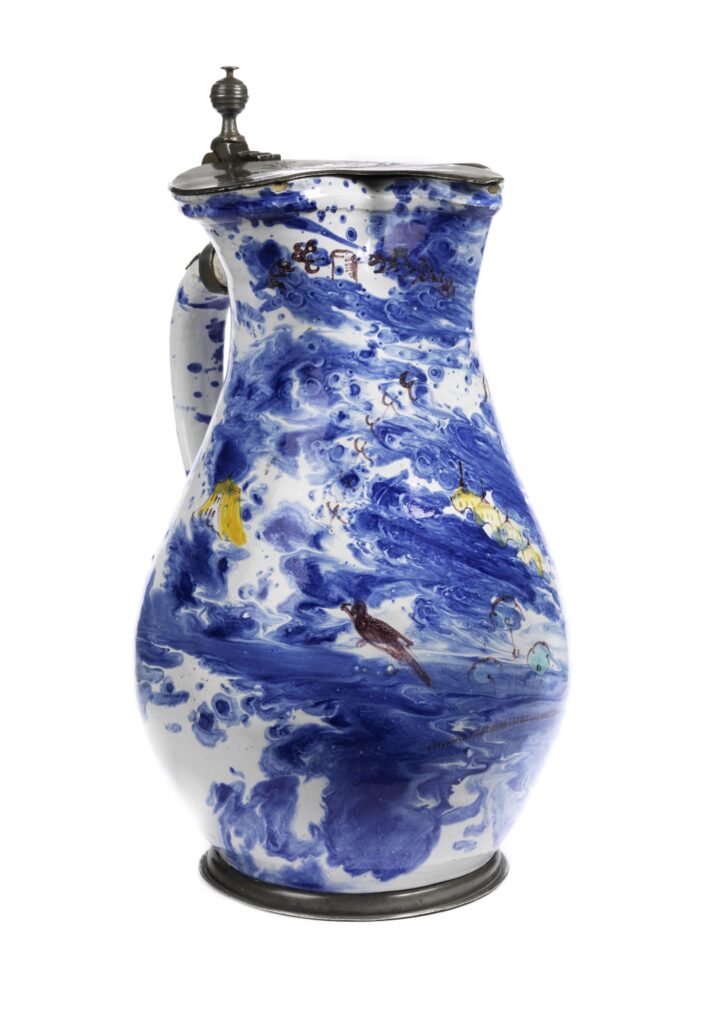
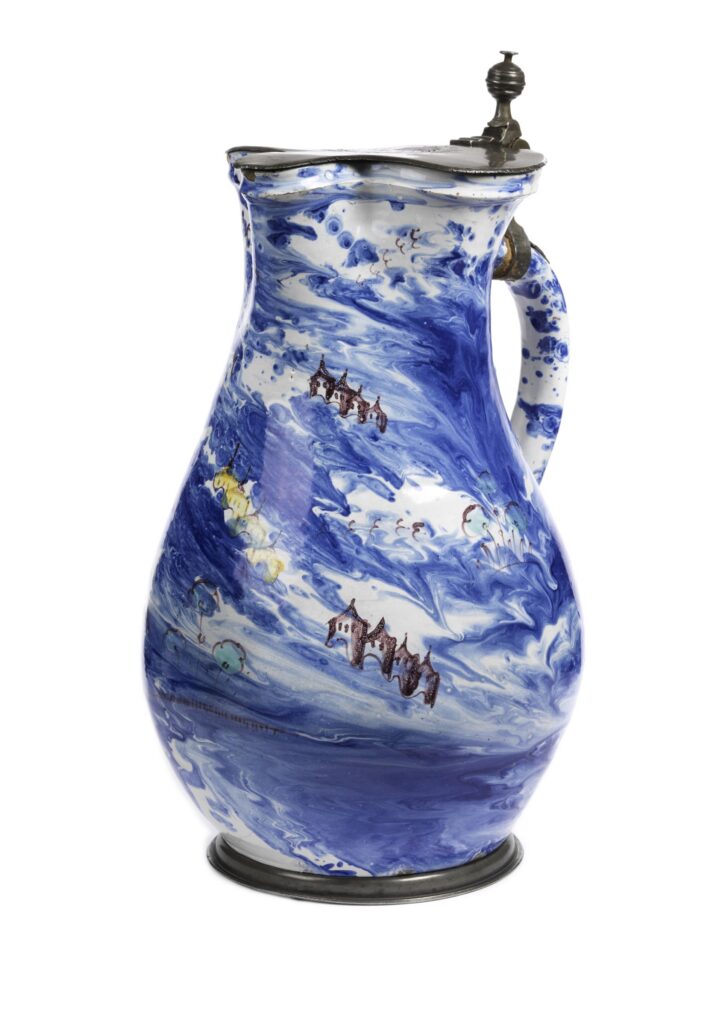
The pewter mounts of Haban ceramic ware are very simple and elegant. The lids of jugs and mugs are relatively flatly arched and plain. If there is a knob, it is either a ball or an upward tapering cone with tiny rims. The lidding of this particular Haban Faience Jug is dated 1696.
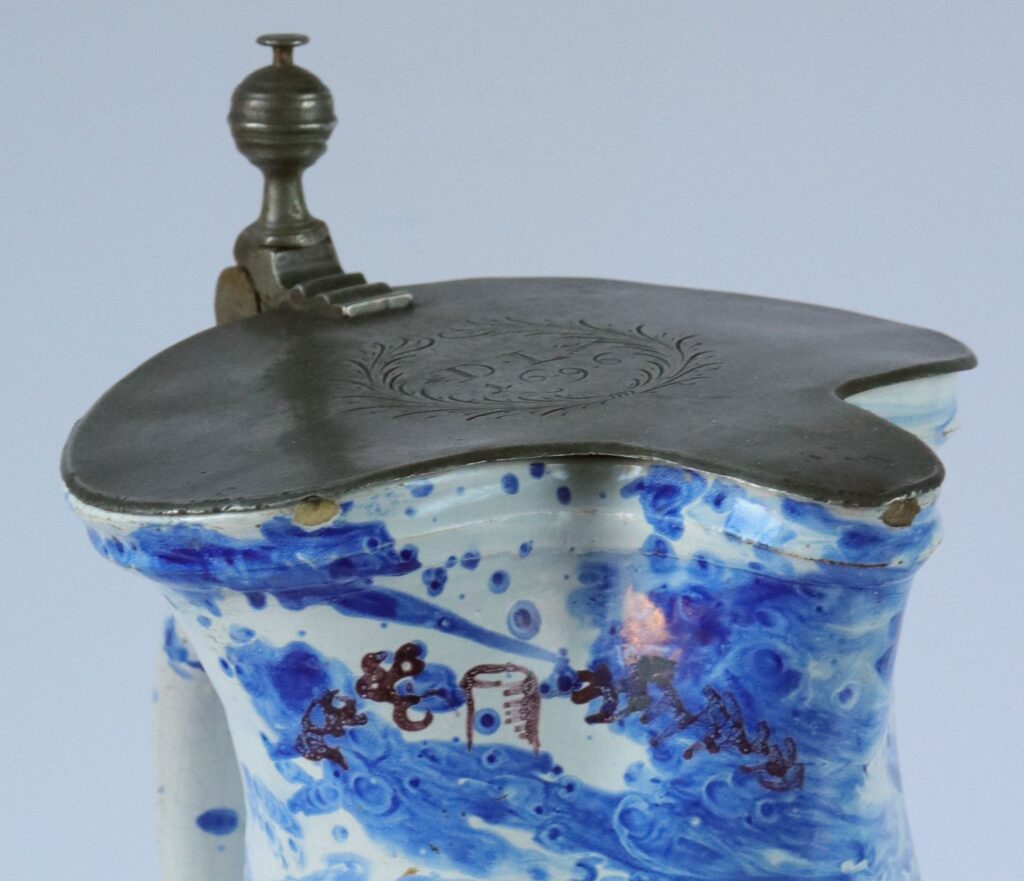
The pewter mounts were made by metalworkers that might have been in other places, not in the same region as the Haban workshops. Therefore the master’s marks of the pewterers do not neccesarily provide information about the place of origin of the ceramic object.
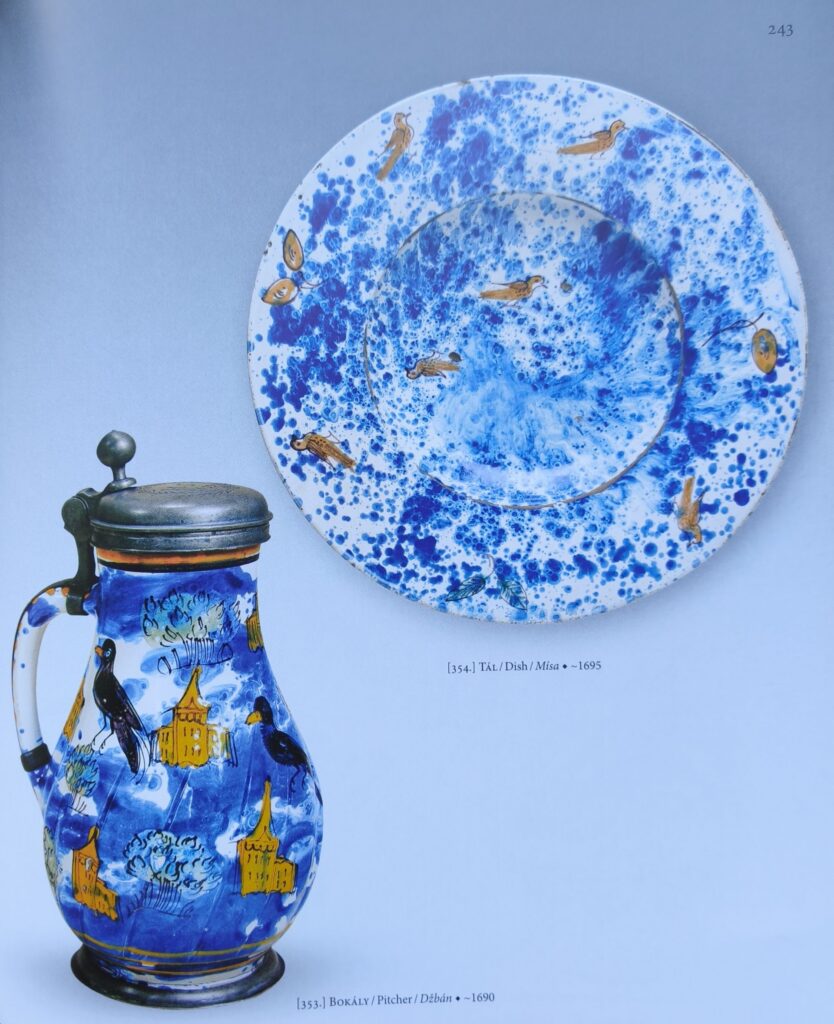
Reference objects of Haban Ceramics with blue and white marbled glaze of the last decade of the 17th century in the literature:
The range of forms included jugs, bottles, dishes and broad rimmed plates in various sizes and partly decorated with pewter lids or screws. The chronological ordering of objects by stylistic characteristics remains the most frequent practice.
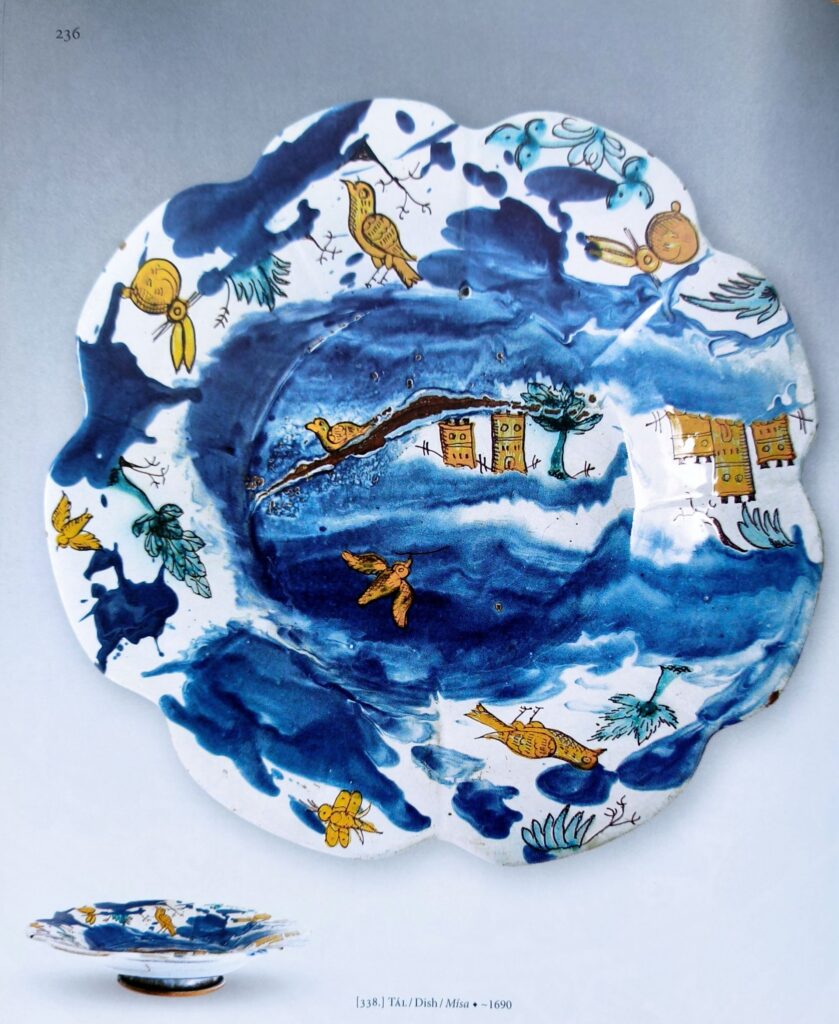
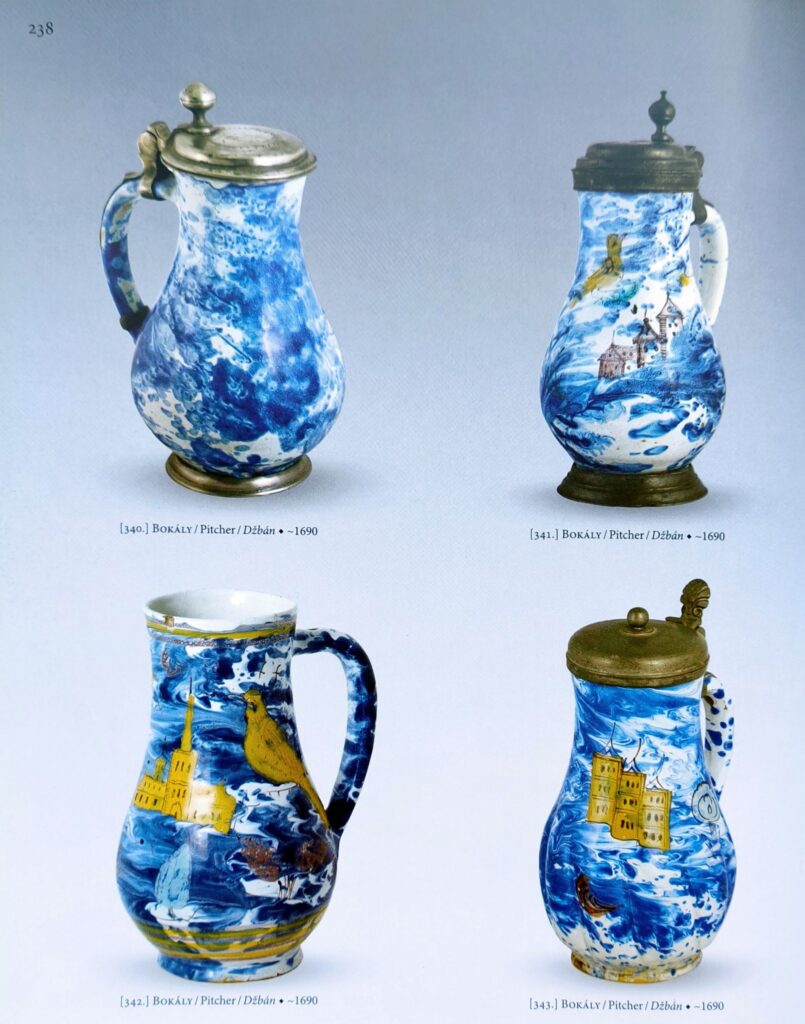
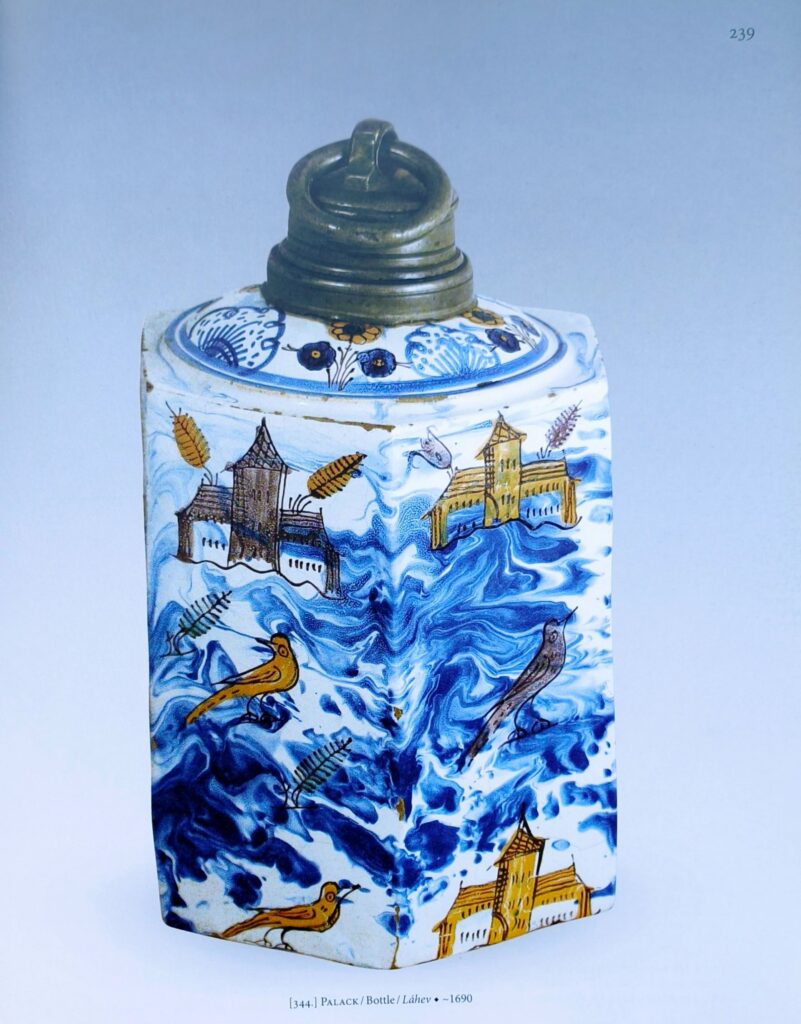
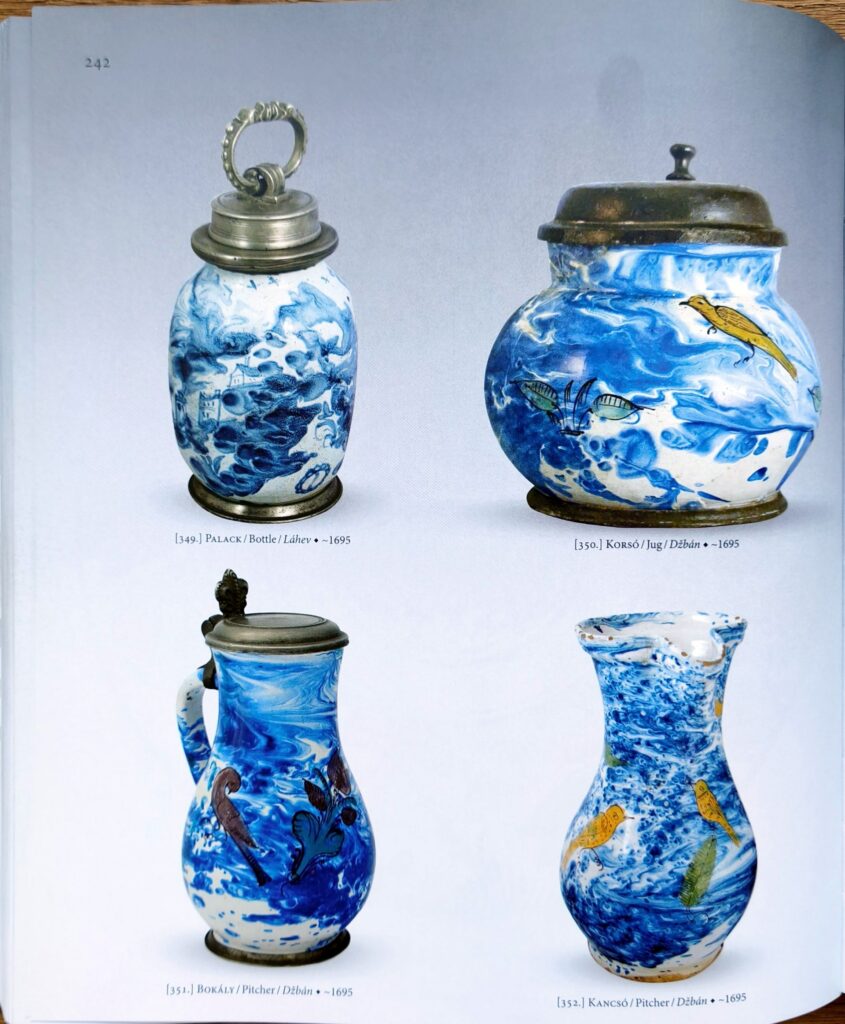
The book Ceramic Art of the Habans is a very comprehensive work on Haban ceramics, documenting almost 600 objects, which are part of museums, chateaux and private collections mostly within the territory where the Anabaptist craftsmen worked in the 16th and 17th centuries. Therefore most extensive collections of Anabaptist faience are found in Czech, Slovakian, Austrian and, in particular, Hungarian holdings. (see literature below)
Reference Objects
Koerner European Ceramic Gallery
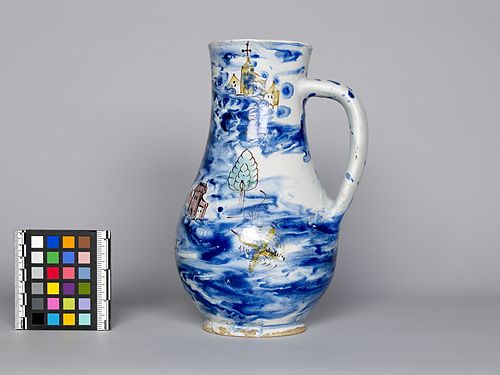
Object description:
Austrian Hapsburg (1650-1700) Hight 23.7 x 14.1 cm
Place made Slovakia
Blue on white marbled earthenware jug with flat spread base, slightly flaring neck, loop handle. Scattered buildings, bird, tree and flowers on body, painted in yellow-brown, blue-green, and purple.
Copyright: Image © UBC Museum of Anthropology Photographed by Jessica Bushey
https://collection-online.moa.ubc.ca/collection_images/23/zoomable/23930V07.jpg
This gallery features more than 600 European ceramics collected by Dr. Walter C. Koerner. The collection contains examples of tin-glazed and lead-glazed earthenware and stoneware from the 16th to the 19th centuries.
Literature:
Radványi, Diána and László Réti. Ceramic Art of the Habans: The Ceramic Art of the Carpathian Basin, Volume IV. Vörösvàry-Kieselbach 2011
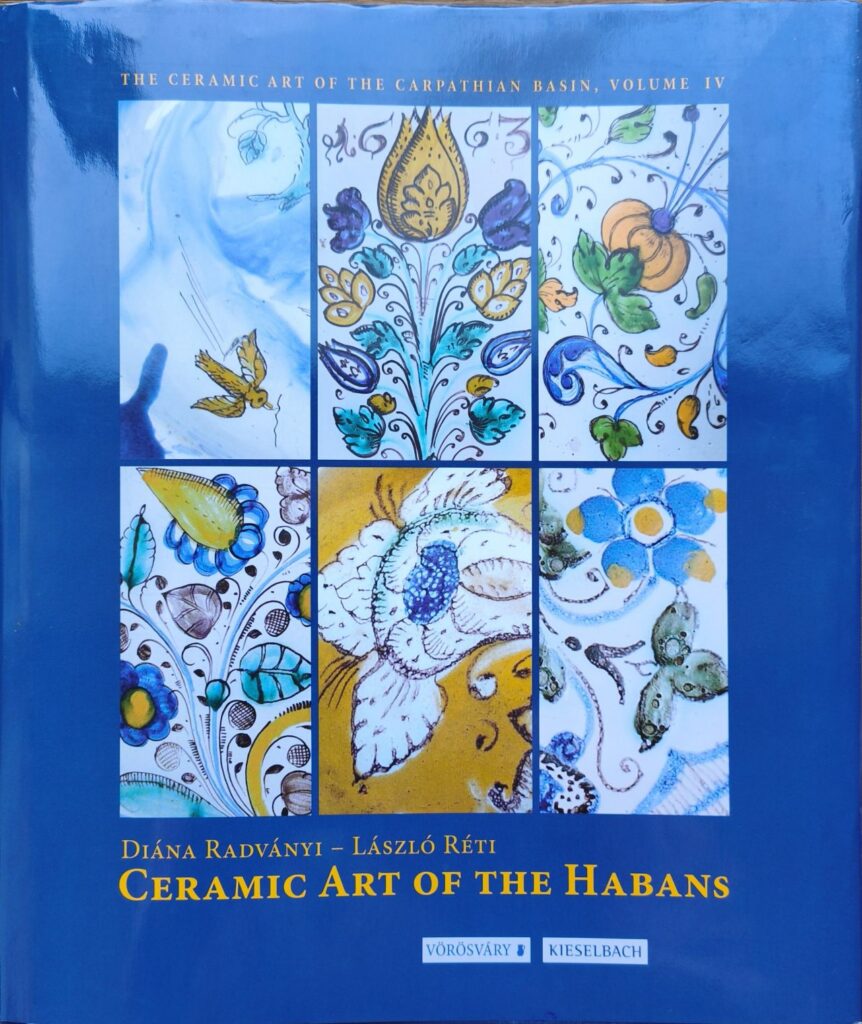
Radványi, Diána and László Réti. Ceramic Art of the Habans: The Ceramic Art of the Carpathian Basin, Volume IV. Vörösvàry-Kieselbach 2011
P. 236 – 239 – see above -Objects 338-344
P. 242 – 243 – see above -Objects 349-354


