Camaïeu Vert and the Chinese Dream


Durlach Chinoiserie Faience circa 1775
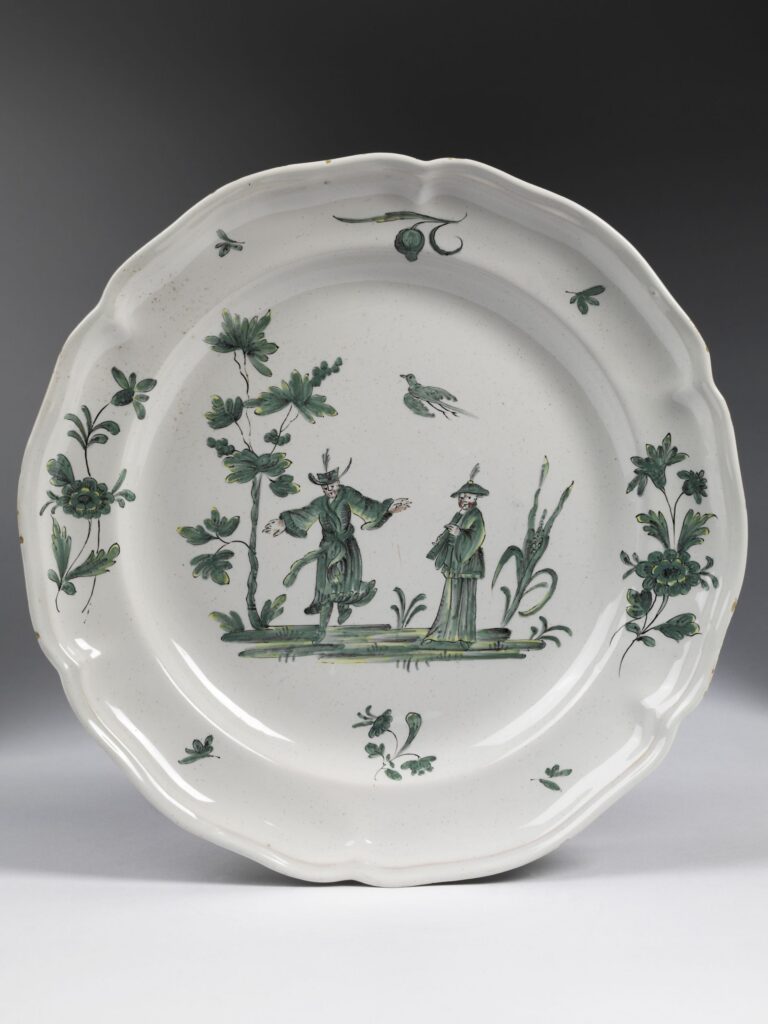
probably Johann Georg Tritt, D. 24 cm see Markentafel below
The Durlach Faience Manufactory
The Fayencemanufaktur at Durlach was founded in 1723 when Margrave Karl Wilhelm von Baden-Durlach granted a privilege to Johann Heinrich Wachenfeld. As he died only 3 years later the factory subsequently navigated through very turbulent seas, with stability only returning in 1749 with a new privilege granted to Georg Adam Herzog and Johann Adam Benckiser.
Under the direction of Dominicus Cuny, a highly skilled craftsman from Nancy the Durlach Manufactory flourished. In just six years, Cuny laid the technical foundations that would define Durlach’s character for decades: a pale, fine-grained body, a dazzlingly white glaze with an almost porcelain-like brilliance, and bright high-fired colours. The golden age of production was brought about by Johann Adam Benckiser, who employed a succession of skilled painters between 1749 and 1789.
Painters and Marks – Markentafel der Durlacher Fayencen
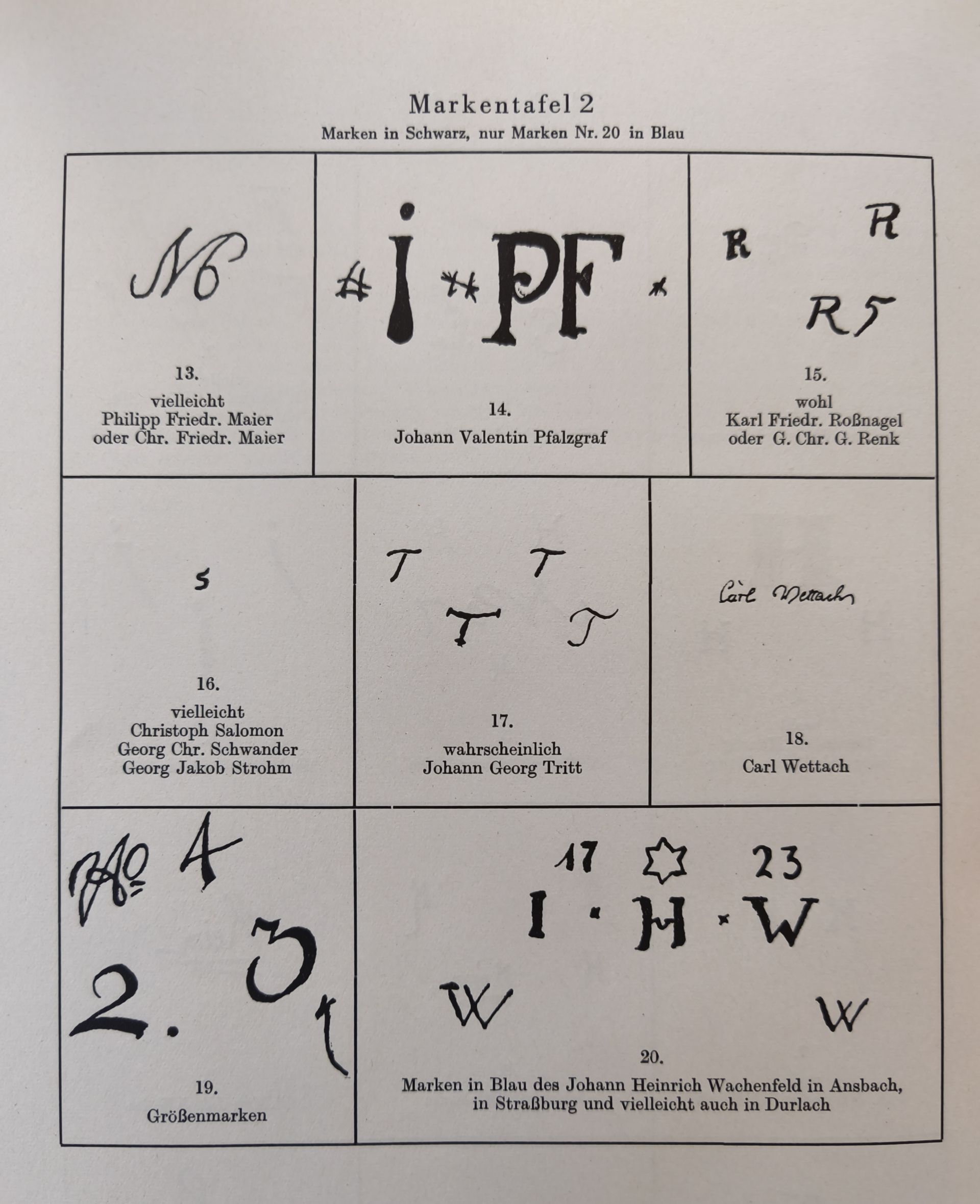
Hauger, Otto. Durlacher Fayencen: ein Beitrag zur Geschichte der deutschen Keramik. G. Braun, Karlsruhe, 1951
Seite 78
The faience dish and the teapot in camaïeu vert produced around 1775 represent the Durlach manufactory’s outstanding technical quality of glaze combined with the charm of its mostly green chinoiserie decoration.
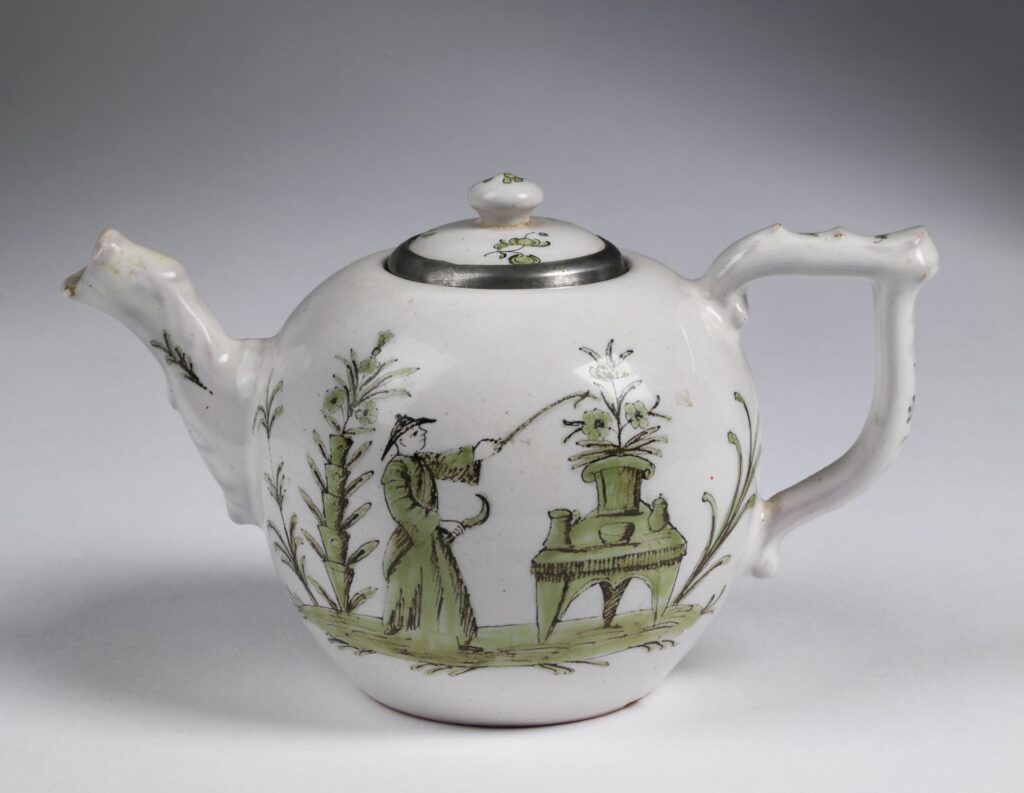
Camaïeu Vert as a Decorating Technique
The word camaïeu derives from French and describes the technique of painting in two or three tones of a single colour. When the single colour chosen is green, as in these pieces, one speaks of camaïeu vert.
This elegant technique represented ornamental delicacy of Chinoiserie topics on 18th-century European faience.
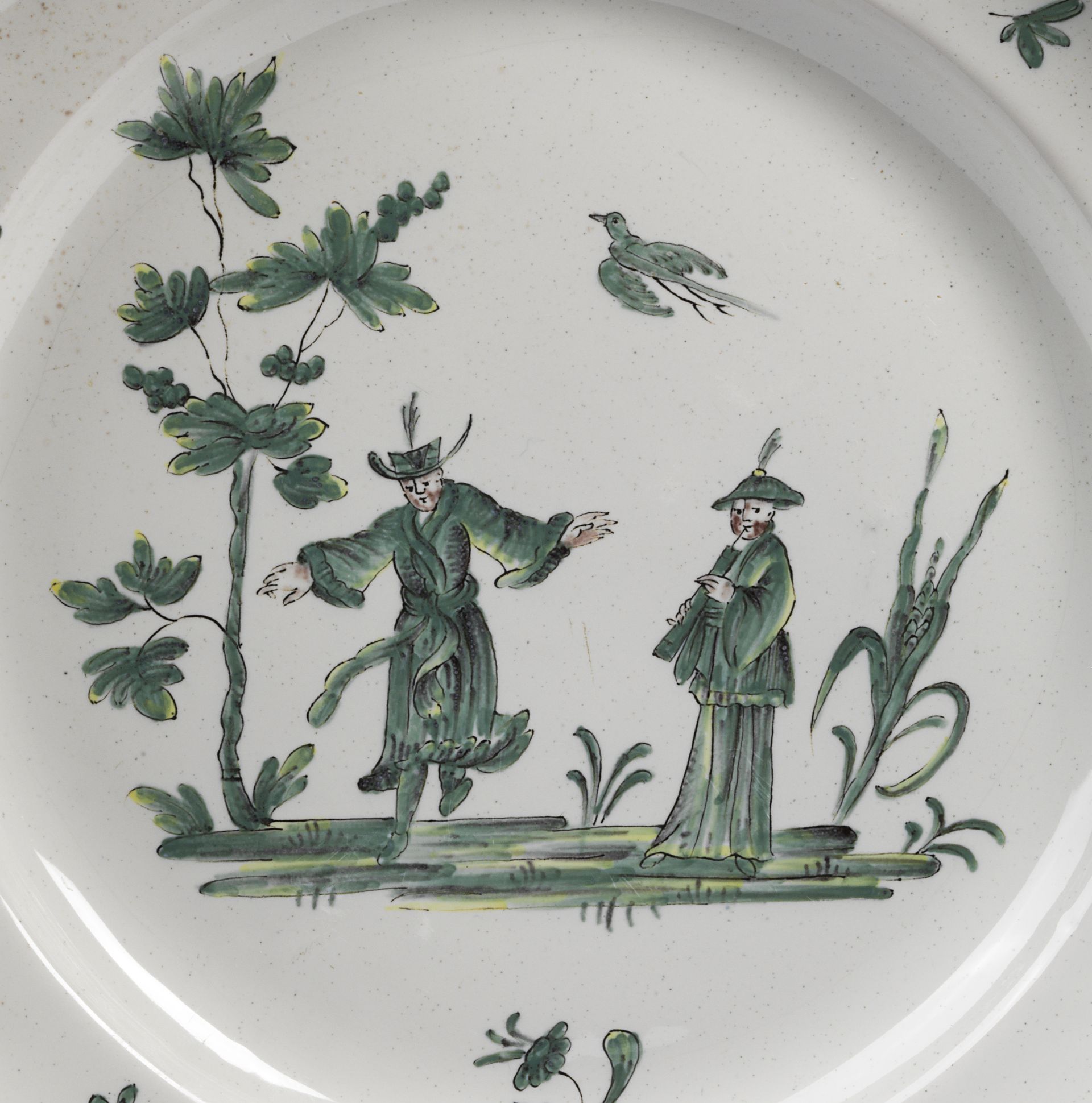
Camaïeu vert is a high-fired technique on faience. On this particular object Seladon Green based on iron oxide (Fe₂O₃) is applied to the raw glaze and fused in the kiln at temperatures of around 1,000°C.
An outline with very dark manganese and varied dilutions of the green pigment create shadow and light.
The green monochrome had flourished in French faience workshops of Moustiers and Marseille produced celebrated camaïeu vert pieces. Durlach, with its strong connections to the French manufacturing tradition through figures like Cuny, were inspired by this example. The renown Durlach shiny glaze met elegantly with the Camaïeu technique.
Museum Reference Object Badisches Landesmuseum Karlsruhe
The primary collection of Durlach faience is held by the Badisches Landesmuseum Karlsruhe, which possesses over 500 documented pieces and published the fundamental catalogue Durlacher Fayencen 1723–1847 (1975). The museum’s online catalogue, is accessible at:
katalog.landesmuseum.de — Durlach Fayencen
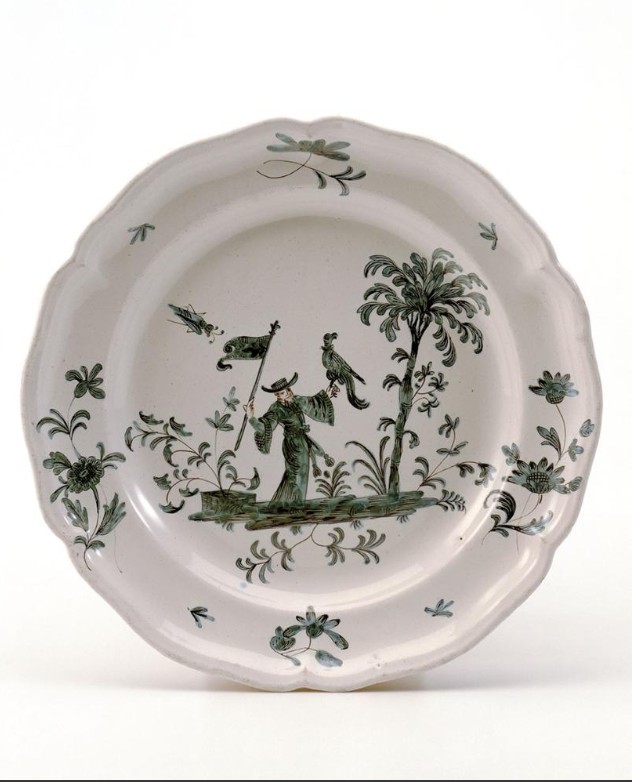
Inventarnummer V 12449
Georg Christian Gabriel Renk (Fayencemalerin), Durlacher Fayencemanufaktur
Datierung um 1770-1775
Fayence, Scharffeuerfarbe
Durchmesser: 25 cm (Gesamt)
Durchmesser: 16.5 cm (Spiegel )
Breite: 3.7 cm (Fahne )
https://katalog.landesmuseum.de/object/534D24474EA24DAD3625CF822546E357-teller-mit-chinoiserie
German description of the object by the museum: Der Teller hat einen runden Fond und eine aufgebogene, sechspassig geschweifte Fahne mit gekehltem Rand. Die Motive sind in Schwarz linear gezeichnet und mit den Farben Blaugrün bis Graublau gemalt. Der Teller trägt an der Unterseite in Schwarz die Malermarke „R“. Mit dieser Marke wird Georg Christian Gabriel Renk (1748-1816) identifiziert, der seit etwa 1770 bis 1815 in der Durlacher Fayencefabrik tätig war. Renk gilt unter anderem als Maler von Chinesen-Darstellungen und von ostasiatisch beeinflussten Blumen mit schraffierten Blütenstempeln.
Literatur: Durlacher Fayencen 1723-1847 ; Ausstellungskatalog des Badischen Landesmuseums Karlsruhe ; Karlsruhe 1975 ; S. 132, Nr. 67, Abb., S. 440 f. (Markentafel 101).
Museum Deutscher Fayencen Schloss Höchstädt – Reference Object
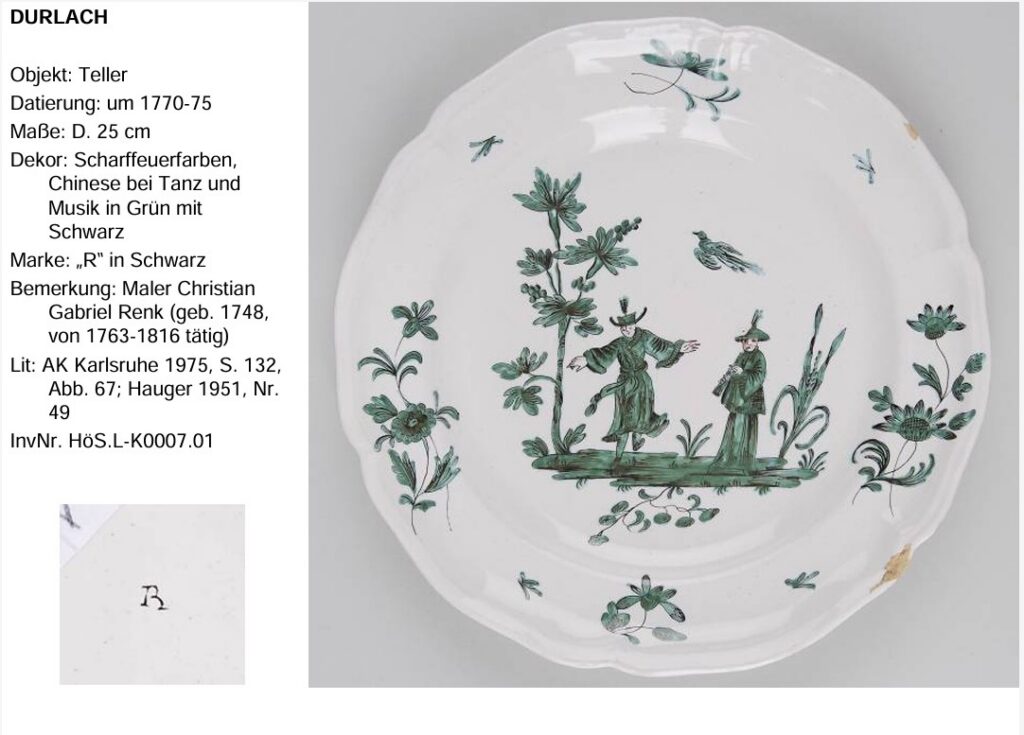
Inspiration: Engravings by Elias Baeck (1679 – 1747) Augsburg Painter and Engraver
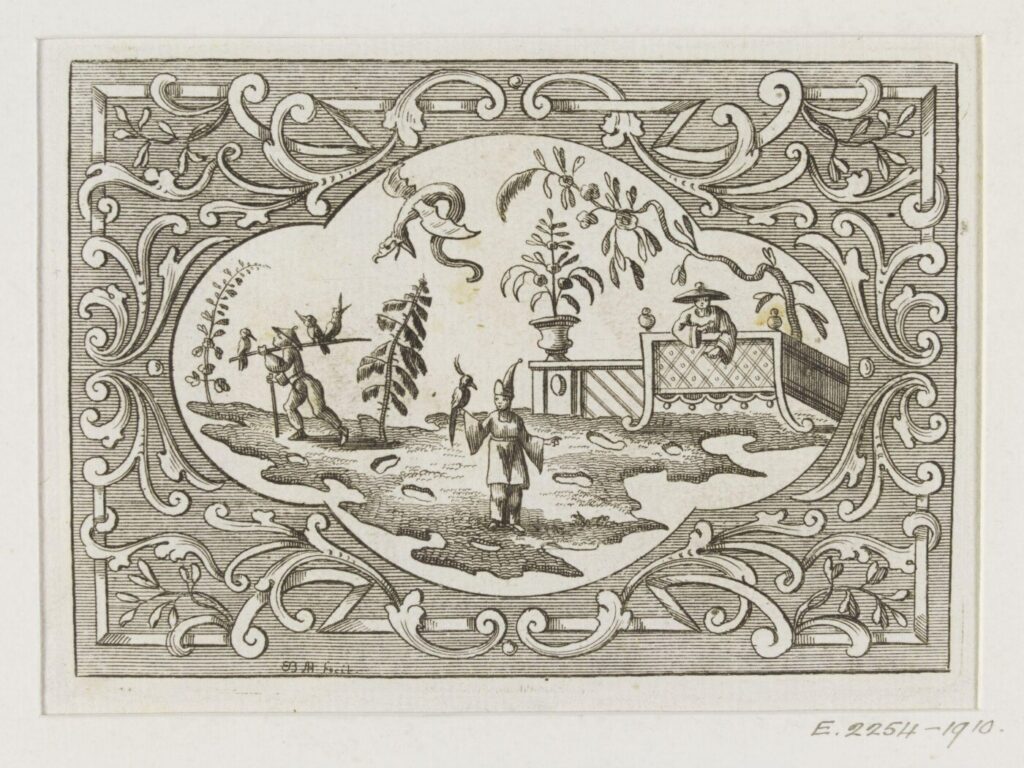
One of a set of 8 designs for lids of boxes with an ornamental border containing landscapes and figures in Chinese style; engraving by Elias Baeck, Heldenmuth copyright V+A London
https://collections.vam.ac.uk/item/O783157/print-baeck-elias
Literature
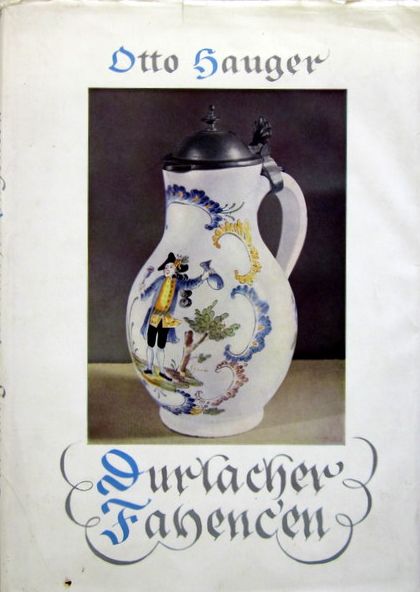
Hauger, Otto. Durlacher Fayencen: ein Beitrag zur Geschichte der deutschen Keramik. G. Braun, Karlsruhe, 1951.
The standard monograph on the manufactory, with nearly 100 illustrations. Currently the most complete study of the factory’s output and history.
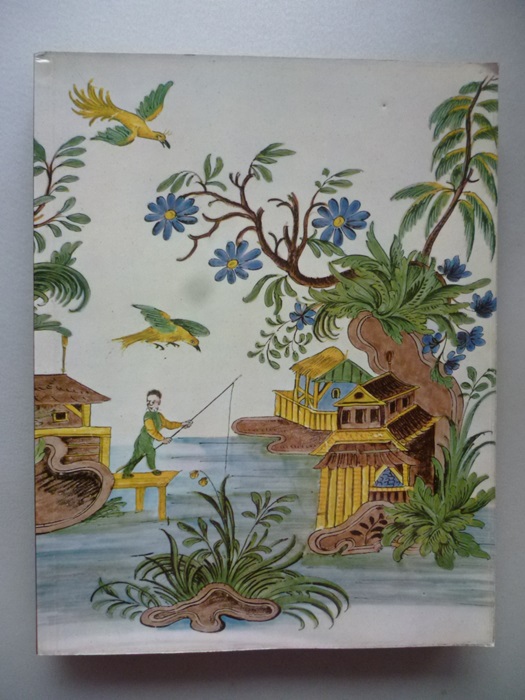
Durlacher Fayencen : 1723 – 1847 Badisches Landesmuseum Karlsruhe Ausstellung vom 20. Juni – 28. Sept. 1975
Petrasch, E., Franzius, W., & SALABOVA, M.
A survey of the artistic output of the faience factory which was founded in 1723 by the Markgrave Karl Wilhelm von Baden-Durlach.
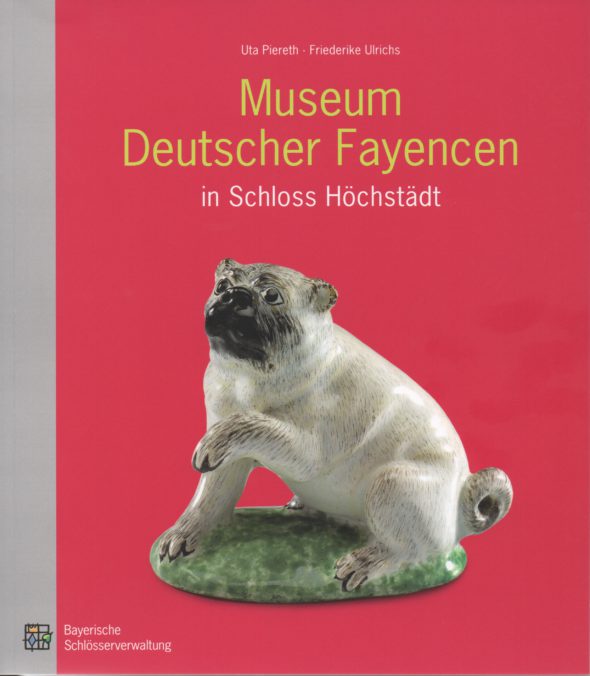
Museum deutscher Fayencen Schloss Höchstädt
Autoren: Uta Piereth Friederike Ulrichs
Bayerische Schlösserverwaltung, 2010
With over 1,000 exhibits from 58 manufacturers, the collection of German faience at Höchstädt Castle is one of the largest and most important in Europe.
Further readings: Chinoiserie in 18th-Century Europe
Very intersting article on this topic at the Victoria and Albert Museum London: https://www.vam.ac.uk/articles/chinoiserie-an-introduction
People had long been fascinated by the exotic nature of luxury products, such as porcelain, silk and lacquerware, that had been flowing into Europe from East Asia since the early 16th century.
Chinoiserie is characterised by a number of frequently occurring motifs. In 18th-century Britain, China seemed a mysterious, faraway place. Although trade between the two countries had increased over the 17th and 18th centuries, access to China was still restricted and there were few first-hand experiences of the country. Chinoiserie drew on these exotic, mysterious preconceptions. Objects featured fantastic landscapes with fanciful pavilions, sweeping lines of the roofs of Chinese pagodas, fabulous birds and figures in Chinese clothes. Sometimes these figures were copied directly from Chinese objects, but more frequently they originated in the designer’s imagination. (Source Victoria + Albert Museum London – Chinoiserie – an introduction)


