Cobalt Blue Raeren Armorial Stoneware


Raeren Armorial Stoneware Jug dated 1592
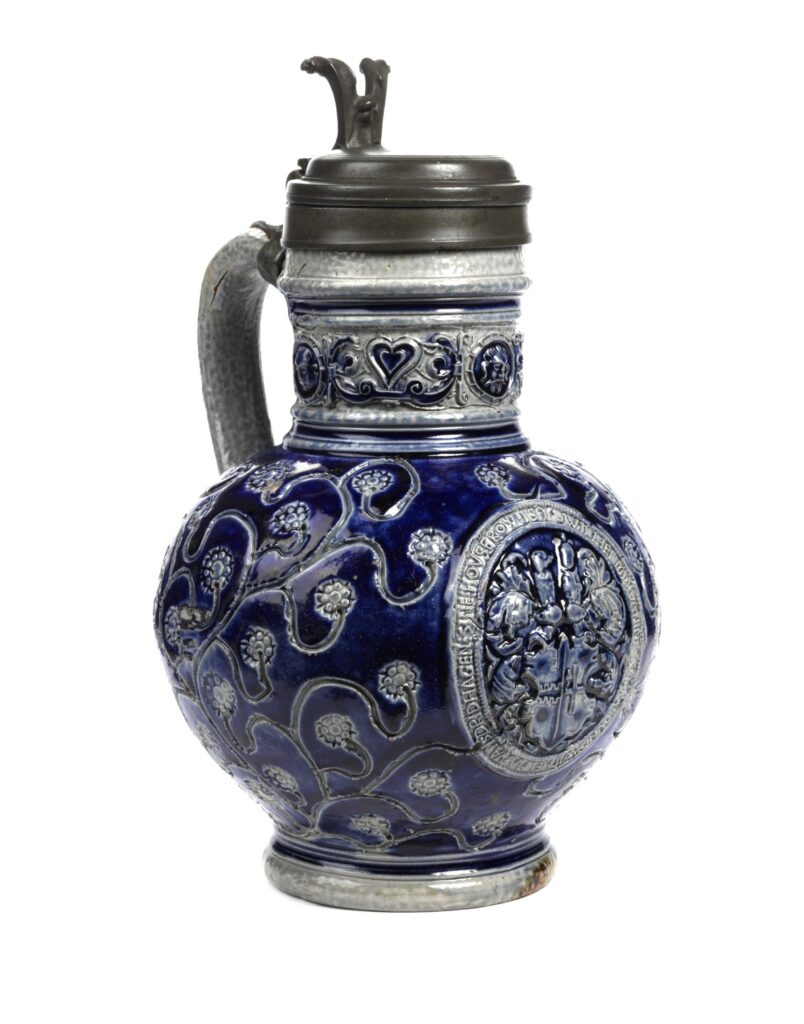
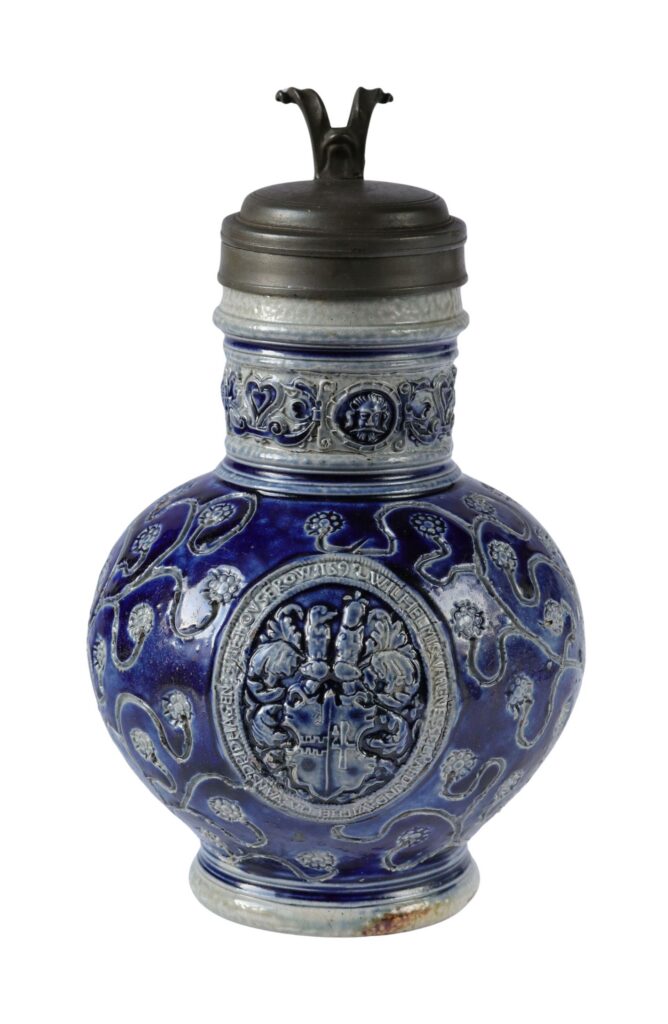
workshop Jan Baldems Mennicken, H. 23 cm
Arms of Wilhelm von Nesselrode und Wilhelma von Strithagen seine Hausfrau
Raeren cobaltblue and grey saltglazed stoneware was elaborately developed by Jan Emens Mennicken ca. 1582 – 1591. Jan Baldems belonged to the extensive family of the Mennickens, who dominated Raeren pottery at least from the second half of the 16th century onwards. He led the Raeren artisans into the new Baroque period. Jan Baldems Mennicken (1577–1613) continued the work of Jan Emens within his workshop and was henceforth regarded as the leading master and finest exponent of the fully mature late style of Raeren.
Source: Otto von Falke, Das Rheinische Steinzeug, Berlin 1908, Volume 2, pp. 6 ff.
Töpfereimuseum Raeren Documentation of Arms
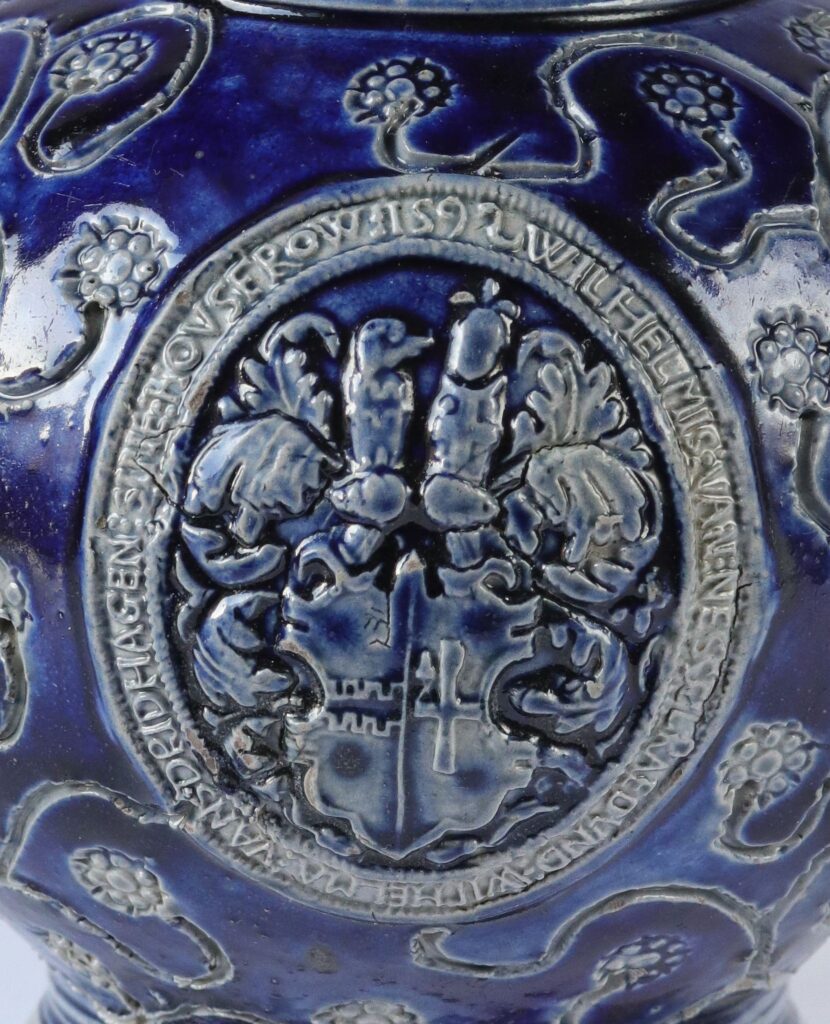
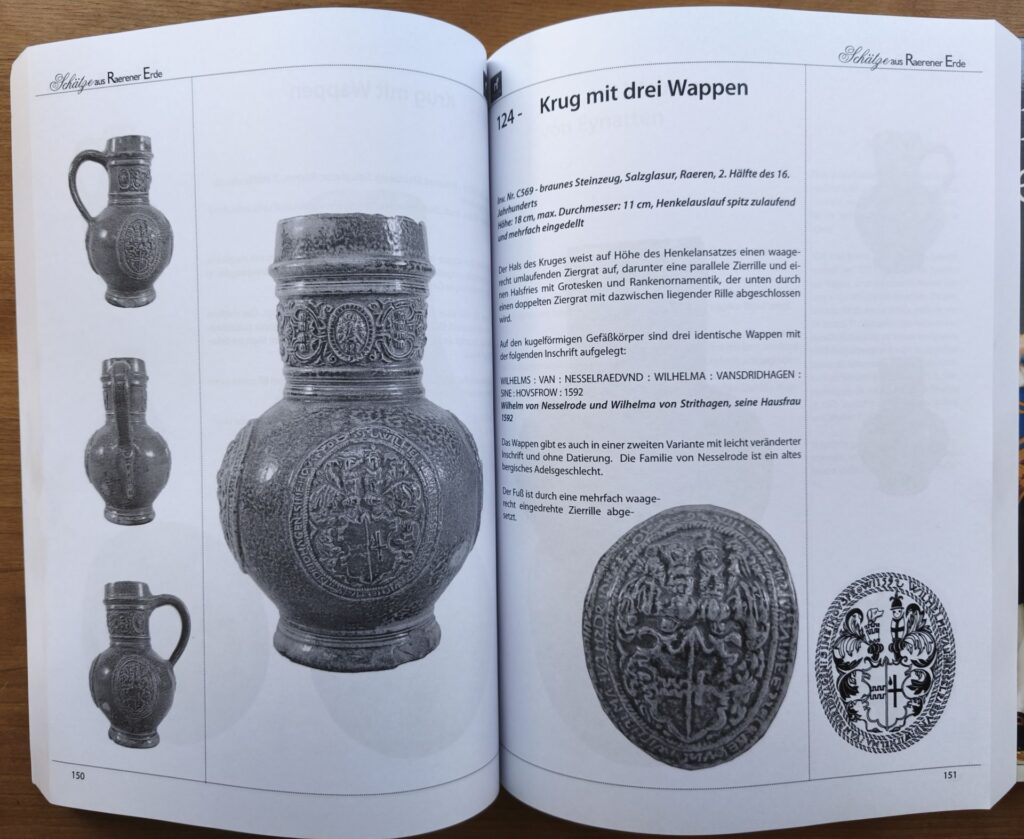
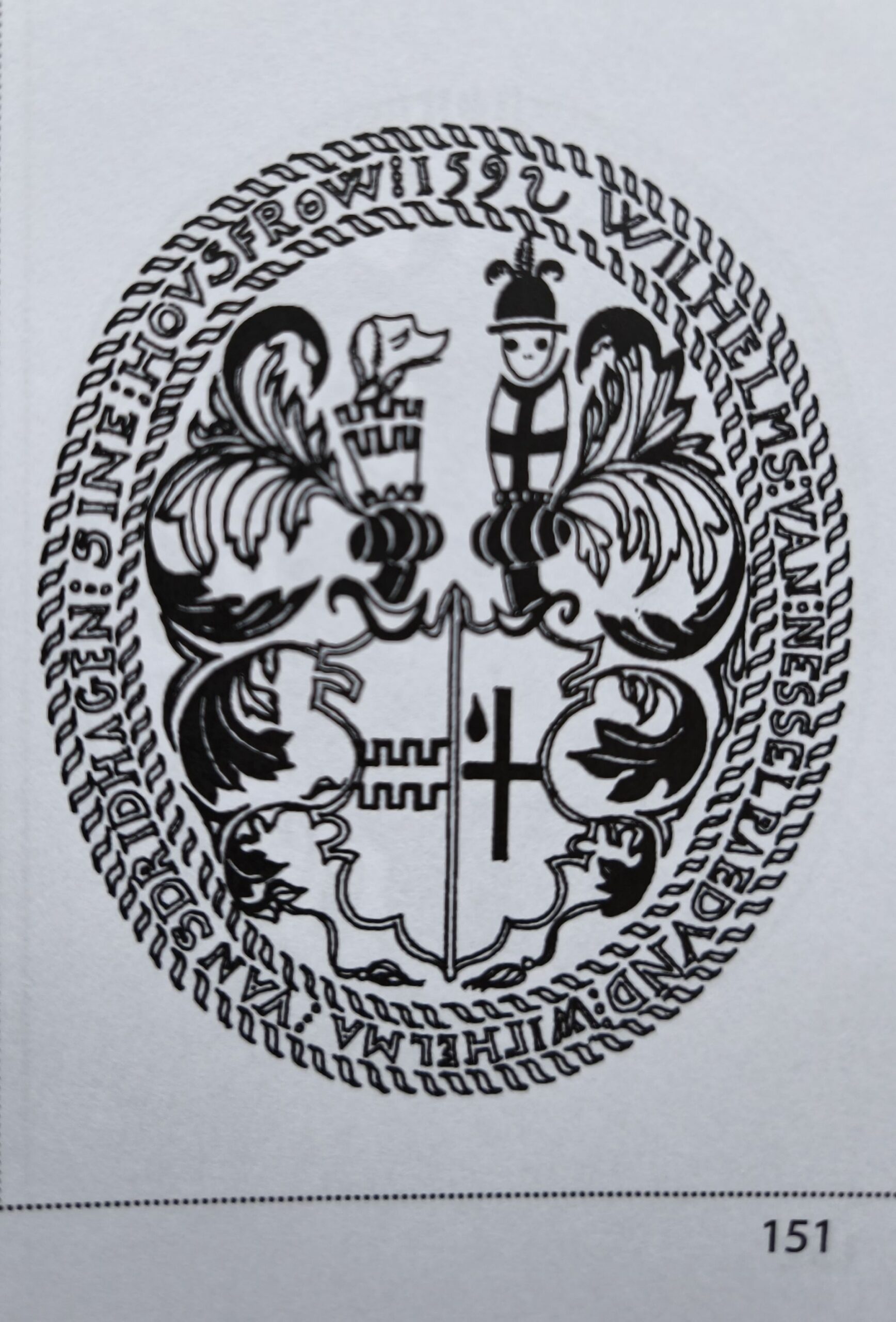
WILHELMS: VAN NESSELRAEDVND: WILHELMA: VANSDRIDHAGEN: SINE: HOVSFROW
Arms of Wilhelm von Nesselrode und Wilhelma von Strithagen seine Hausfrau
Allianzwappen des Wilhelm von Nesselrode zu Munts und Wilhelma von Strithagen, seine eheliche Hausfrau
MENNICKEN, Ralph. Schätze aus Raerener Erde. Katalog des Raerener Steinzeug aus dem Hetjens-Museum Deutsches Keramikmuseum Düsseldorf, 2009. Page 151
link to online documentation of Wappen 0183 Töpfereimuseum Raeren
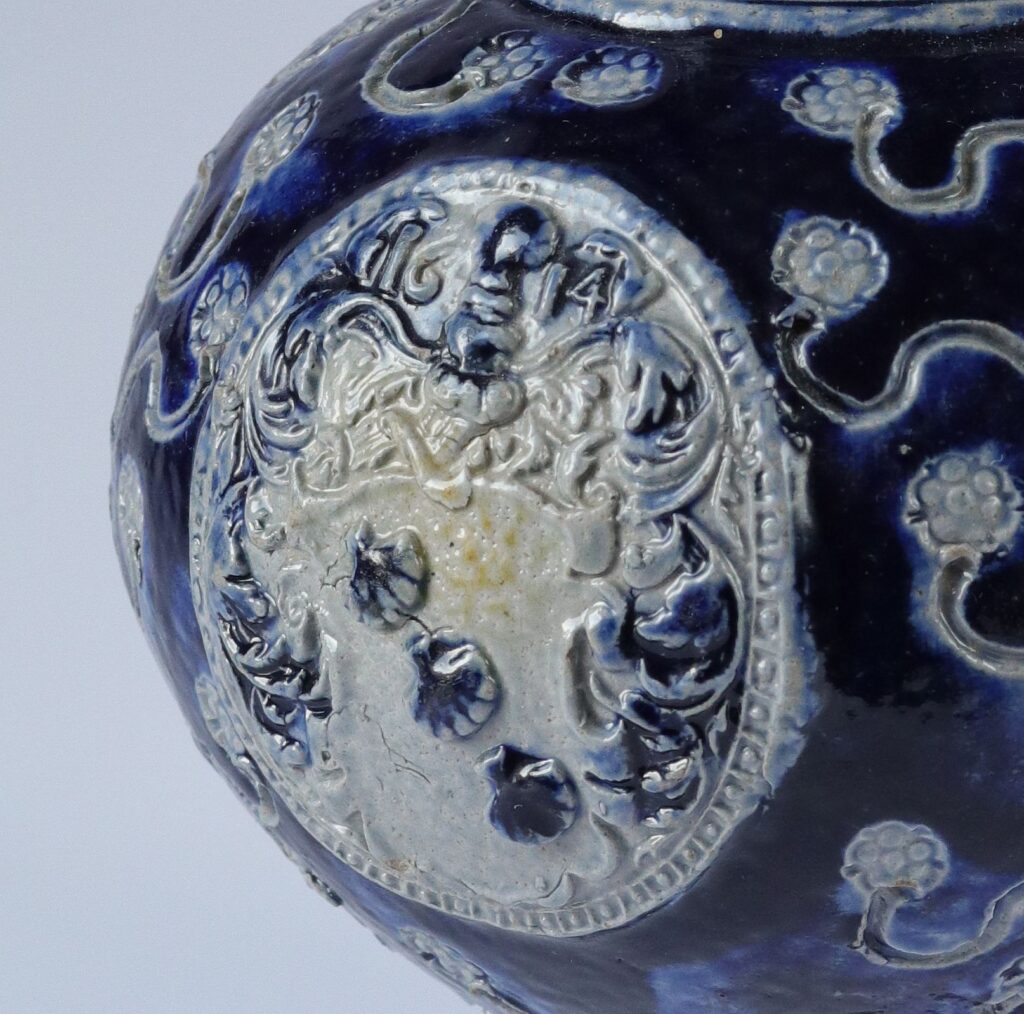
Raeren Armorial Stoneware Jug dated 1614
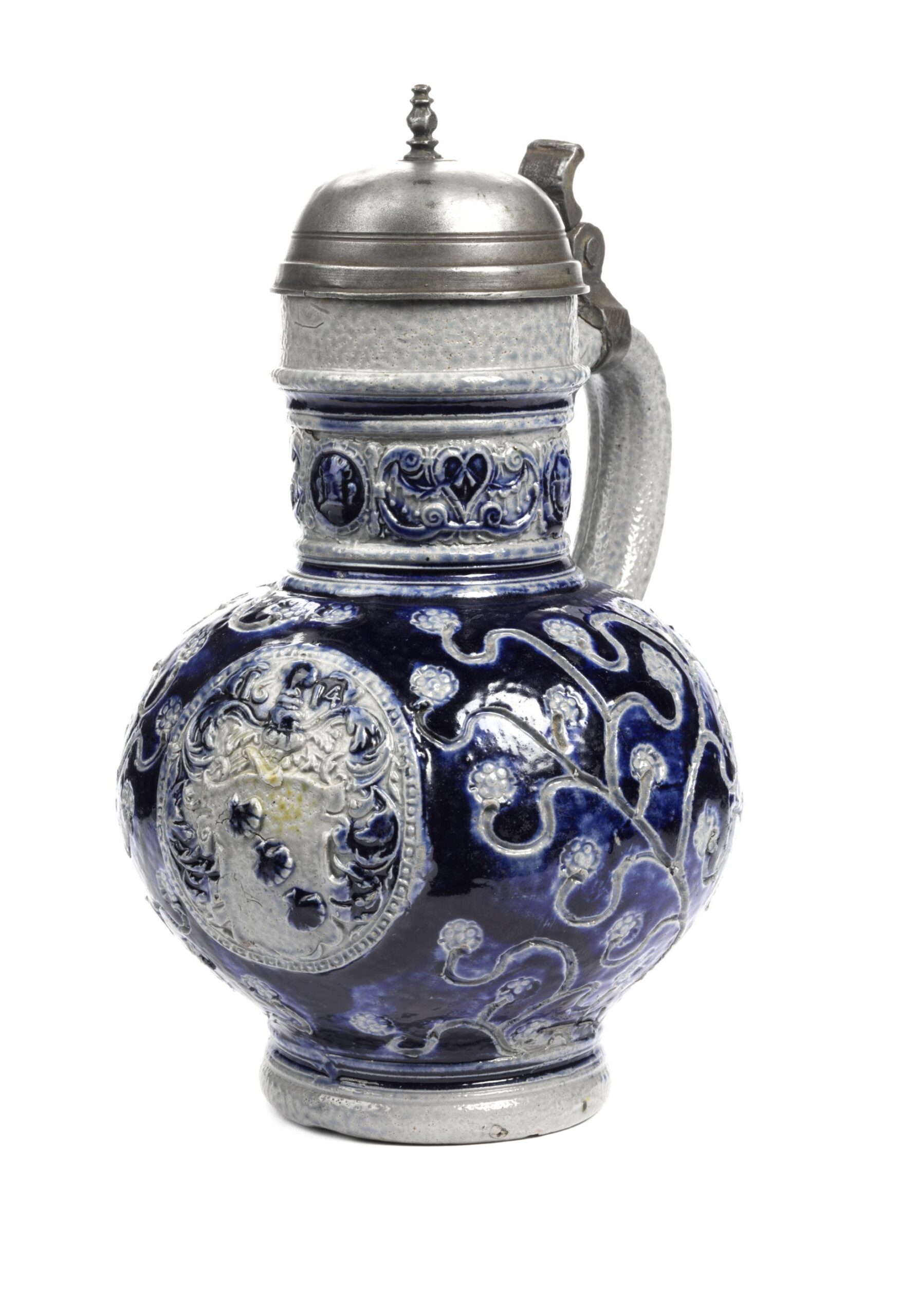
Raeren Stoneware Jug dated 1614, incised, stamped and applied moulded decoration workshop Jan Baldems Mennicken,H. 20 cm
Coat of arms: Heinrich Stravius, canon at St. Lambert in Liège 1607-1626, Kohnemann, p. 27
Wooden stamps were used to imprint floral scrolls on the objects surface.
A very particular and recognizable style that enhances the grey stoneware colour through the cobalt glaze.
The workshop of of Jan Baldems Mennicken (Pottery maker 1577–1613)
brought this iconic design into the 17th century. (See Museum attributions below)
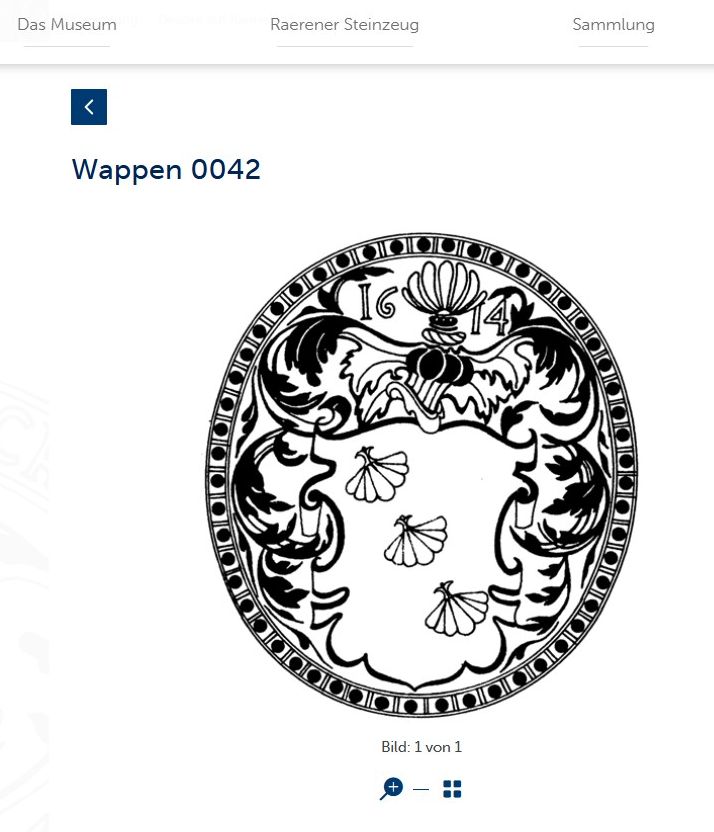
Töpfereimuseum Raeren Wappen 0042
Wappen mit drei Jakobsmuscheln
Heinrich Stravius (?) Kanoniker an St. Lambert in Lüttich 1607-1626, wird 1612 und 1626 als Kanonikus der Aachener Münsterkirche genannt, war apostolischer Protonotar und vertrat 1612 das Aachener Domkapitel bei der Krönung des Kaisers Mathias 1614
Rhenish Stoneware centers of the 16th and 17th century
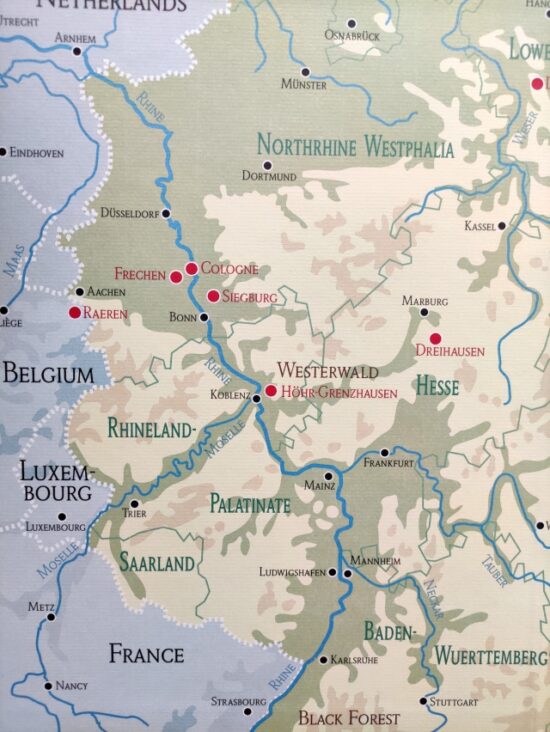
Raeren’s golden age beginning with the second 3rd of the 16th century produced a larger diversity of vessel types than Cologne or Siegburg ever attained.
There were steins with faces, three-handled steins, funnel-necked beakers, Schnellen, Pinten (pint mugs), Pullenbottles, Bartmannkrüge, puzzle jugs, ring steins, conical pint, mugs or apothecary jars, just to name a few.
The Thirty Years‘ War made it difficult to continue the production. As a result the best Raeren potters emigrated to the Westerwald which had now assumed the dominant position of Stoneware production in the 17th Century.
Source: Frühe Steinzeugkrüge aus der Sammlung Les Paul. Early Stoneware. Steins from Les Paul Collection. Beatrix Adler. Petersberg 2007
Museum Reference Objects:
Rijksmuseum Amsterdam
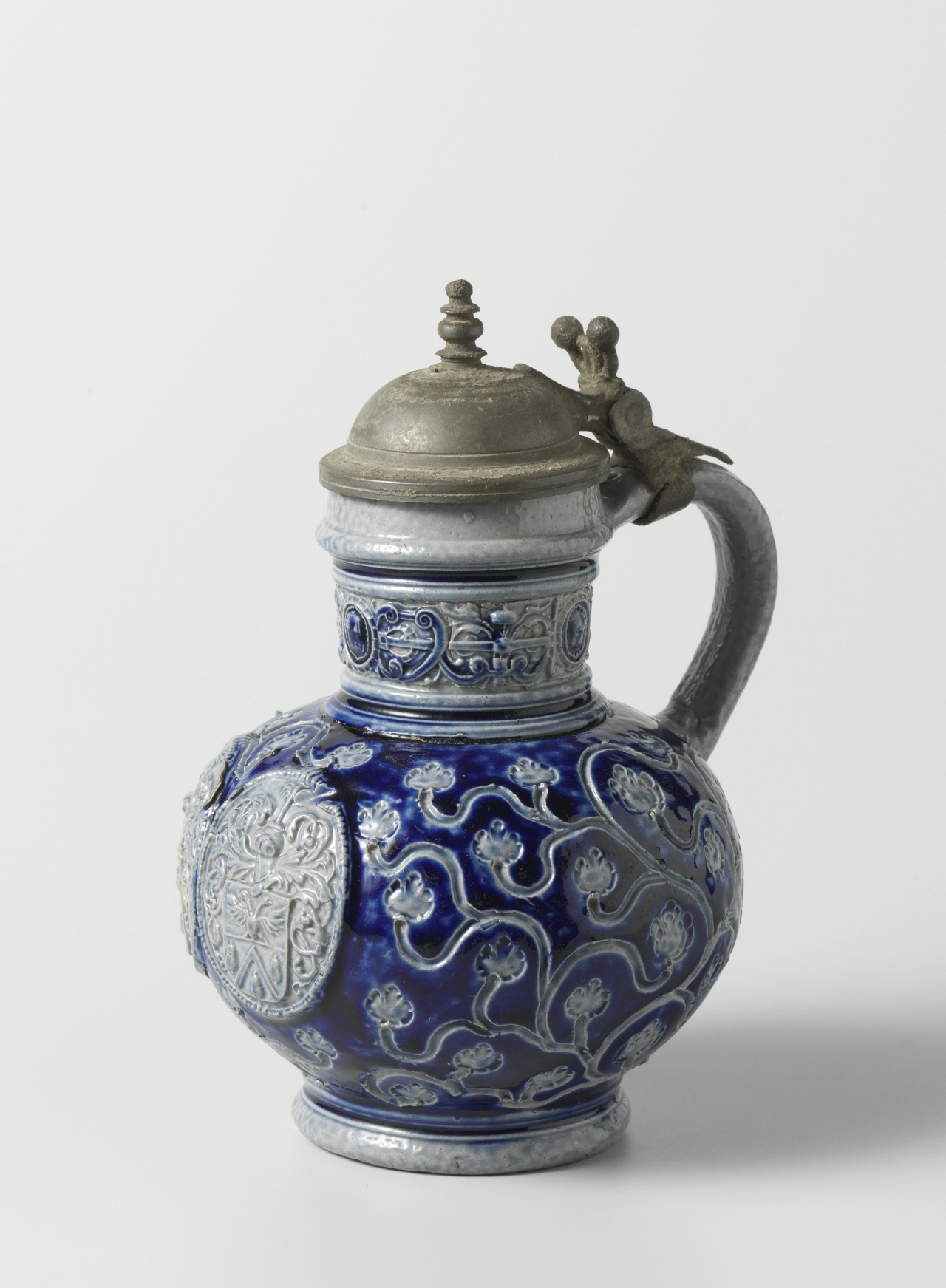
Raeren Stoneware Jug
Jug with coat of arms and floral scrolls, anonymous, c. 1595 – c. 1625
http://hdl.handle.net/10934/RM0001.COLLECT.19591
© Rijksmuseum, Amsterdam
Victoria & Albert Museum, London
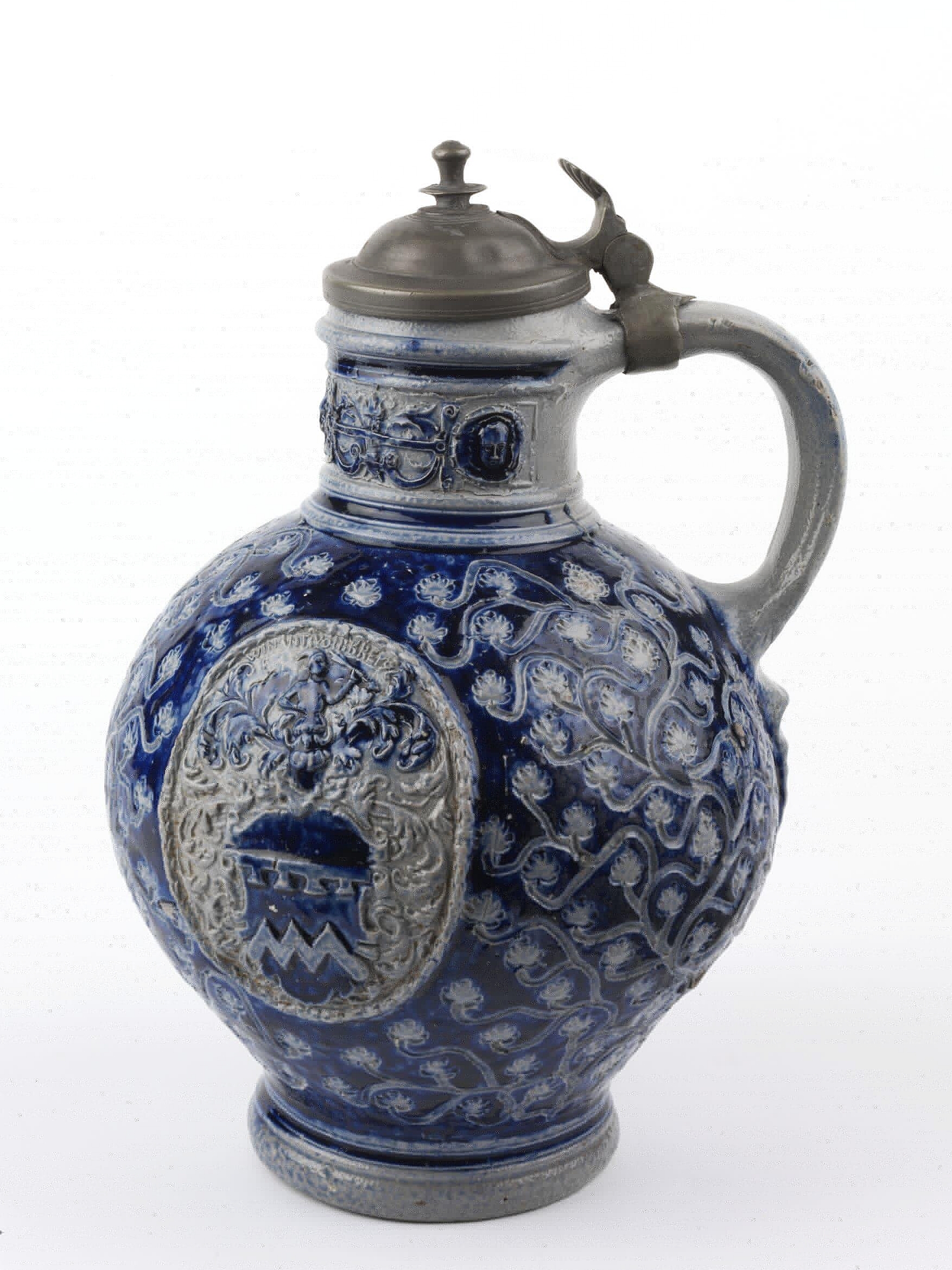
Raeren Stoneware Jug
Jug depicting the arms of Winant von Kreps of Westphalia
Workshop of Jan Baldems Mennicken, Raeren, Germany ca.1600
Stoneware with incised, stamped and applied moulded decoration
https://collections.vam.ac.uk/item/O161032/jug-mennicken-jan-baldems/
© Victoria and Albert Museum, London
Related Articles :
Cobalt Blue Raeren Stoneware – Peter Vogt Fayence und Steinzeug aus vier Jahrhunderten
Literature:
Das Rheinische Steinzeug Otto von Falke, Berlin 1908
Volume 2 S. 26 ff
https://archive.org/details/dasrheinischeste01falk
digital version of the book Volume 1 and 2 – Internet Archive
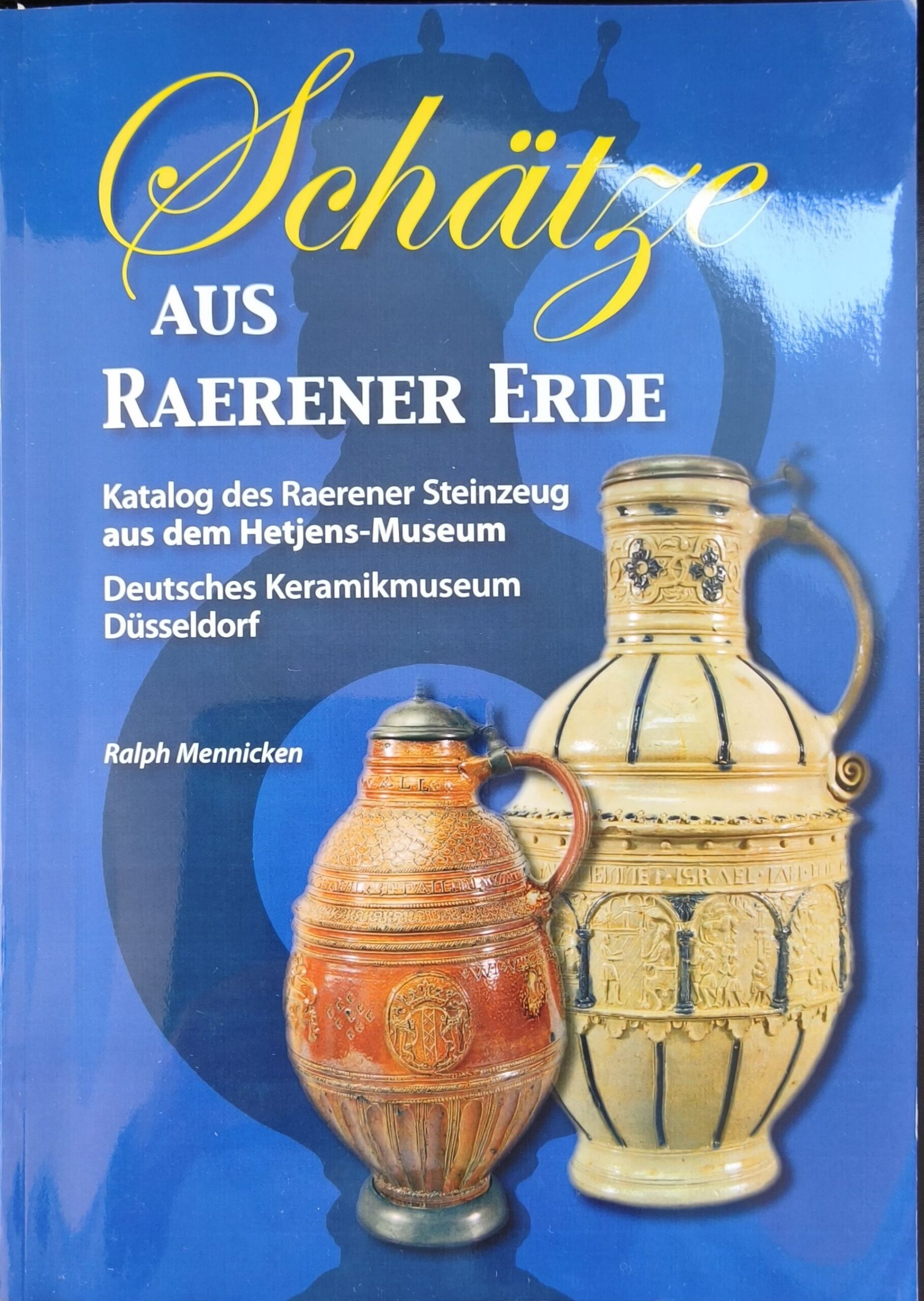
MENNICKEN, Ralph. Schätze aus Raerener Erde. Katalog des Raerener Steinzeug aus dem Hetjens-Museum Deutsches Keramikmuseum Düsseldorf, 2009.
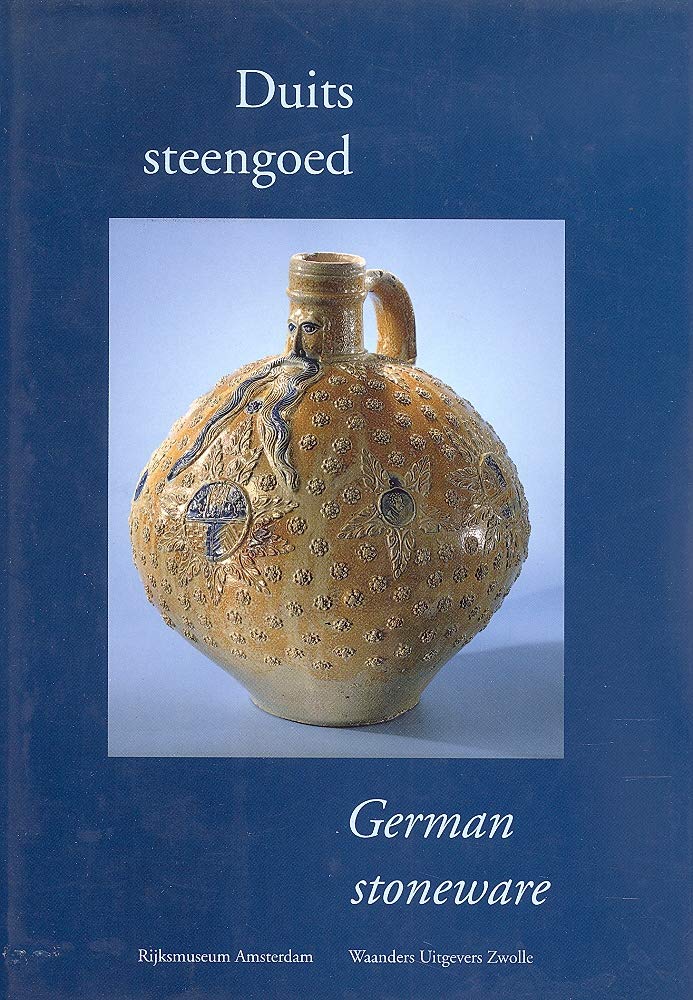
Duits steengoed (1996), Ekkart Klinge, Amsterdam Zwolle : Waanders , cop. 1996 Rijksmuseum Amsterdam
S. 29 – 39
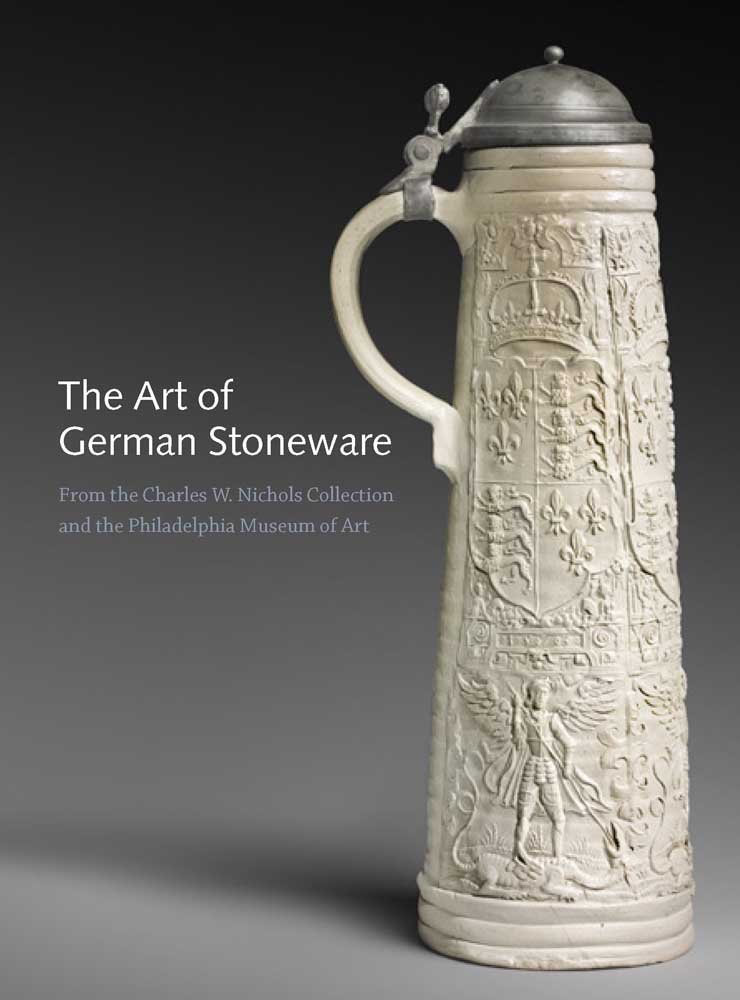
Hinton, J. (2012). The Art of German Stoneware, 1300-1900: From the Charles W. Nichols Collection and the Philadelphia Museum of Art. Philadelphia museum of art.


