Fayence aus der Werkstatt Thomas Obermillner Salzburg


Die Blaue Welle der Werkstatt Thomas Obermillner
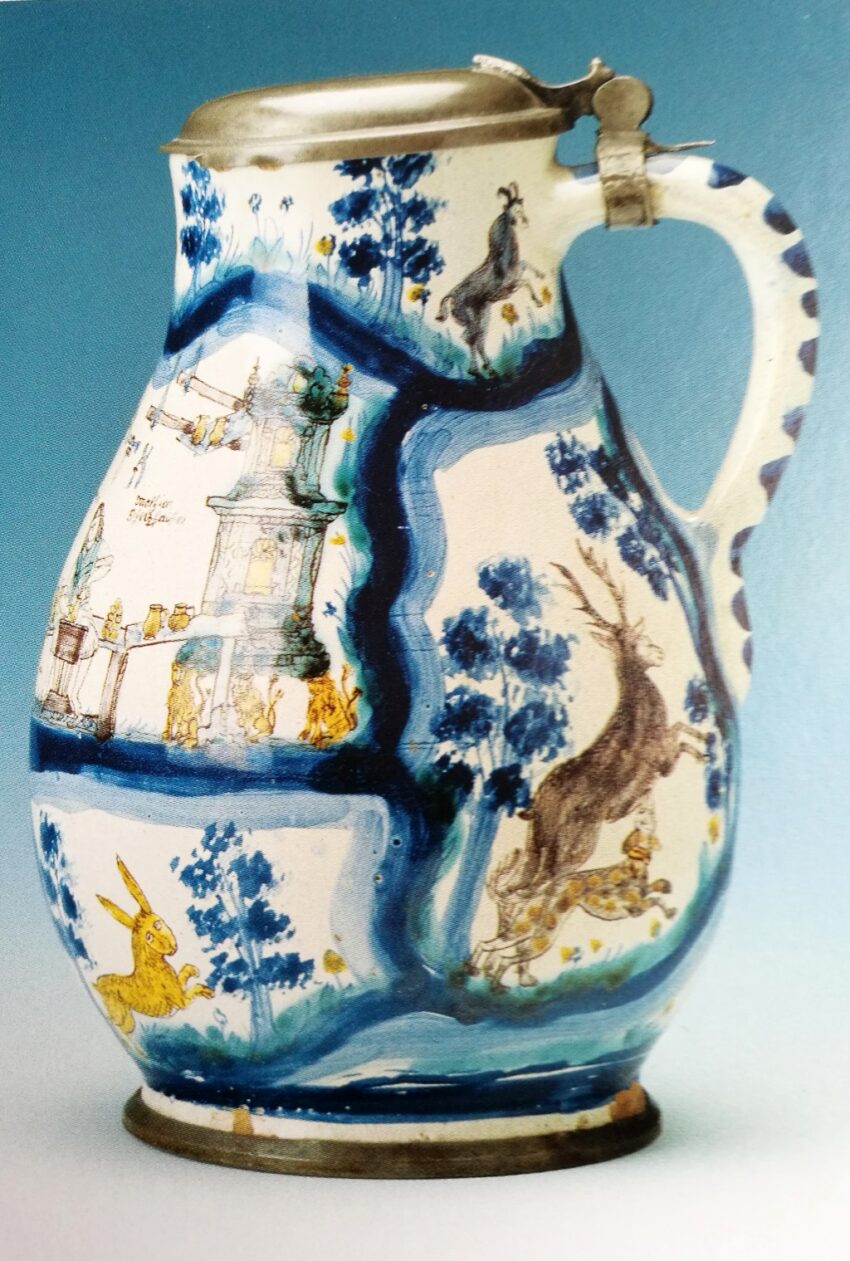
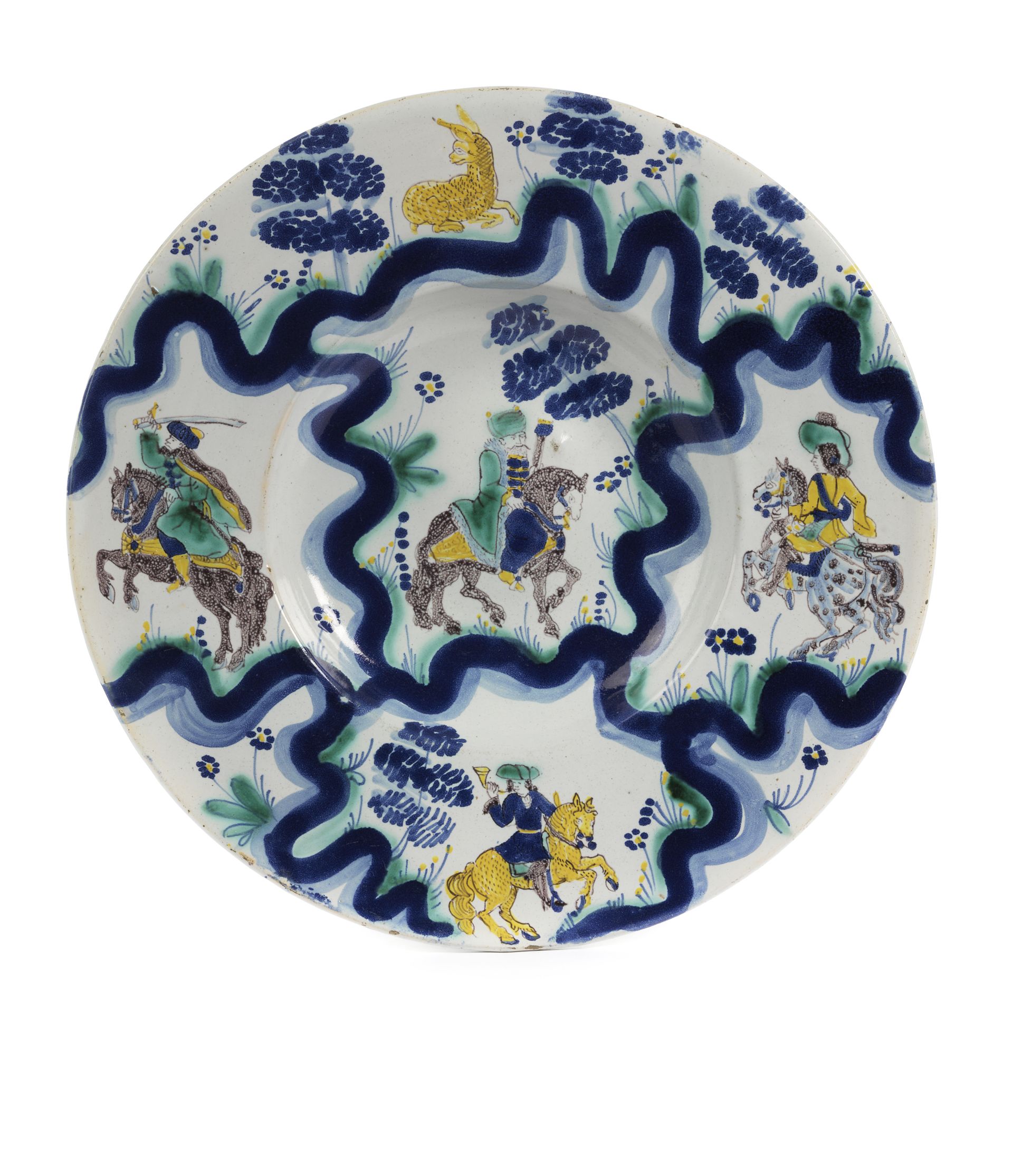
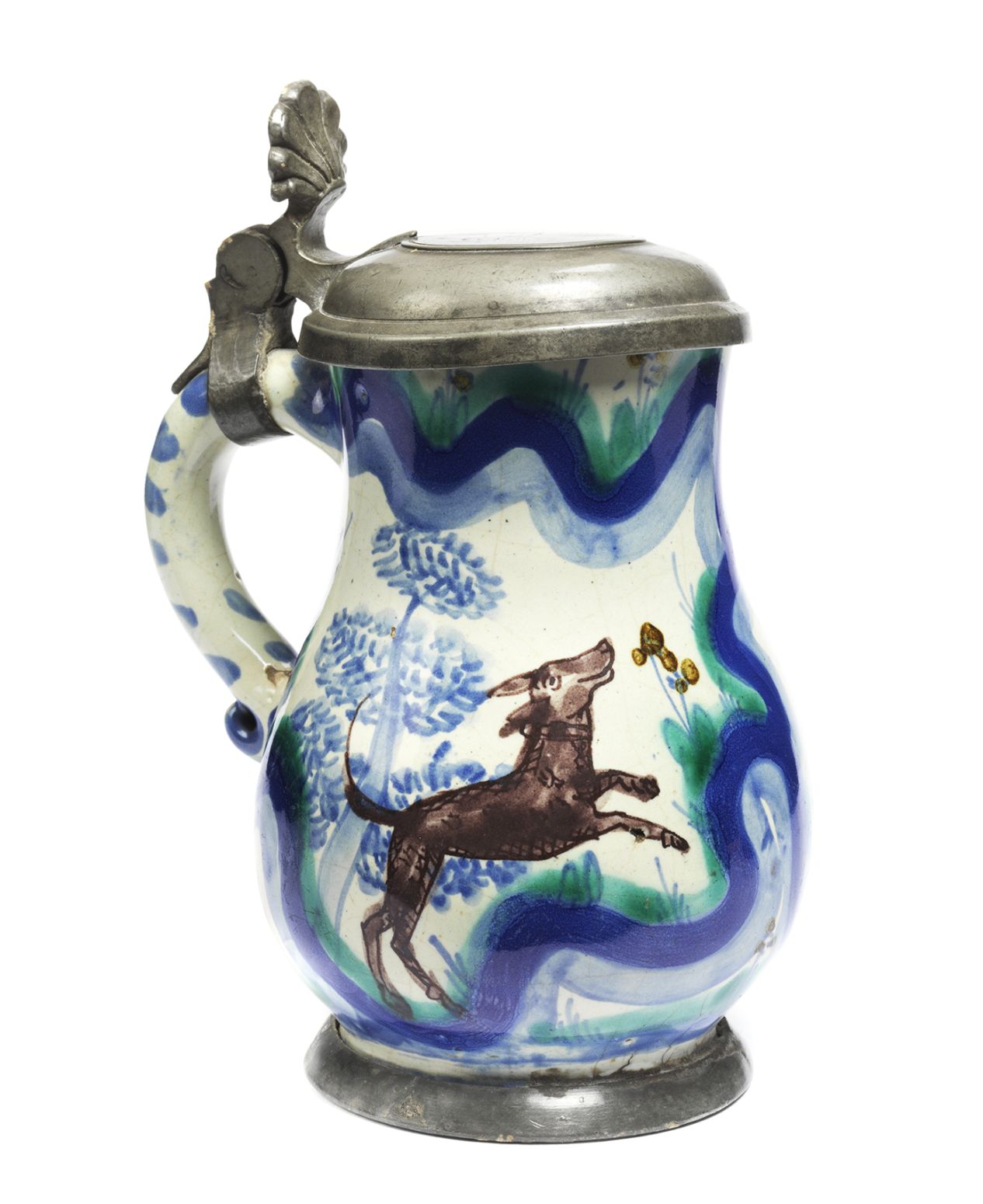
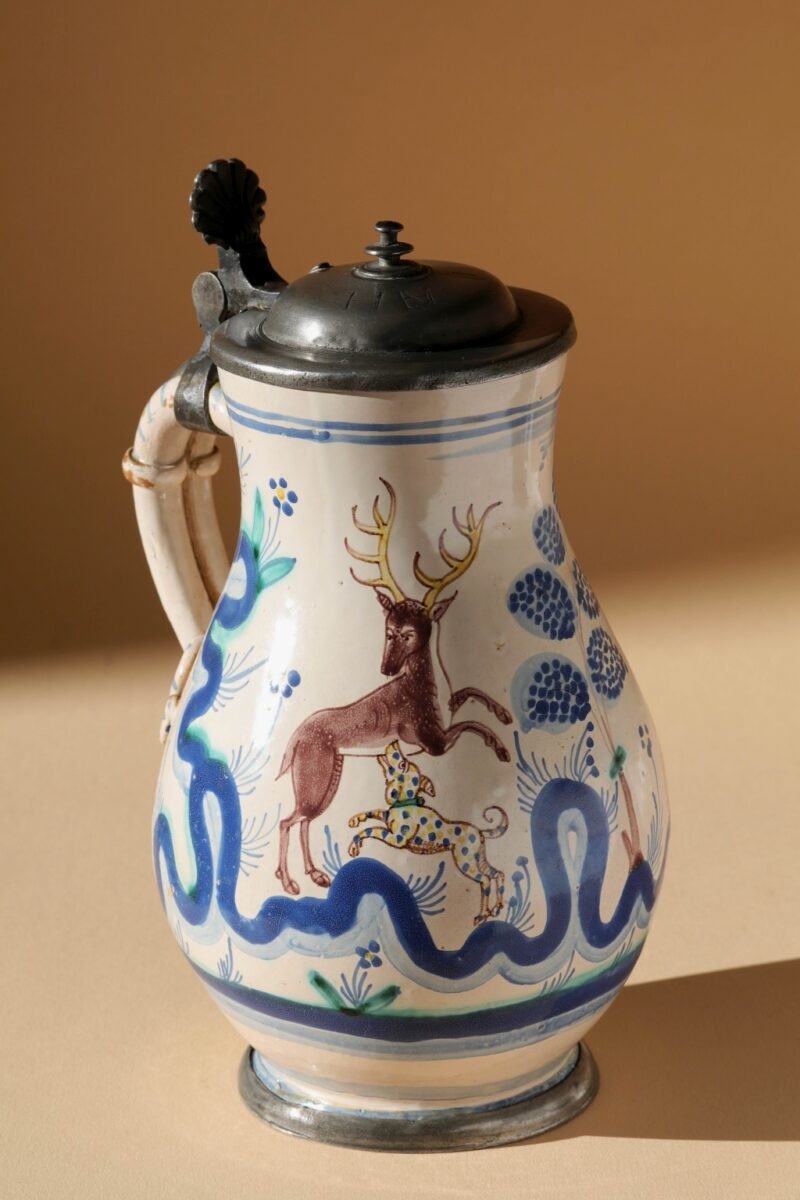
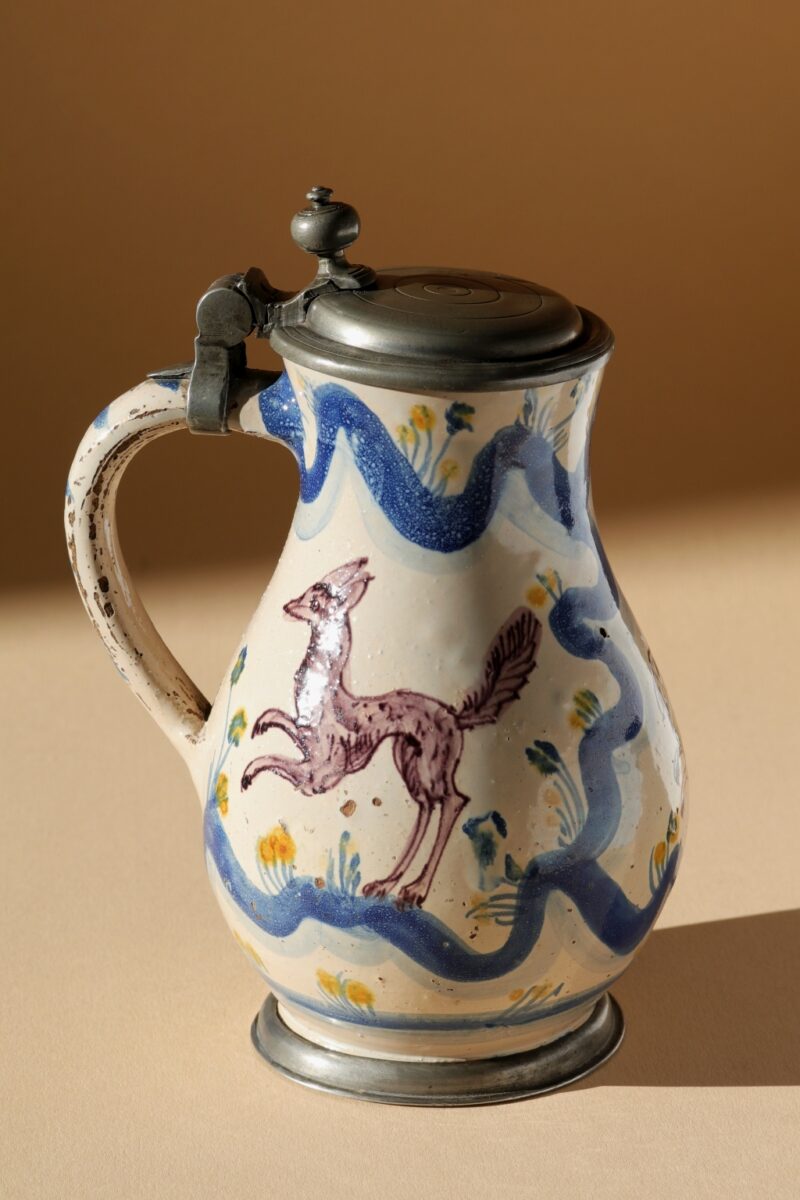
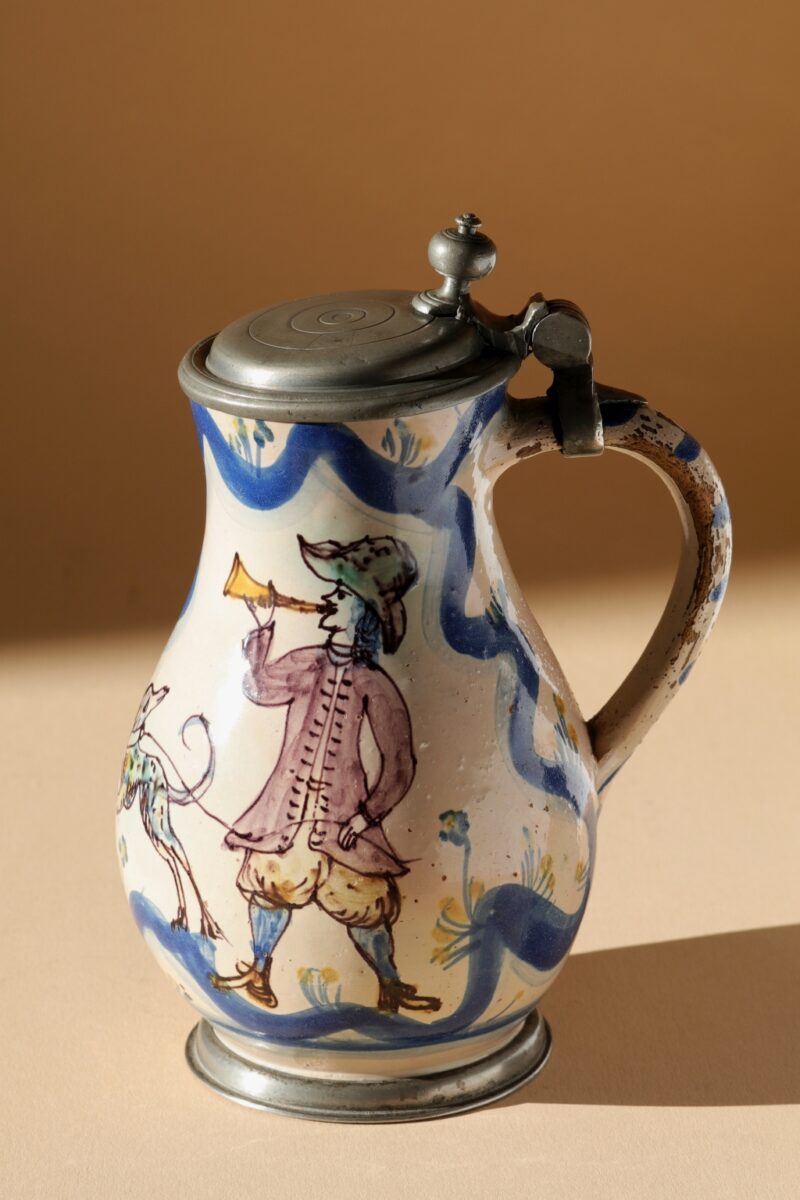
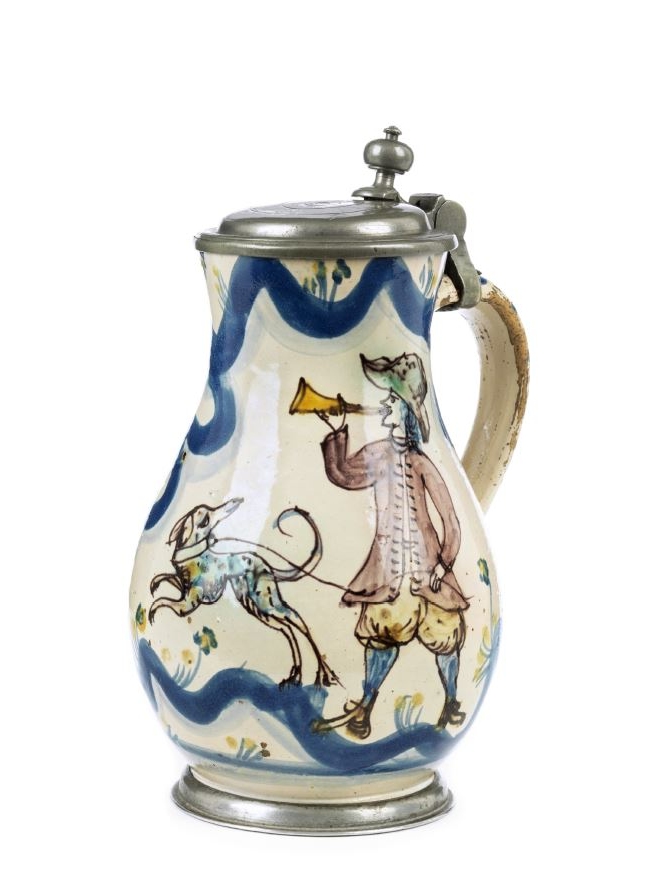
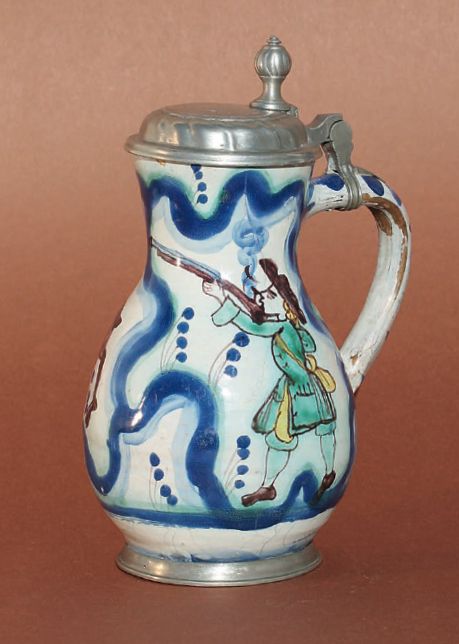
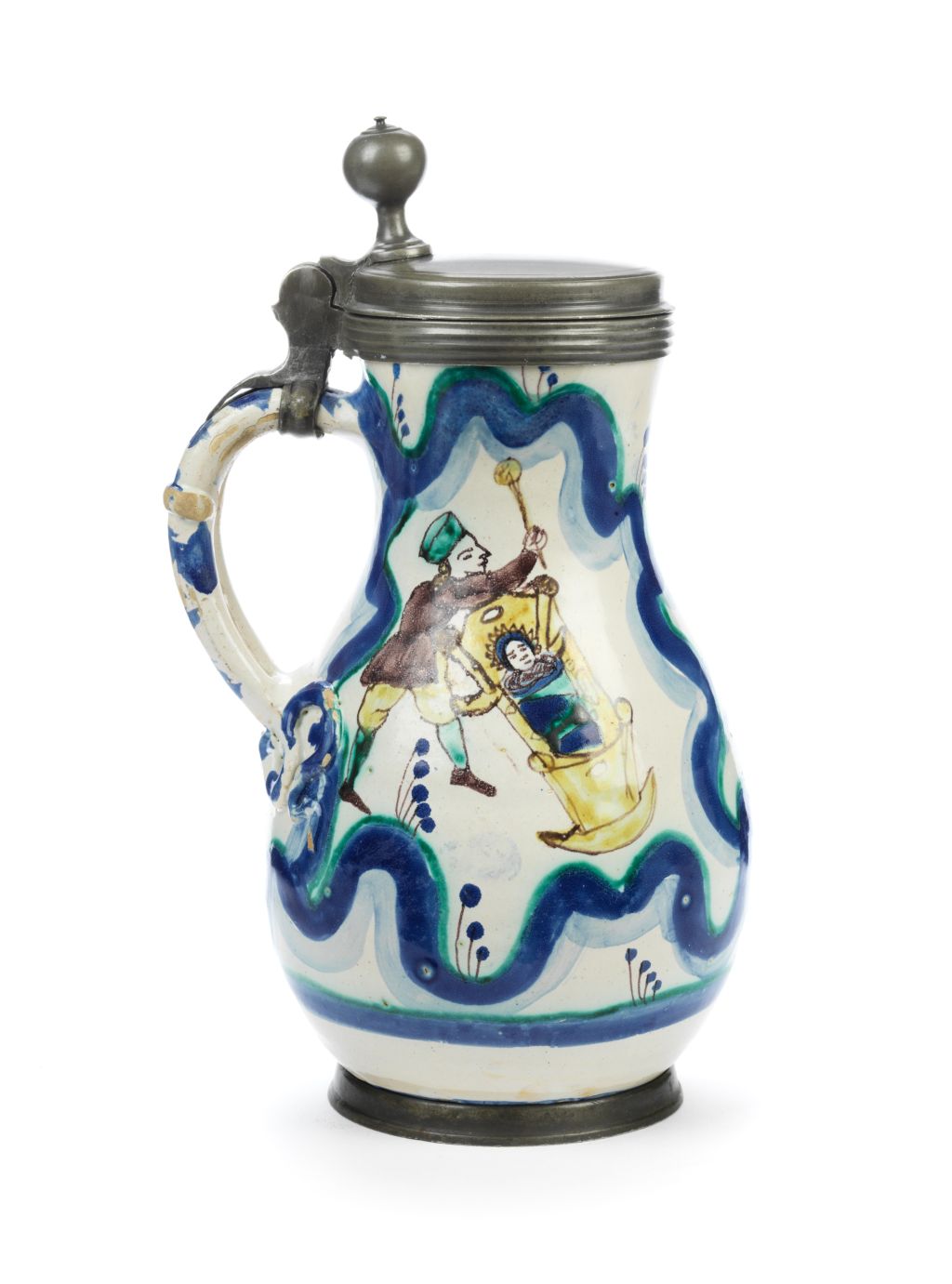
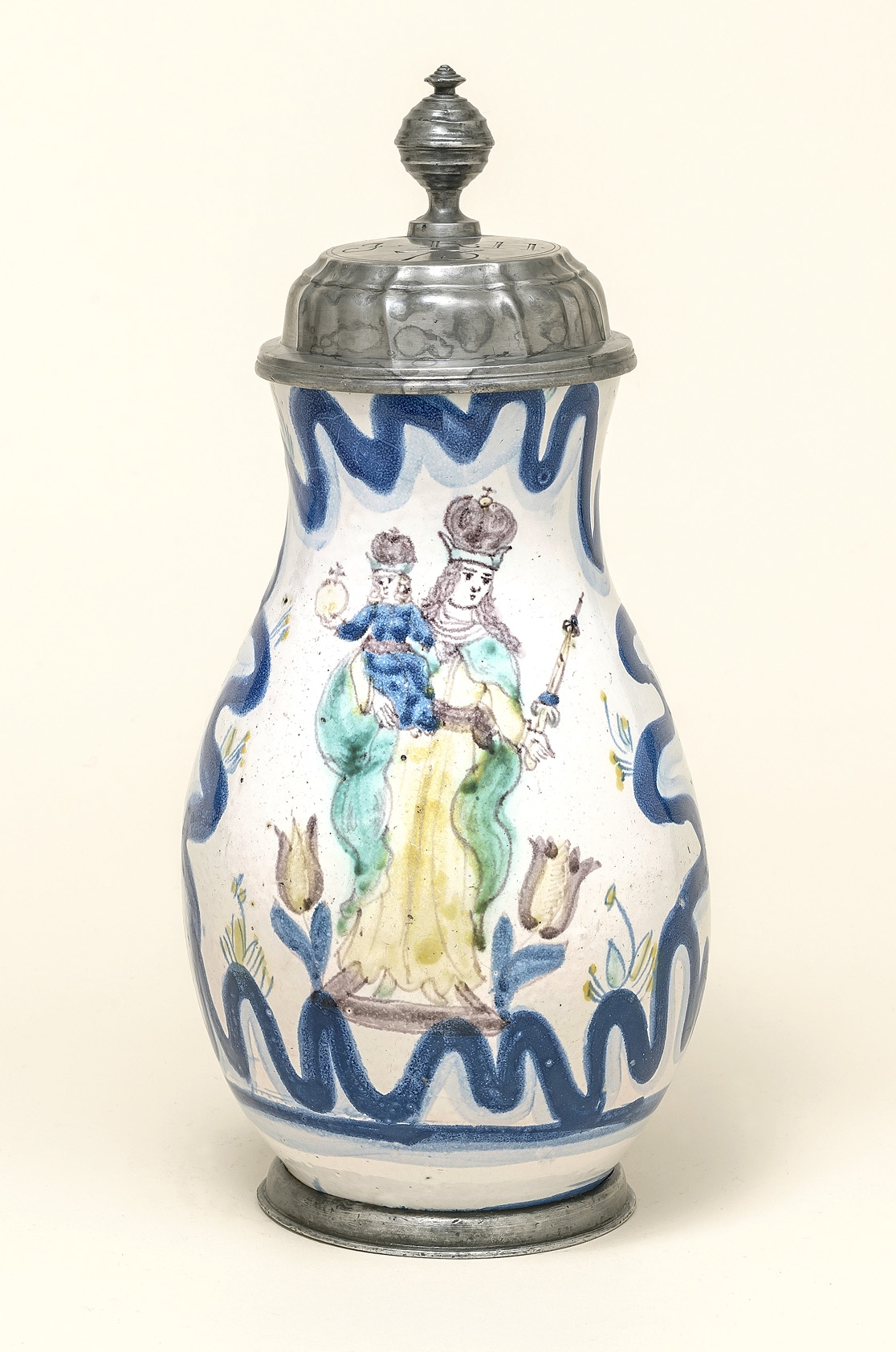
Das blaue Wellenband ist charakteristisch für die Werkstatt des Thomas Obermillner. Das dunkle Wellenband wird mit einem helleren Band konturiert. Dieses gliedert die Fläche in mehrere Bildfelder, die mit unterschiedlichen Motiven bemalt wurden.
Die Wellenband Geschirre aus der Werkstatt Obermillner sind eine singuläre Erscheinung. Keine andere bekannte europäische Keramik kennt das blaue Wellenband als Dekor. Die Wellenbänder sind Boden und Standfläche, sind Vegetationslinien für Gräser, bergiges Terrain für Ziegenböcke und vieles andere mehr. Die Krüge und Teller der Obermillner Werkstatt sind ideenreich und individuell gestaltet.
So erläutert Christa Svoboda im Ausstellungskatalog von 1999 die Besonderheiten der Fayencen aus der Obermillner Werkstatt.
Blaue Welle – grüne Flamme: Salzburger und Gmunder Fayencen 17.-19. Jahrhundert.
Aus der Sammlung des Carolino Augusteum Svoboda, Christa und Wolfram Morath (Hrsg.) Salzburg : Carolino Augusteum, 1999 S. 16 ff
Faience from the Workshop of Thomas Obermillner, Salzburg – English Summary
The Salzburg workshop of Thomas Obermillner (2nd half of the 17th century) is best known for its distinctive blue wave-band decoration — a design unique to this workshop, found on no other known European ceramics. As curator Christa Svoboda explains in the 1999 exhibition catalog Blaue Welle – grüne Flamme (Blue Wave – Green Flame), the dark wave band is outlined by a lighter one, dividing the surface into fields painted with varied motifs. These wave bands serve multiple functions within the design: ground and standing surface, lines of vegetation for grasses, mountainous terrain for goats, and more. The jugs and plates from the Obermillner workshop are imaginative and individually designed.
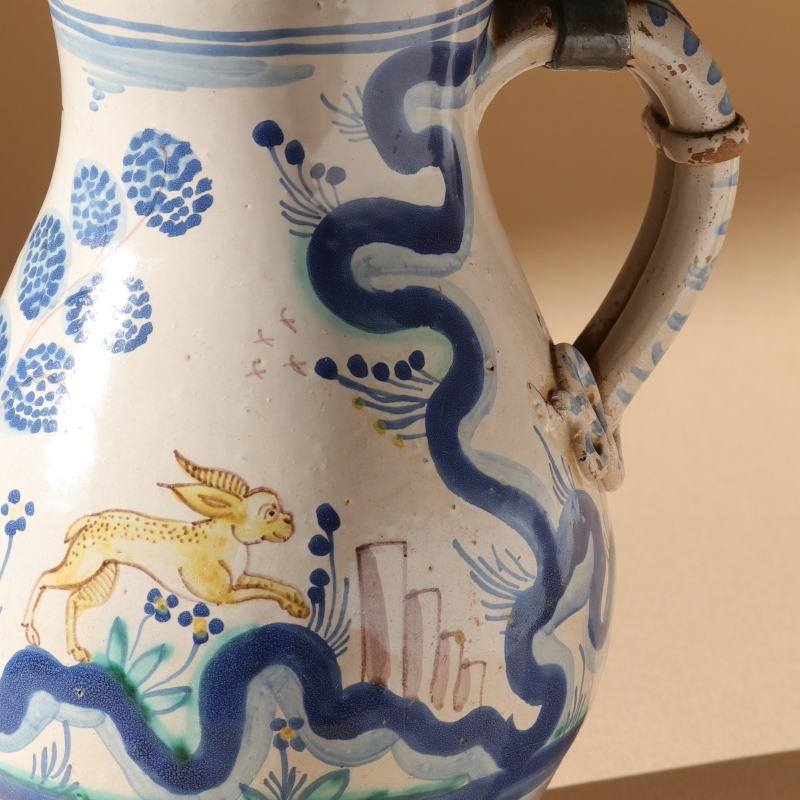
Another hallmark of Obermillner pieces from the late 17th century is the so-called “Savona handle” — a double-ridged handle whose lower ends taper off in a serpentine form, often with a horizontal ridge in the upper third for easier grip. This handle type was common in Friuli (northern Italy) and Savona, pointing to Italian maiolica as a stylistic influence on Salzburg faience.
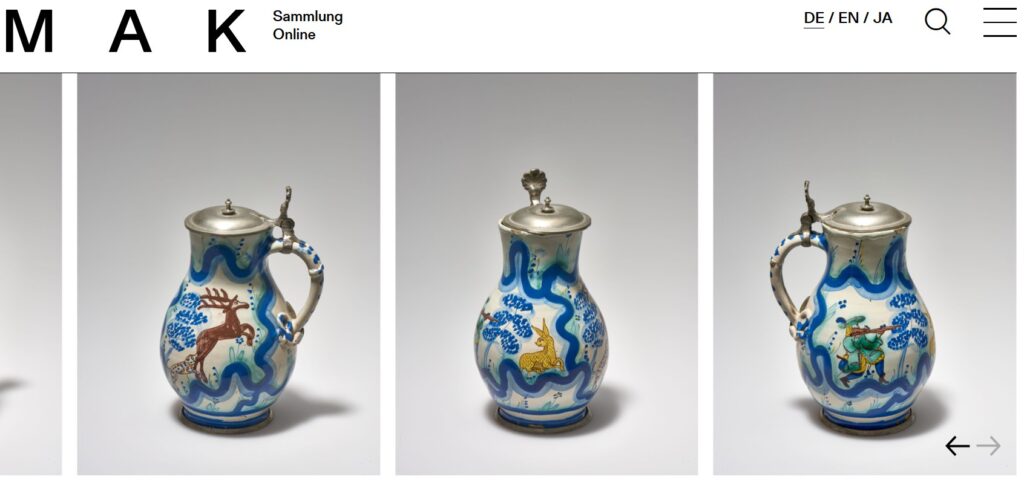
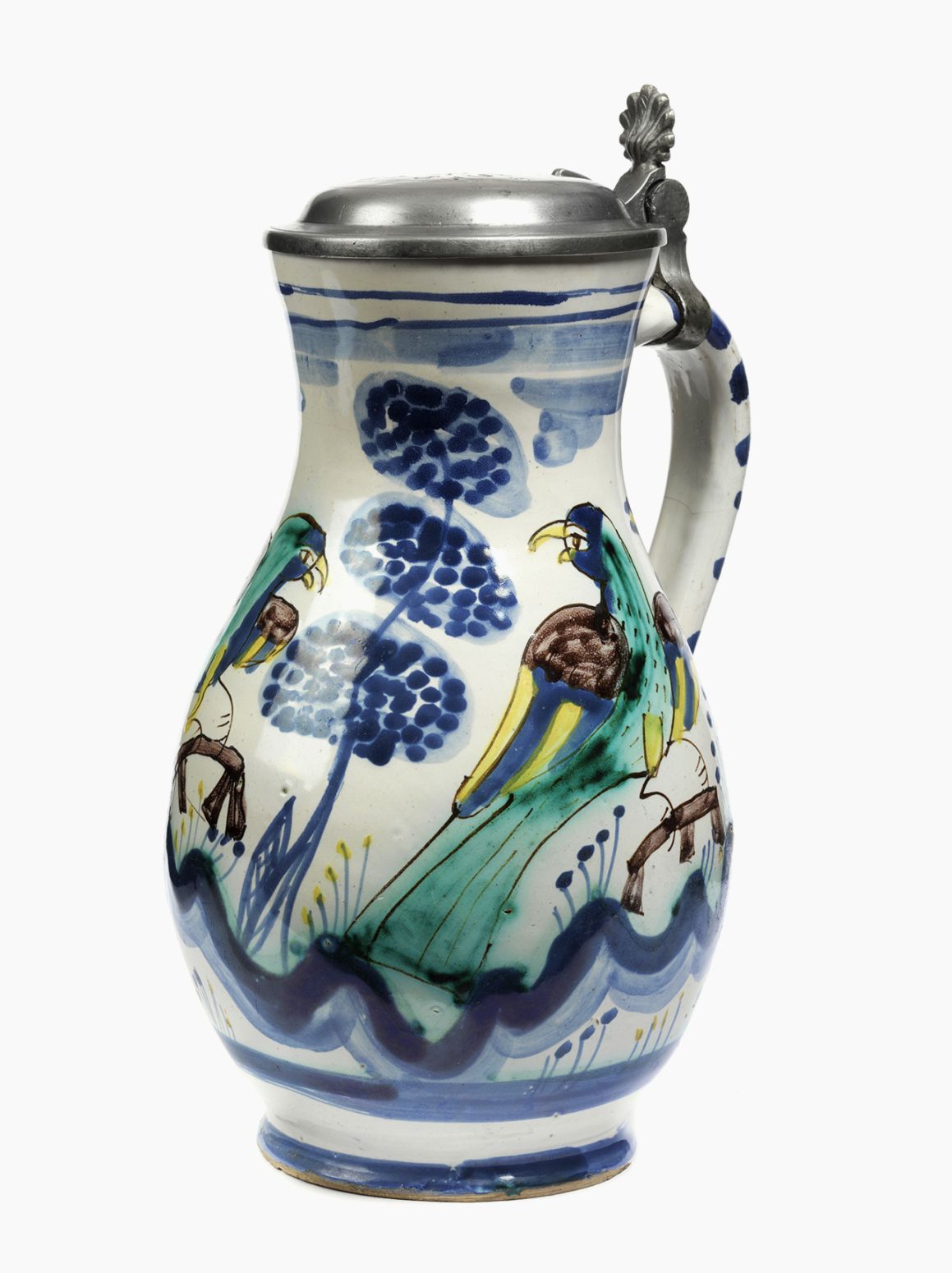
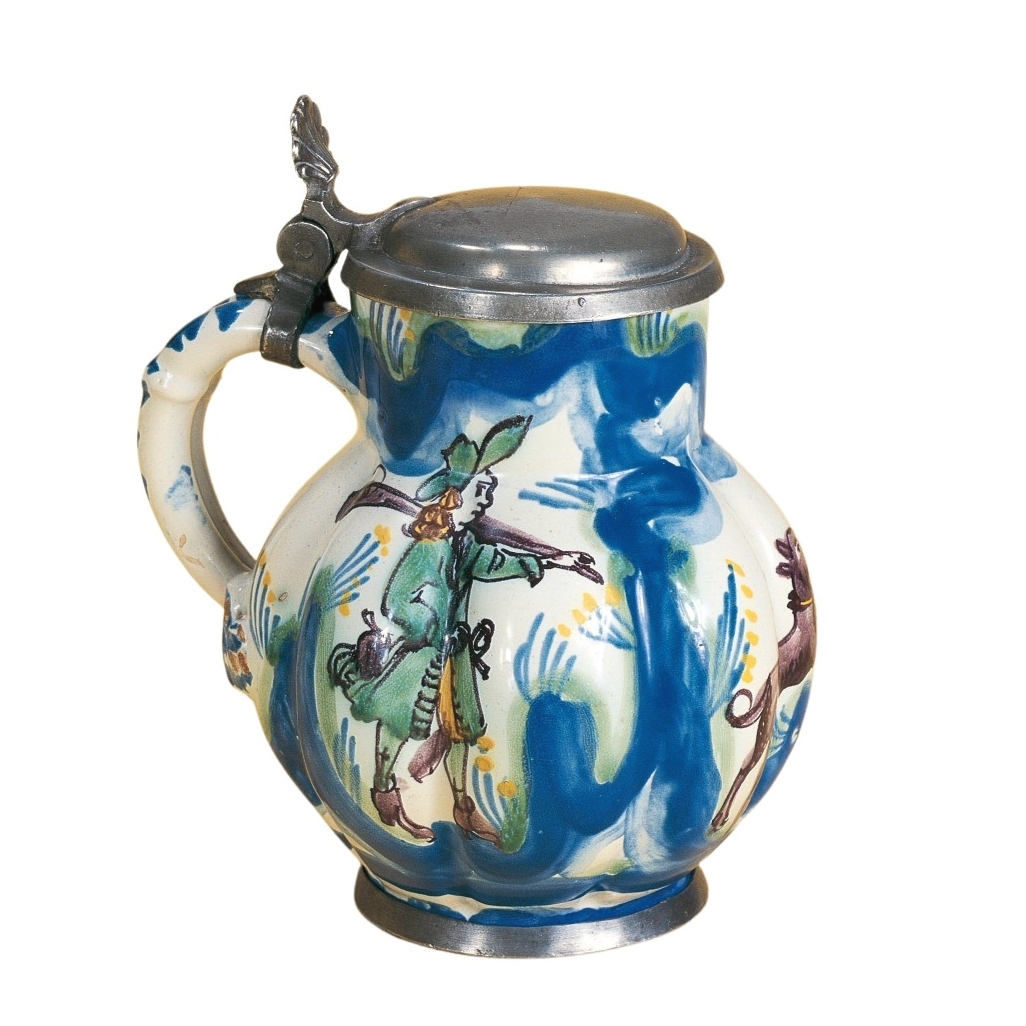
A reference piece is held in the online collection of the MAK Museum Wien (Inv. no. KE 6027). The article illustrates numerous comparable jugs and a plate from the Peter Vogt collection, mostly hunting-themed pear-shaped jugs (Birnkrüge/Jagdkrüge) dating from roughly 1675–1700, decorated with motifs such as stags, foxes, hares, a huntsman with horn, and a parrot. Comparable pieces are held in the collection of the Carolino Augusteum in Salzburg.
Source: Svoboda, Christa, and Wolfram Morath (eds.). Blaue Welle – grüne Flamme: Salzburger und Gmundner Fayencen 17.–19. Jahrhundert. Salzburg: Carolino Augusteum, 1999.
Der sogenannte Savona Henkel als Inspiration für Fayencekrüge aus Salzburg
Auch die besondere Form des Henkels – “Savona Henkel” genannt – ist charakteristisch für die Objekte aus der Werkstatt Obermillner aus der
2. Hälfte des 17. Jahrhunderts. Dies ist ein doppelwulstiger Henkel, dessen untere Enden seitlich schlangenförmig auslaufen. Im oberen Drittel des Henkels meist auch noch ein Querbündel, das die Handhabung erleichtert. Gebräuchlich waren diese im Fraiul und auch in Savona.
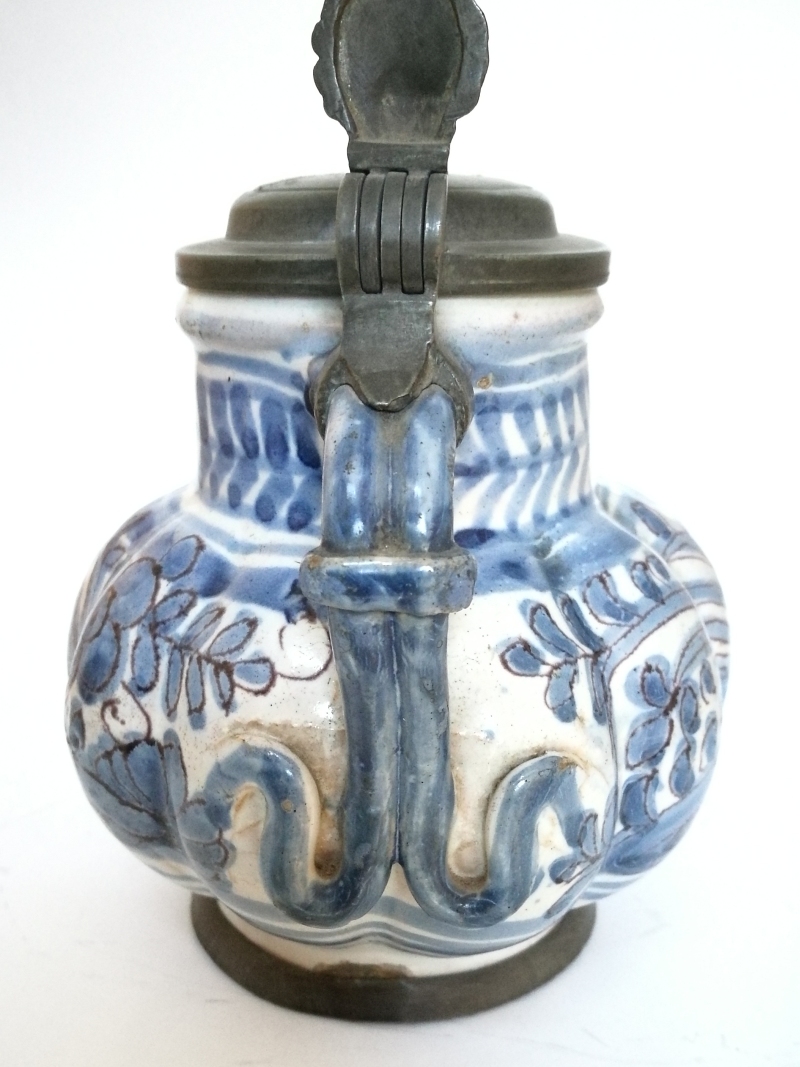
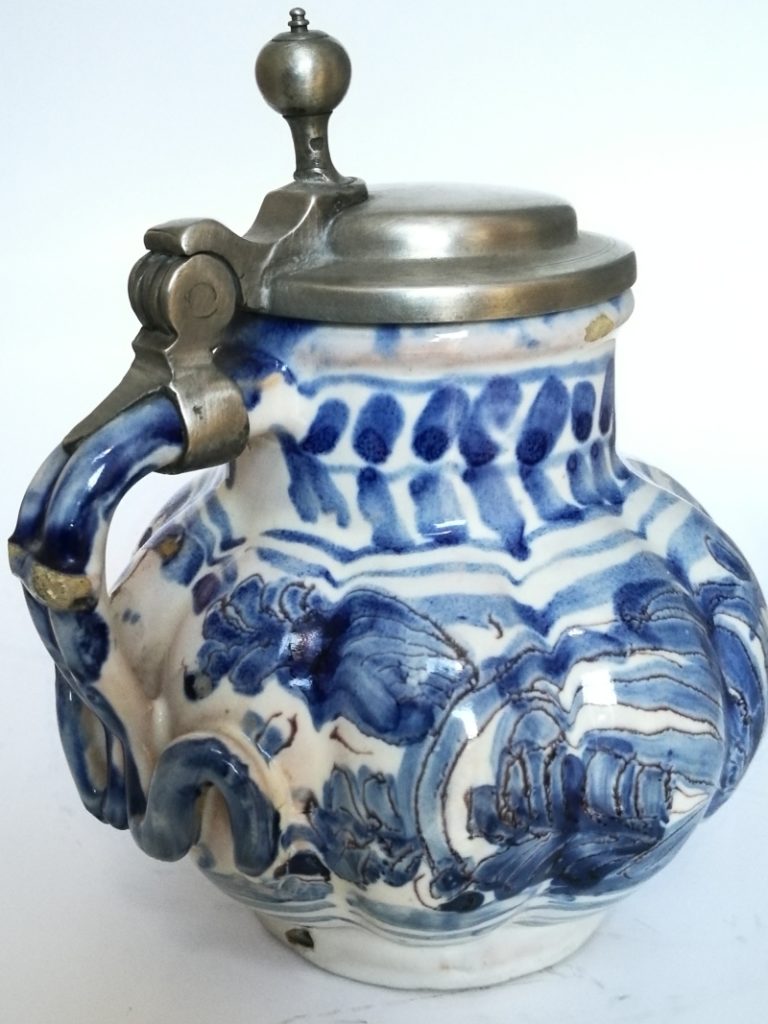
Referenzobjekt aus der Sammlung des MAK Museum Wien
Referenzobjekte Sammlung Peter Vogt

Literatur
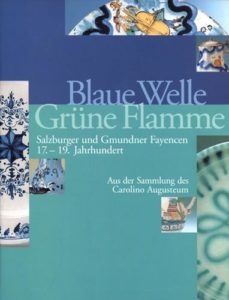
Blaue Welle – grüne Flamme: Salzburger und Gmunder Fayencen 17.-19. Jahrhundert.
Aus der Sammlung des Carolino Augusteum Svoboda, Christa und Wolfram Morath (Hrsg.) Salzburg : Carolino Augusteum, 1999


