18th Century Kuenersberg Faience


Kuenersberg Faience with hunting scenes
Hunting as a noble privilege in the 18th century and its artistic expression
The Künersberg faience manufactory, active during the eighteenth century in southern Germany, produced a distinctive corpus of hunting faiences that reflected the social hierarchies and cultural values of the period. Under the direction of Johann Valentin Bontemps from 1751 to 1766, the manufactory developed a sophisticated decorative programme. These objects not only demonstrate technical virtuosity but also show the variety of exclusive hunting privileges (Jagdprivileg) reserved for the nobility.
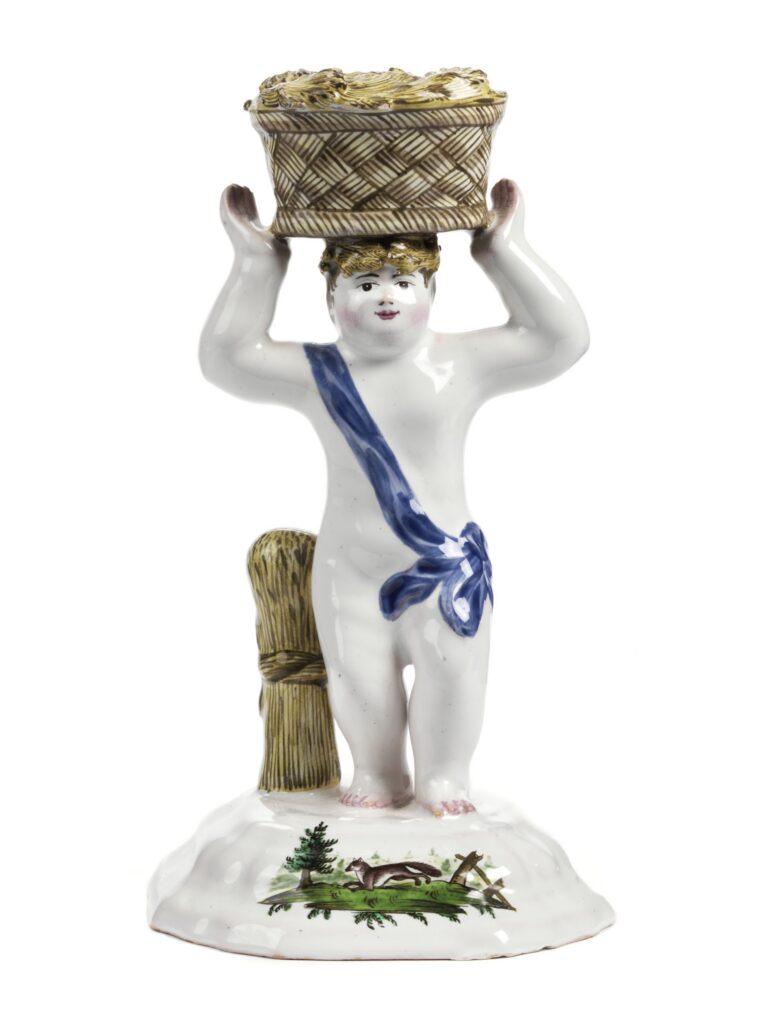
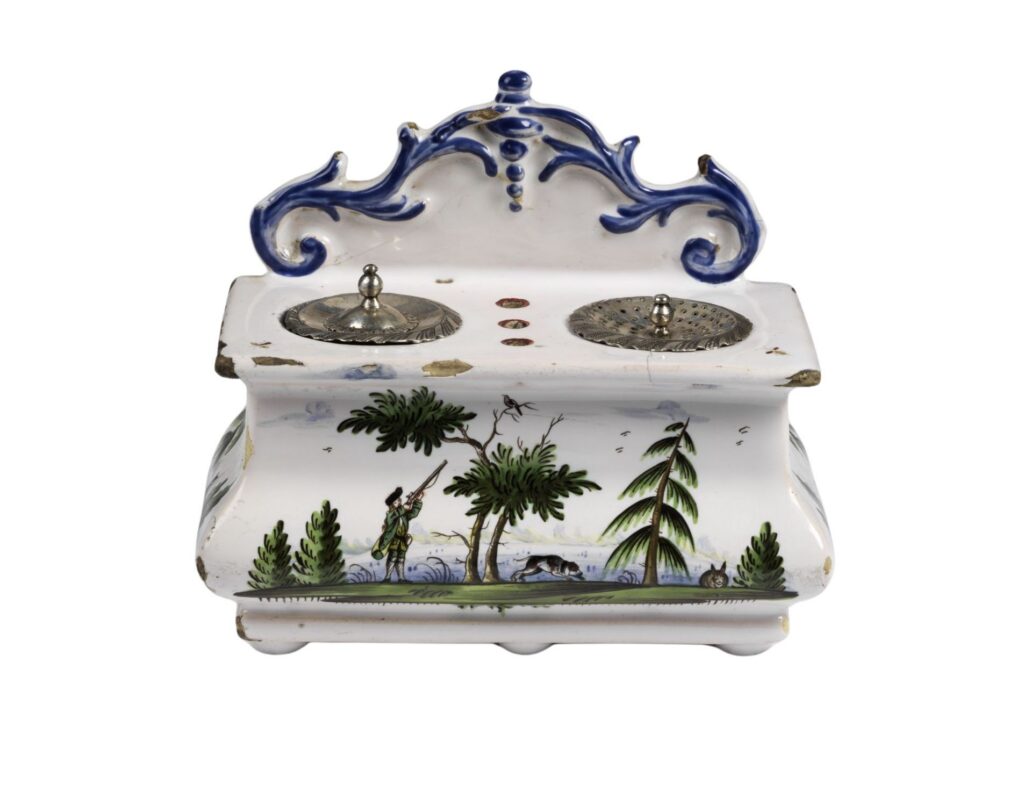
Johann Valentin Bontemps Period of the Manufactory 1751 – 1766
Johann Valentin Bontemps assumed direction of the Künersberg manufactory in 1751, bringing experience from his previous work as a painter in Nuremberg and Ansbach, where he had operated a small faience manufactory from 1743 to 1751. His arrival marked a decisive shift in the decorative orientation of Künersberg production. Bontemps established the manufactory partly with remaining stock from Ansbach, and brought with him key personnel including Lorenz Michael Schmidt, a thrower and modeler (Dreher und Bossierer), and later Peter Schmid. The elder Schmidt is credited with developing the distinctive „Ansbach green“ (Ansbacher Grün), a chromatic innovation that would become central to Künersberg’s hunting pieces.
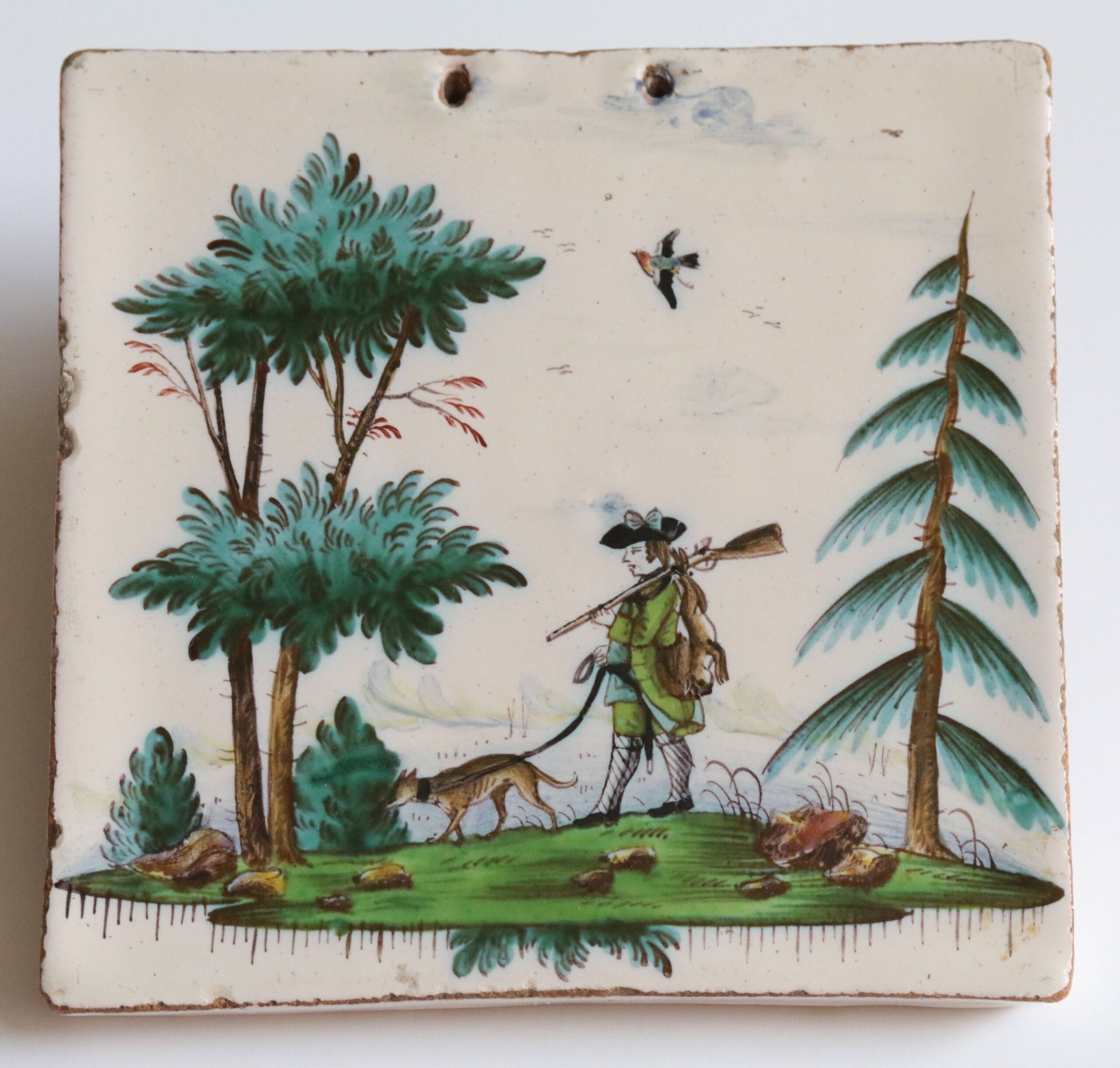
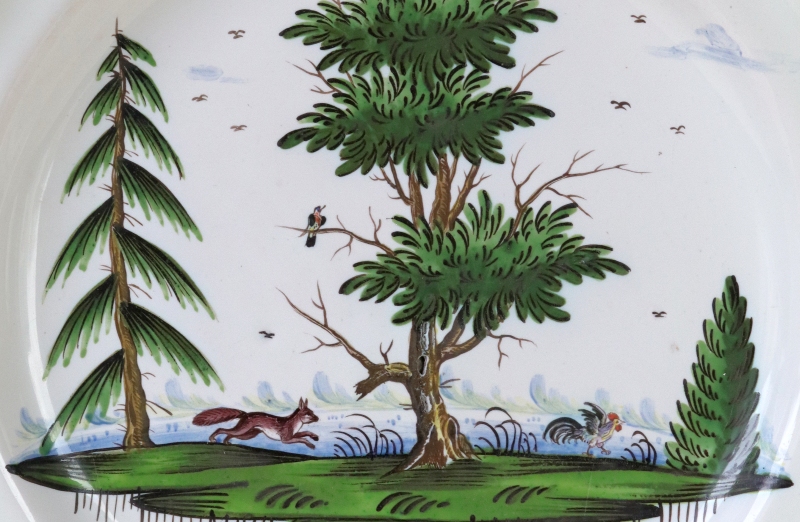
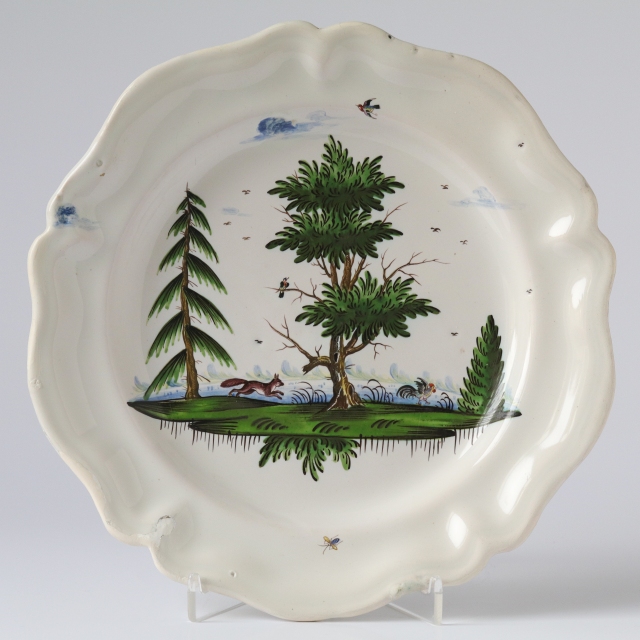
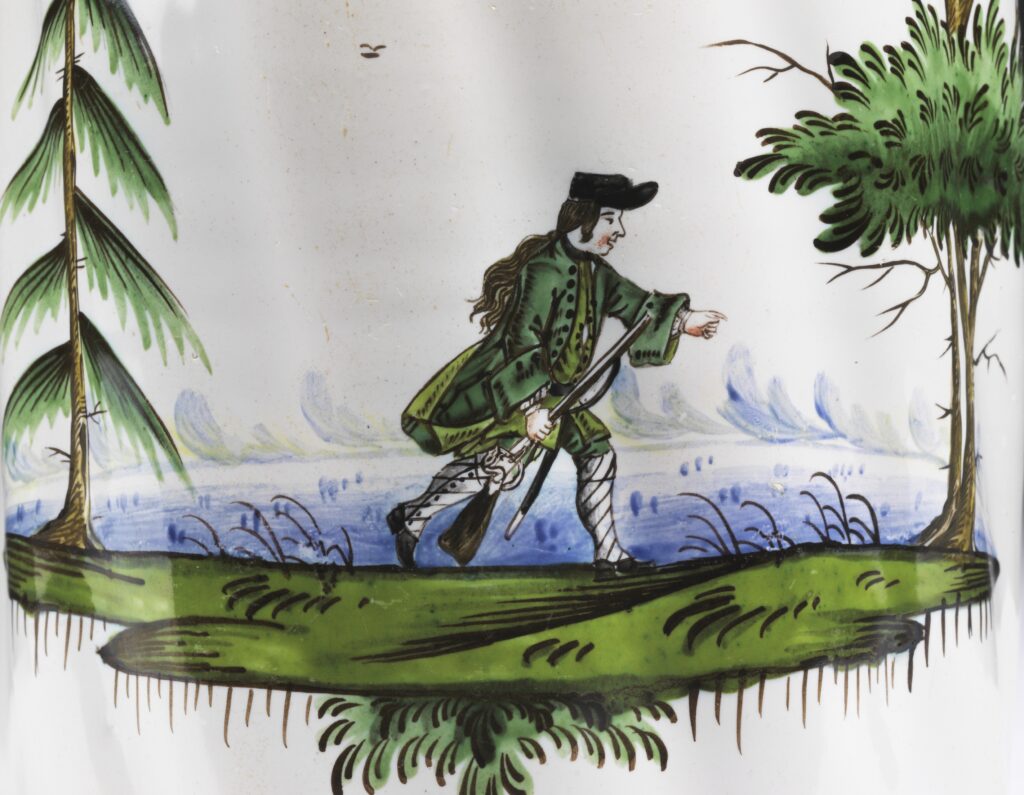
Example of the the Kuenersberg riverside landscape (Uferlandschaft) with shades of green and blue water shades in the background.
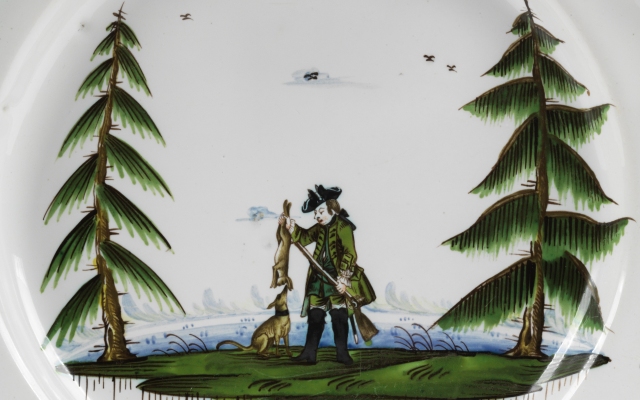
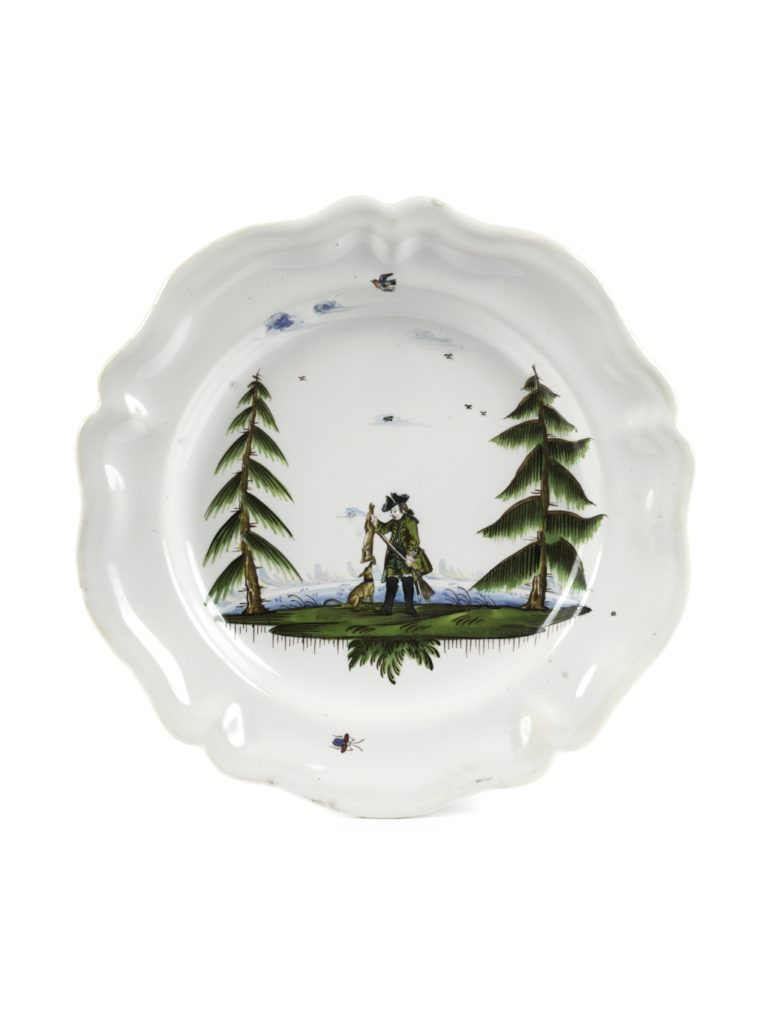
The hunting faiences produced during this period demonstrate sophisticated polychromy, particularly in the rendering of landscape elements.
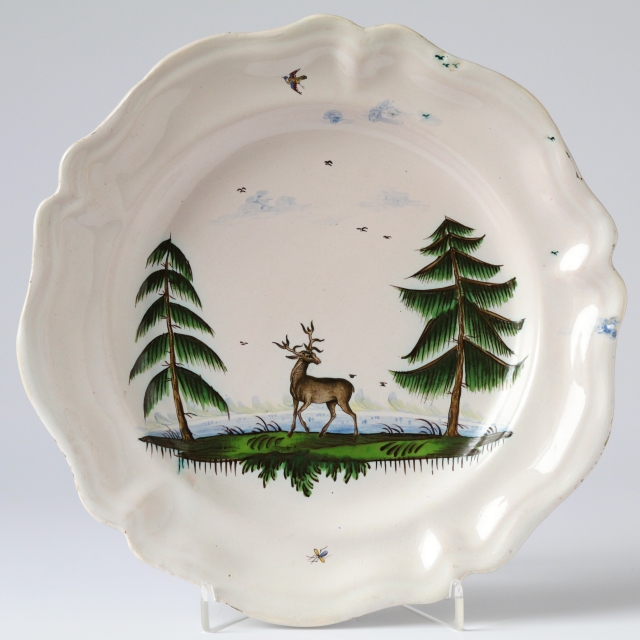
Three distinct landscape types appear consistently: the riverside landscape (Uferlandschaft) rendered in blue tones, the clod landscape (Schollenlandschaft) in earth colors, and the cone-tree landscape (Kegelbaumlandschaft). Against these varied settings, the manufactory deployed a full spectrum of green tonalities, creating remarkable chromatic depth.
Inspiration: Johann Elias Ridinger | Engravings ca. 1720 – 1760
Johann Elias Ridinger (* 15. Februar 1698 in Ulm; † 10. April 1767 in Augsburg)
German painter, engraver, etcher, and publisher
His work Treibjagd – Die Nez sind aufgespannt, nun geht es an ein Hezen exemplifies the dynamic composition and careful observation that made his prints essential references for decorative artists.
The engravings captured the hunt and its elaborate ceremonial aspects.
Treibjagd – Die Nez sind aufgespannt, nun geht es an ein Hezen – Datierung 1718 -1767
Ridinger, Johann Elias (Maler)
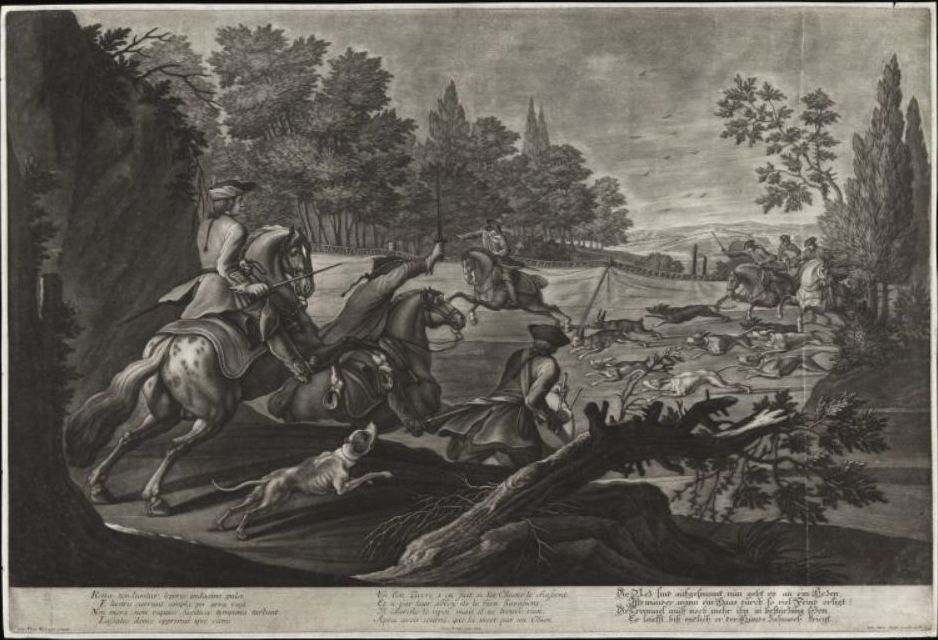
Source und Copyright:
Herzog Anton Ulrich-Museum Braunschweig – Museumsnr. / JERidinger AB 1.21
http://kk.haum-bs.de/?id=j-e-ridinger-ab1-0021
Figurative Repertoire of Kuenersberg Hunting Faience ca. 1760
The figural repertoire of Künersberg hunting faience encompassed both human and animal subjects drawn from the ritualized world of the aristocratic hunt. Human figures included hunters and hunting supervisors (Jäger und Jagdaufseher), each distinguished by costume and attribute.
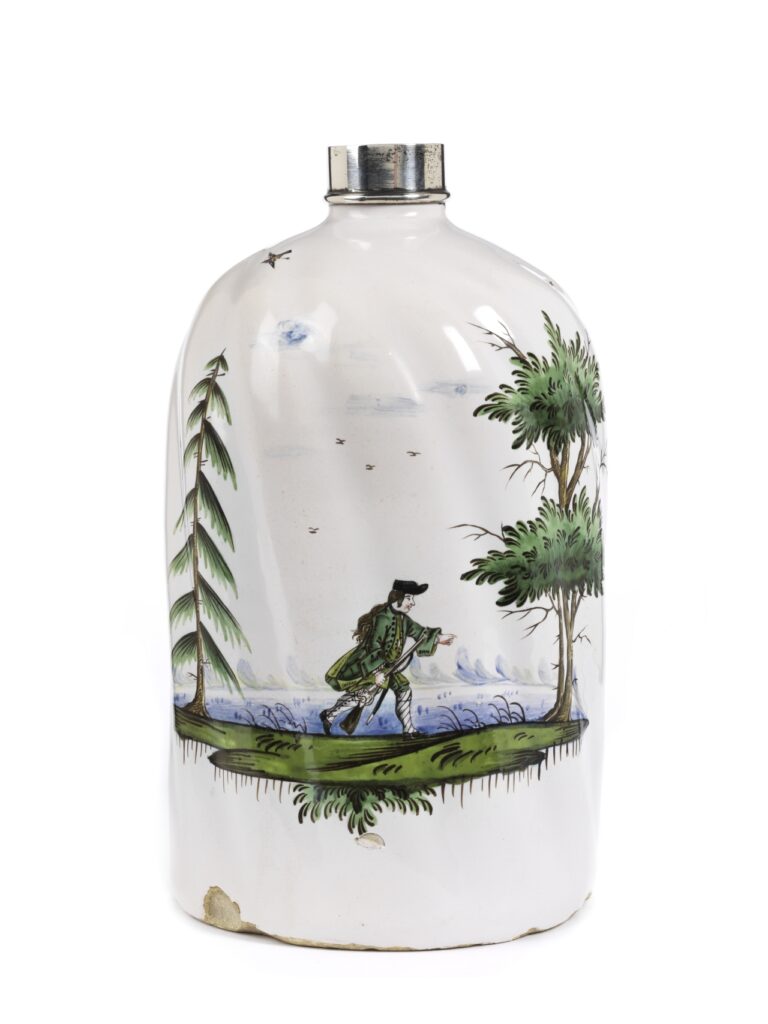

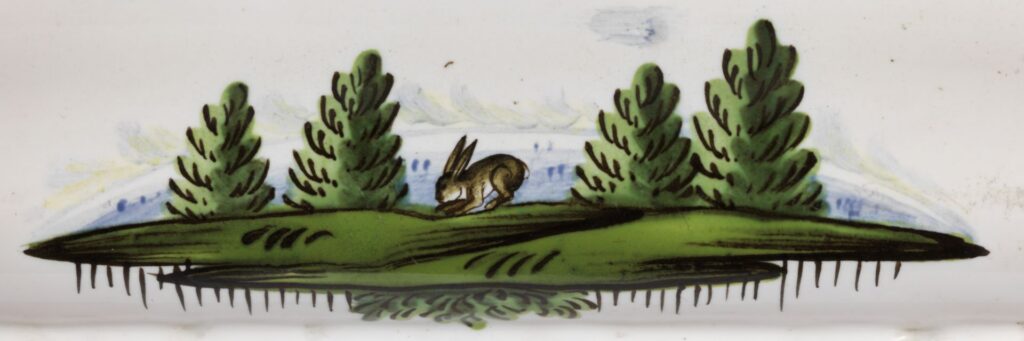
The animal subjects comprised the full range of Central European game: e.g. bear, stag, fox, hounds, wild boar, hare, and various birds and fowl. Each species required specific modeling techniques and chromatic approaches, demanding considerable skill from the painters and modelers..

Literature:
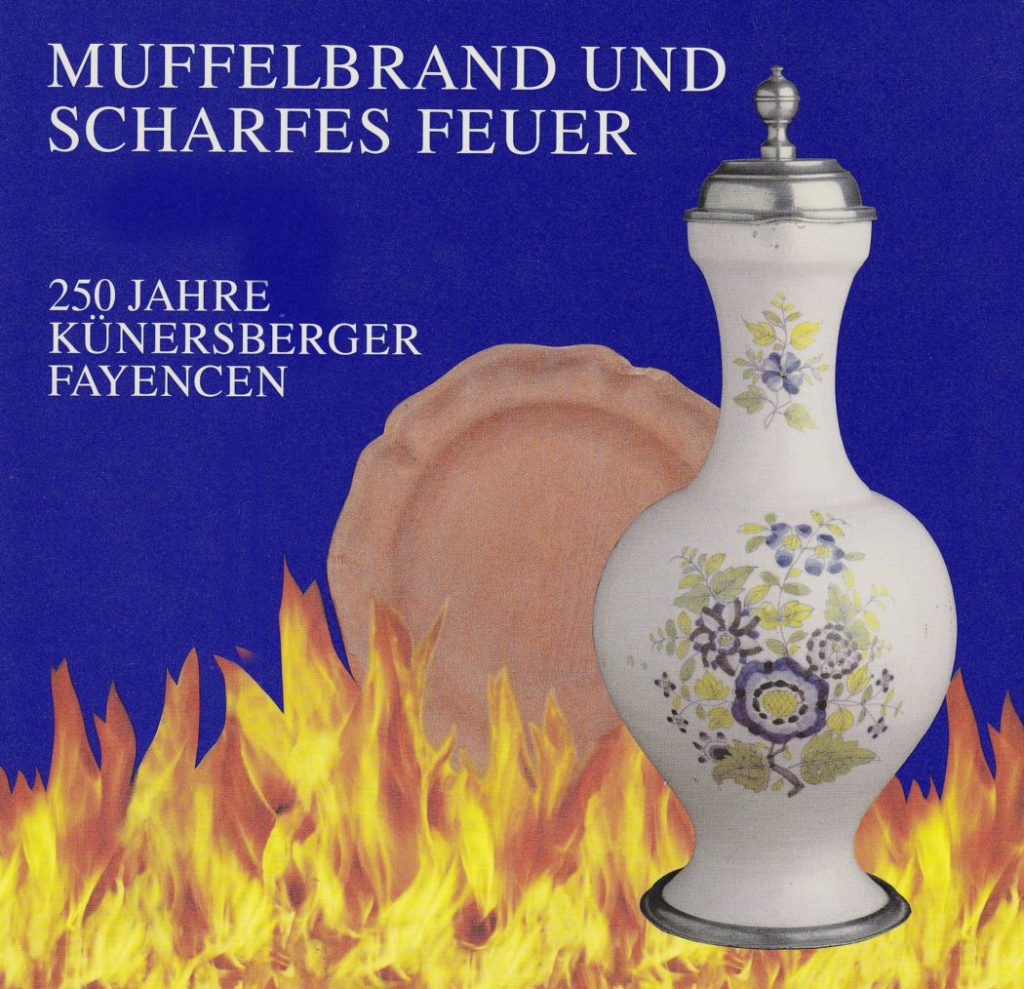
Muffelbrand und scharfes Feuer 250 Jahre Künersberger Fayencen/ https://www.konrad-verlag.de/programm/titel/299-muffelbrand-und-scharfes-feuer.html
Hans W. Bayer (Hg.) 1995 252 Seiten, 21 x 20 cm, 42 Abbildungen und 160 Tafeln in Farbe
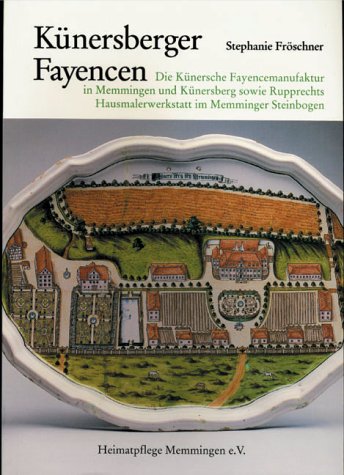
Fröschner, Stephanie. Künersberger Fayencen: die Geschichte der Manufaktur; Untersuchungen der Scharffeuerdekore und der Muffeldekore. Fröschner Bonn, 1992.
Table of contents:
https://d-nb.info/945745621/04


