Under the Canopy of the Heavens: Creussen Planetenkrug dated 1640


Rare Creussen Stoneware Tankard dated 1640 with polychrome enamel Planets Applications
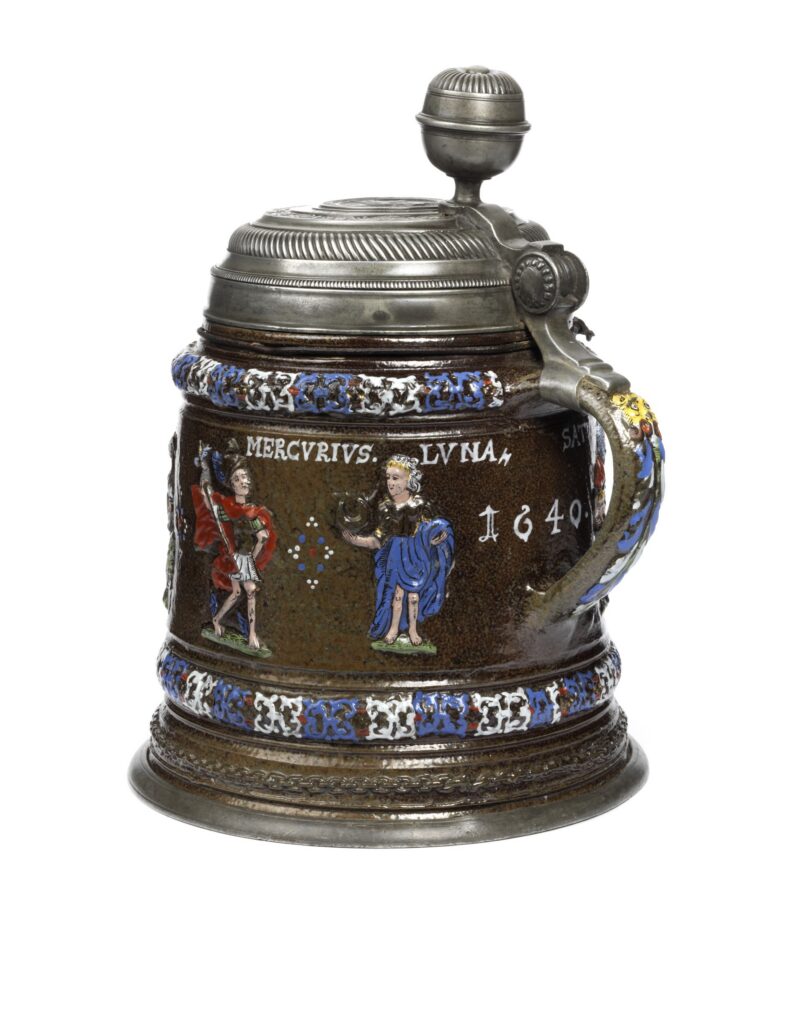
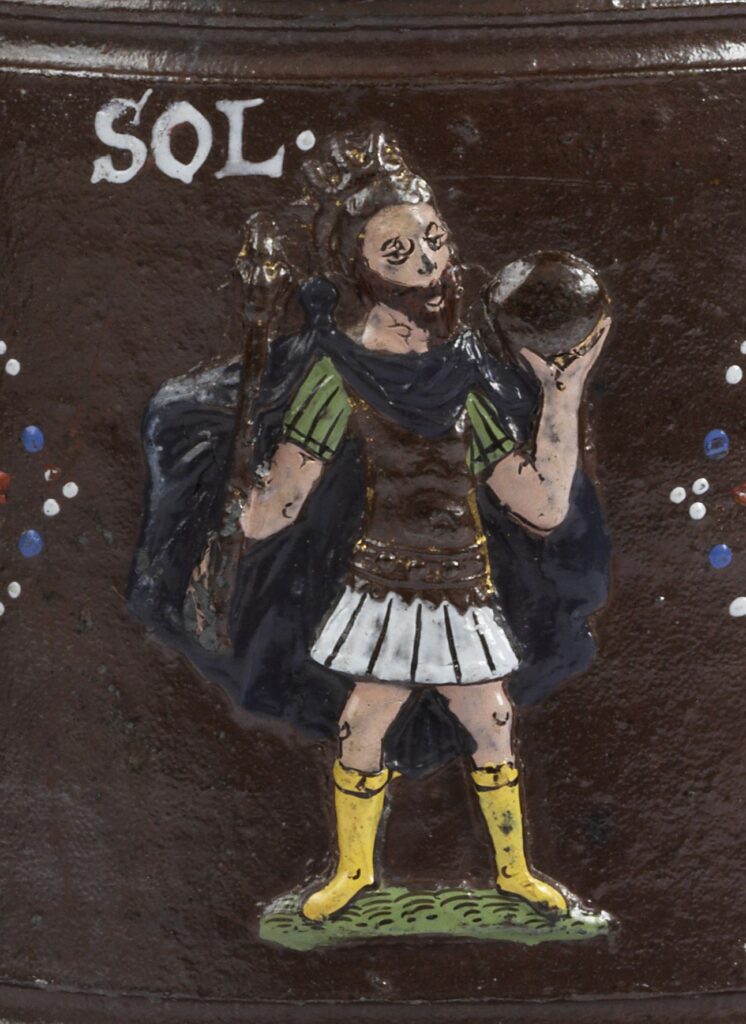
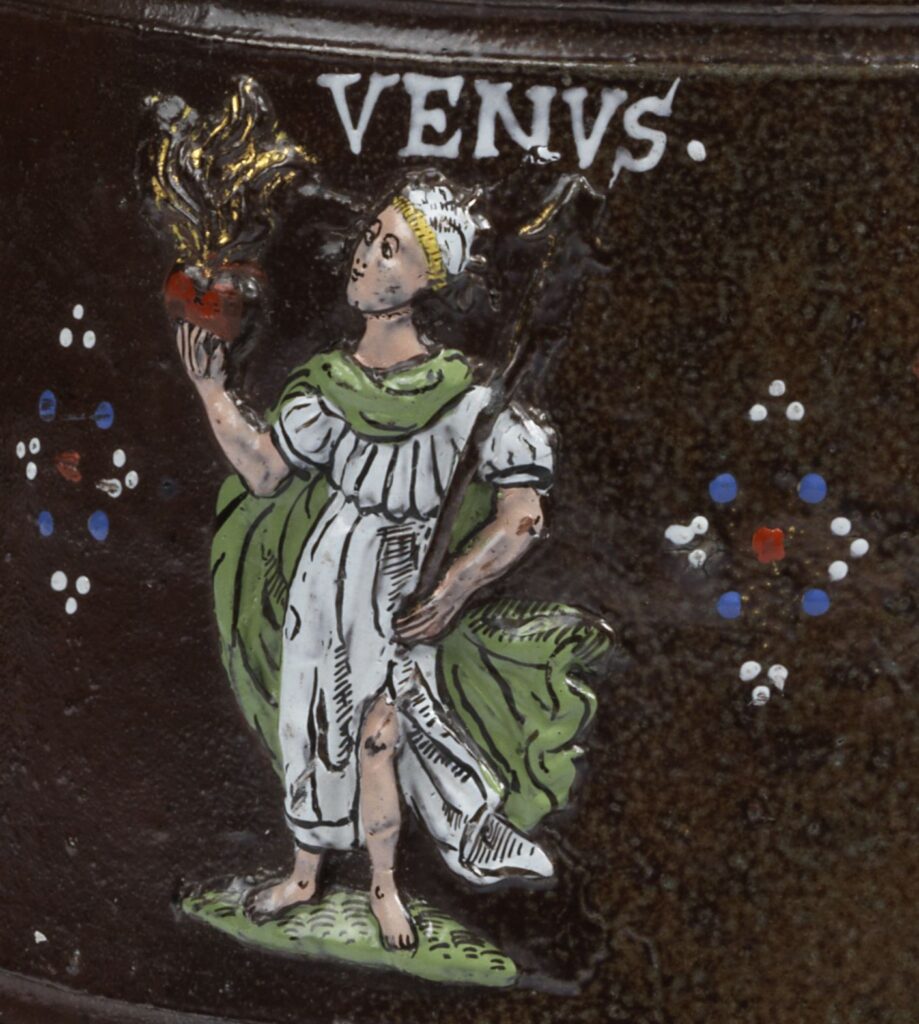
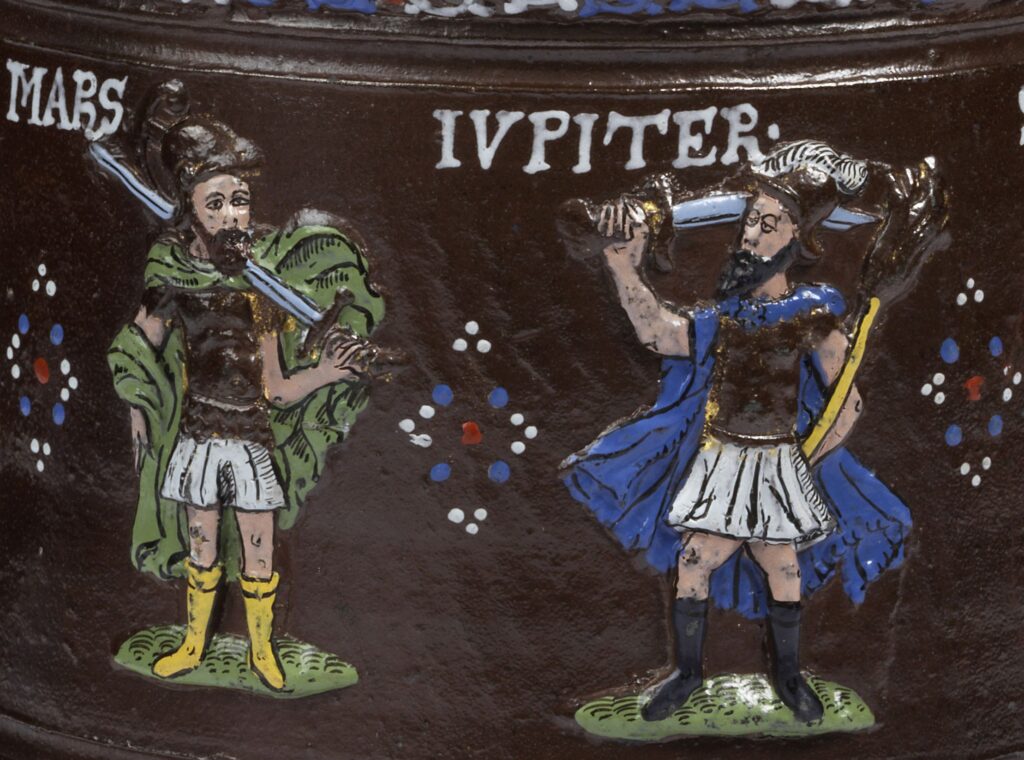
The body is encircled by two decorative friezes of foliated scrollwork and interlaced relief applications painted in polychrome enamels displaying the seven planets in the form of their presiding Roman deity figures.
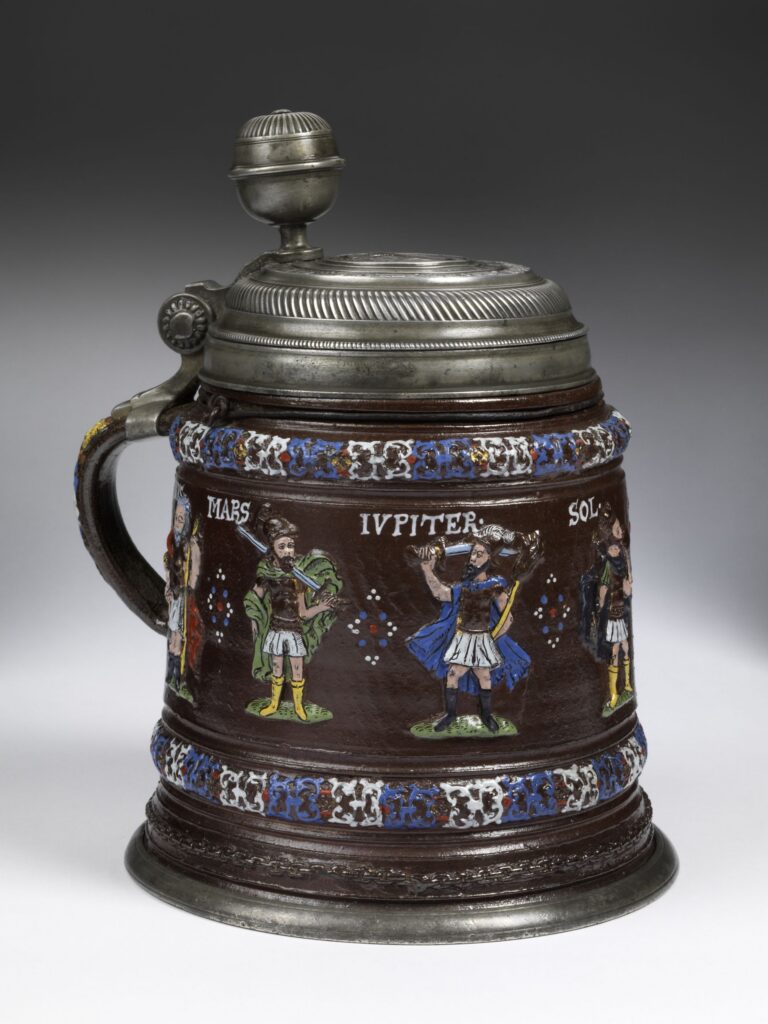
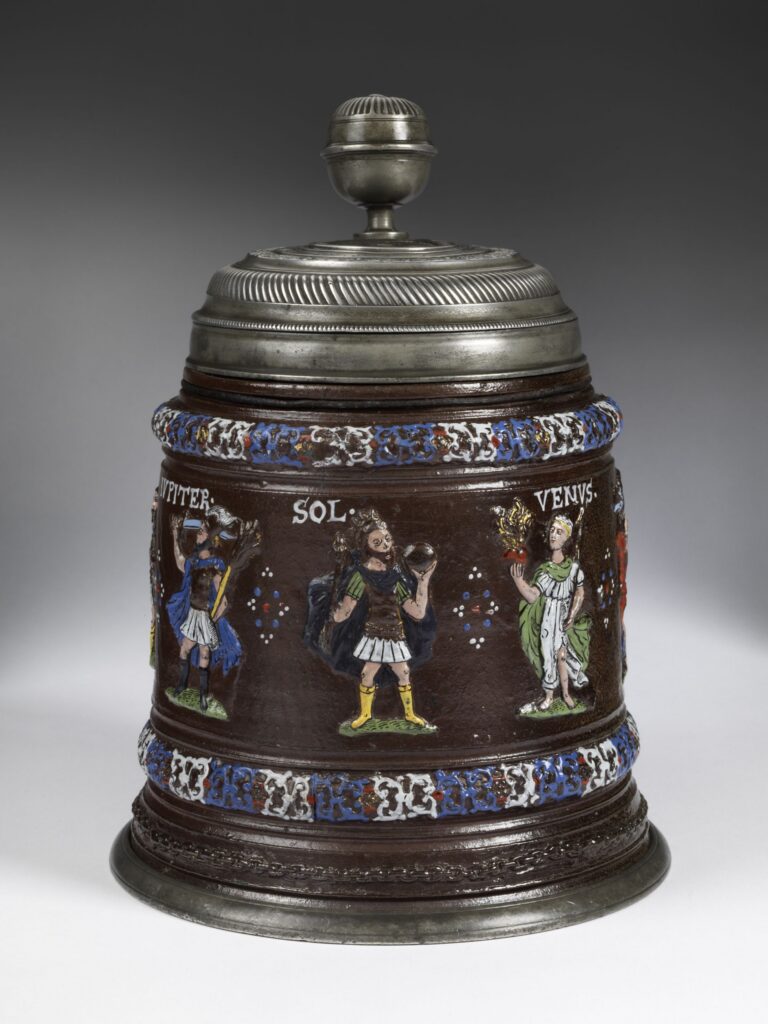
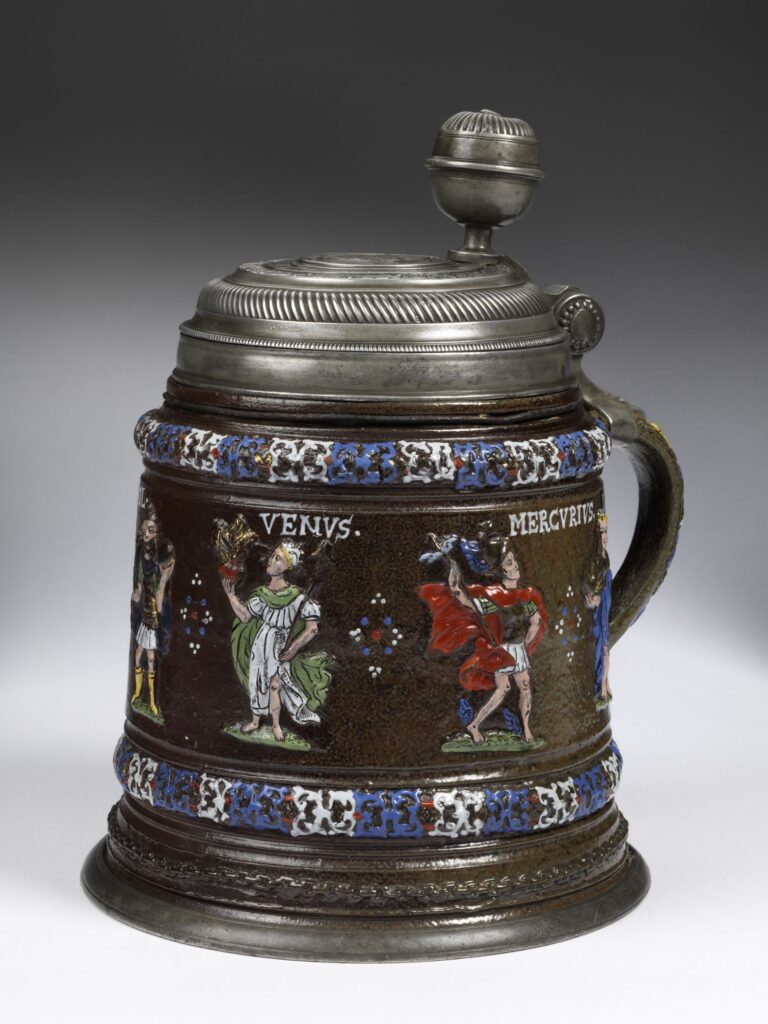
The Iconography of the Seven Planets
- SATVRN — an old man with a scythe, representing the slow-moving planet of time, melancholy and agriculture
- IVPITER — a noble figure in armour with a lightning bolt or staff, the great benefic planet of kingship and prosperity
- MARS — a warrior in red, holding a sword, embodying the martial planet of war and courage
- SOL — the Sun, depicted as a crowned or radiate figure with an orb, sovereign of all planets
- VENVS — a feminine figure in a long gown, associated with love and beauty
- MERCVRIVS — a fleet figure with winged helmet and caduceus, the planet of commerce, eloquence and travel
- LVNA — the Moon, shown as a woman in flowing robes, holding a crescent
Creußen: A Potter’s Town in Upper Franconia
The town of Creußen (also spelled Creussen or Kreussen) lies in Upper Franconia, today in Bavaria, some fifteen kilometres south of Bayreuth and within easy reach of Nuremberg — for centuries the commercial and artistic heart of southern Germany.
During the late sixteenth and early seventeenth centuries the Creußen manufactory produced rich brown stoneware with applied reliefs. The earliest Creussen objects decorated with polychrome enamel painting started around the end of the first quater of the 17th century. (See reference object V+ A London)
The golden age of Creußen polychrome stoneware is generally placed in the period from approximately 1625 to 1700. Planet jugs — the Planetenkrüge — were made throughout this period. Later in time as the production matured through the planet jugs, as well as other topics of iconography, tended to become more elaborate in respect of the refinement of the modelling, the richness of the colour palette and the complexity of the ornamental friezes.
Reference Objects Collection Peter Vogt
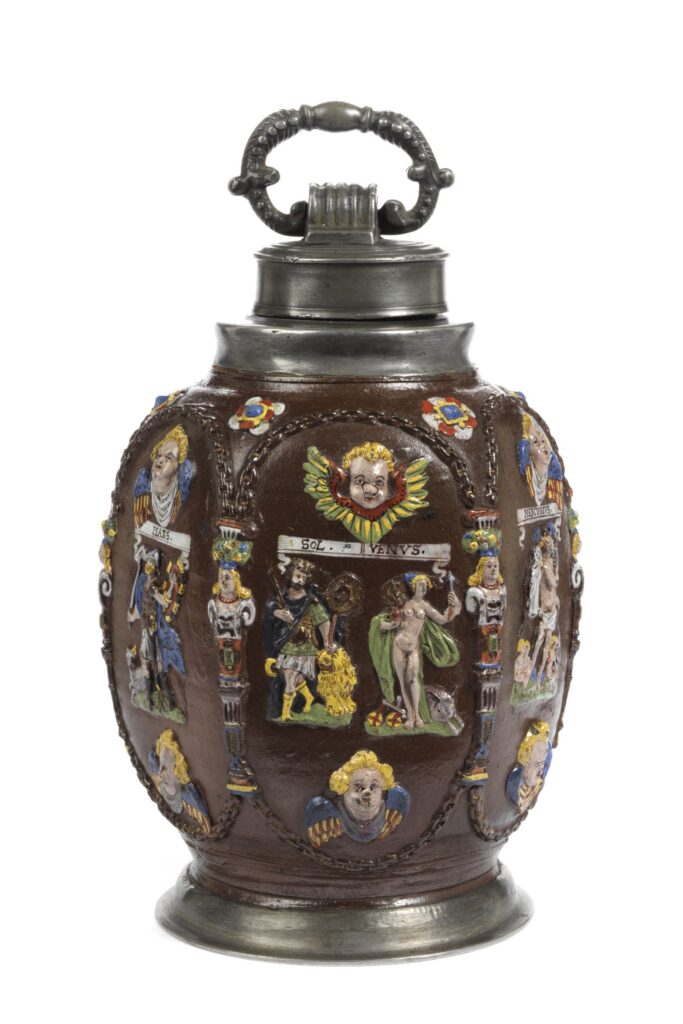
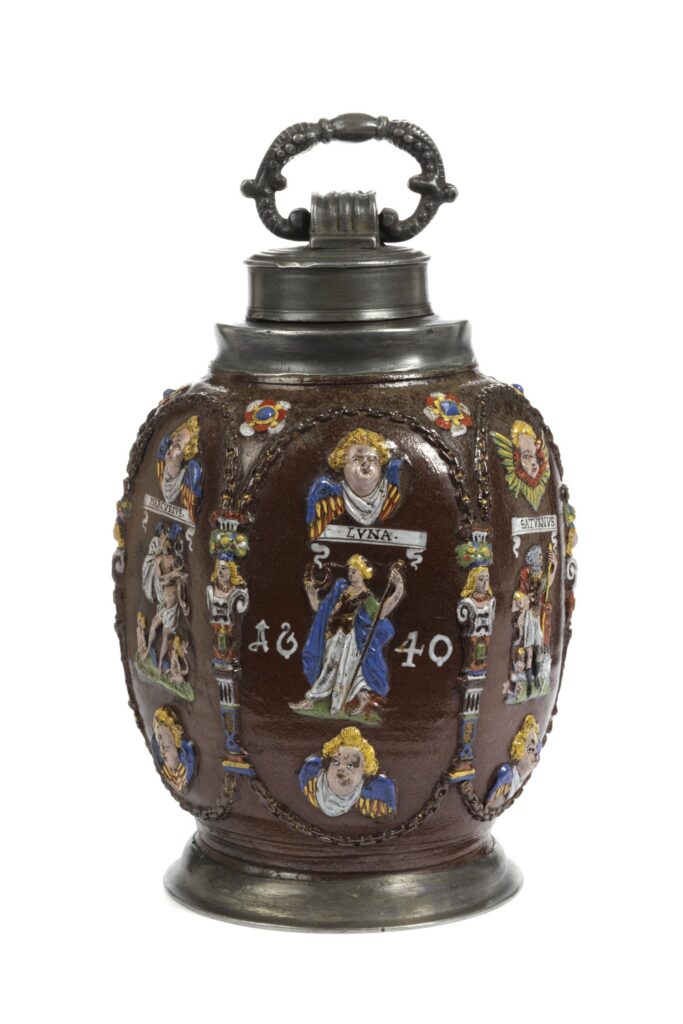
Reference Object Victoria and Albert Museum London
online access: https://collections.vam.ac.uk/item/O161054/tankard-unknown
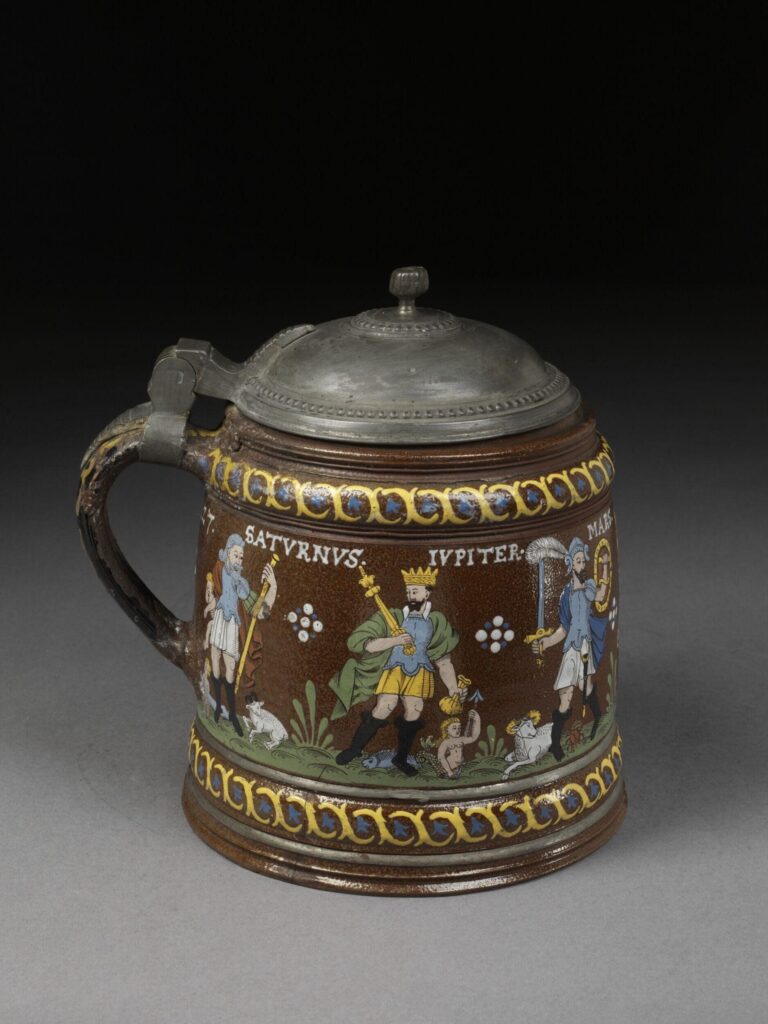
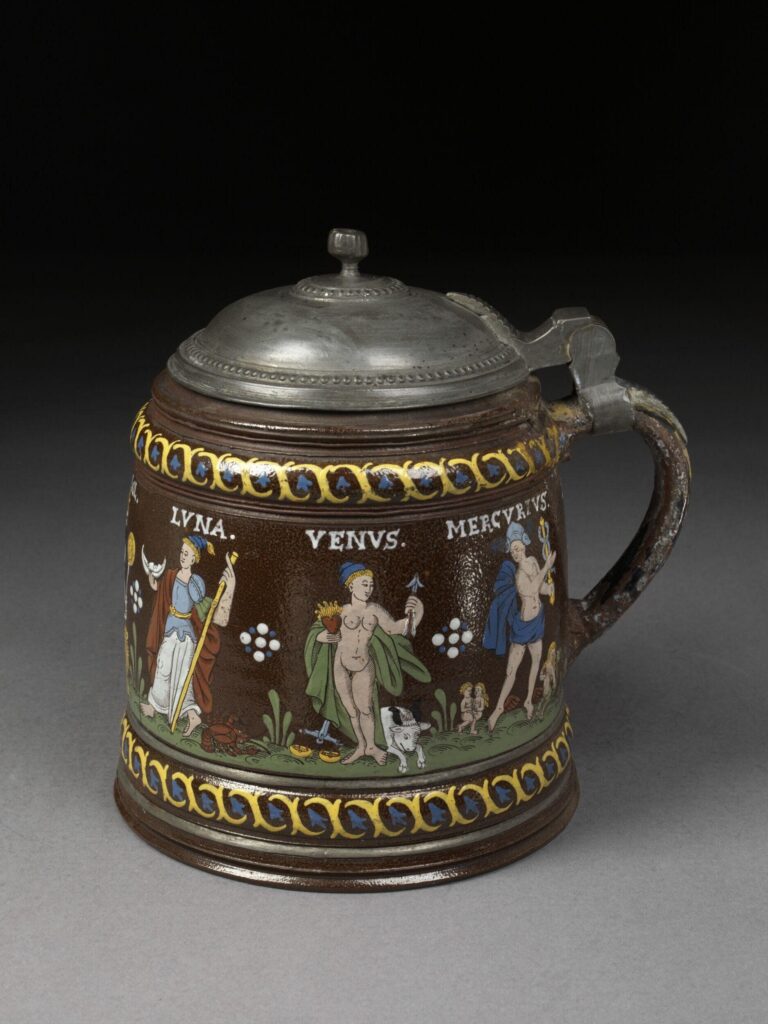
© Victoria and Albert Museum, London
Inspiration Etching of Venus dated 1529
This print is from a series by Georg Pencz, an engraver active in Nuremberg in the 16th century. The engravings in the set show figures representing the various planets, accompanied by symbols and signs of the Zodiac. The characters are shown in earthly surroundings, with woods and landscapes behind them.
This print shows a female figure as Venus, who carries a burning heart in her hand. Venus is associated with two astrological signs, Libra, which is represented by scales on the ground and Taurus, represented by a bull.
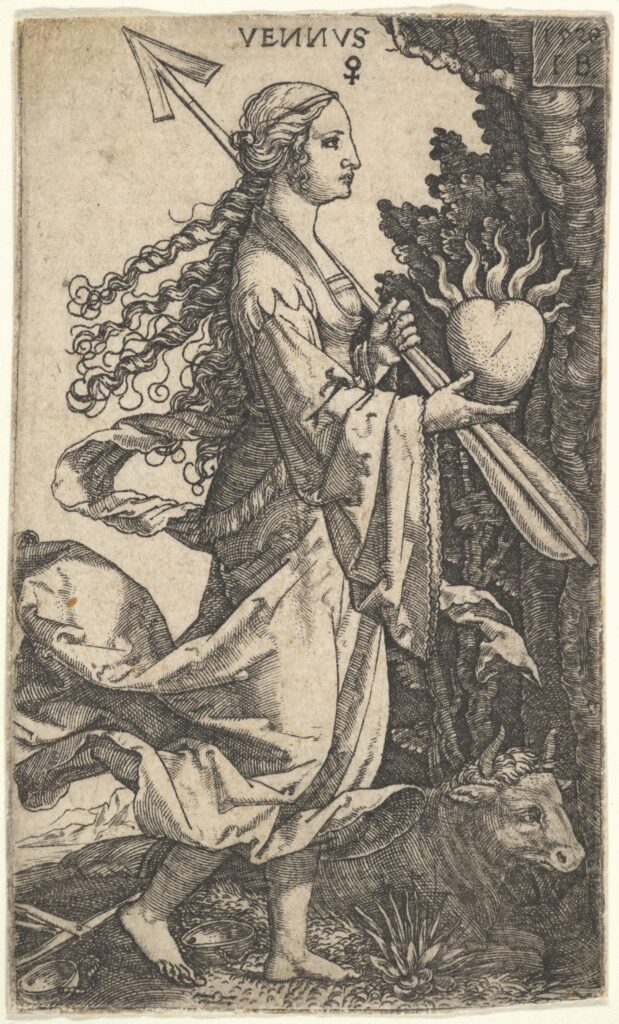
Vennus
Engraving
1529 (printed), 1523-30 (Printed)
Artist/Maker
Pencz, Georg (printmaker)
Monogrammist I. B. (Printmaker)
online access: © Victoria and Albert Museum, London
https://collections.vam.ac.uk/item/O114205/vennus-engraving-pencz-georg
The postures, attributes and even the costumes of the relief figures on the tankards correspond closely to the iconographic language of early sixteenth-century printmaking, filtered through the conventions of the applied relief-mould workshop.
Literature
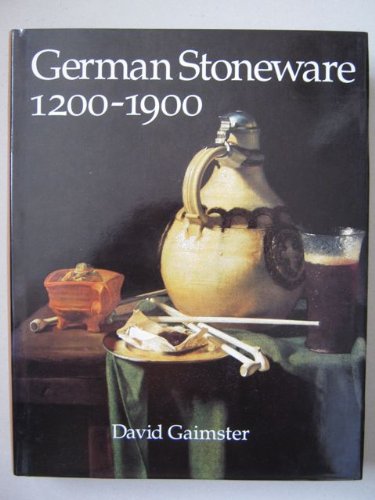
Gaimster, David. German Stoneware 1200–1900: Archaeology and Cultural History. London: British Museum Press, 1997
Horschik, Josef. „Creußener Steinzeug.“ Keramos: Zeitschrift der Gesellschaft der Keramikfreunde e.V. Düsseldorf, Heft 139/140, April 1993
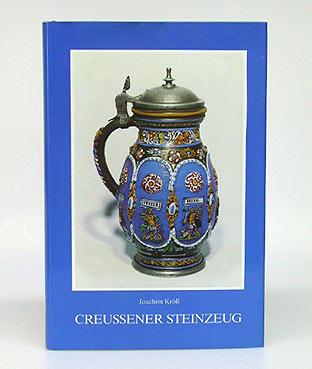
Kröll, Joachim. Creussener Steinzeug. Ein Handbuch für Sammler und Liebhaber. Braunschweig: Klinkhardt & Biermann, 1980
Related Articles
Creussen Steinzeug im 17. Jahrhundert – Peter Vogt Fayence und Steinzeug aus vier Jahrhunderten
Creussener Kurfürstenkrug 1677 datiert – Peter Vogt Fayence und Steinzeug aus vier Jahrhunderten
Creussen Vierkant Flasche um 1625 – Peter Vogt Fayence und Steinzeug aus vier Jahrhunderten


